
Vandaag of morgen in huis

Kwaliteit gegarandeerd

Welkomstaanbiedingen ontgrendelen: GRATIS bezorging | Tot 80% korting | Gratis 30 dagen JoyPlus-proefperiode
Download de app
Good outdoor lighting makes an entrance easier to see, helps you find the keyhole and adds atmosphere to a patio or balcony. However, it is unwise to choose a light based solely on its appearance, lumen output or terms such as “weather-resistant”. A light may appear technically suitable, yet provide insufficient illumination in practice, be difficult to install or simply not suit the location where you want to use it.
Pay particular attention to three common pitfalls:
The IP rating indicates how well a light fitting is protected against dust and moisture. An IP44 outdoor light is suitable for many sheltered façades, entrances, balconies and patios where splashing water may occur. It is best not to install this type of light where rainwater runs directly over the housing or where it could be hit by a garden hose.
For more exposed locations, a higher rating such as IP65 may be more practical. According to its product specifications, the Philips UltraEfficient Zyren has IP65, making it suitable for more intensive outdoor use than many IP44 models. Always check the installation instructions and the exact position of the light.
Light output is measured in lumens. As a general guide:
Kelvin is also relevant. Warm white light around 2700-3000 K looks softer and often suits patio or façade lighting. 4000-5000 K creates a more neutral to cooler impression and can be useful when visibility is the priority.
A fixed outdoor light operates on mains electricity and requires a suitable connection box, secure wall mounting and professional installation. Models with an E27 fitting, such as the Brilliant Todd or Philips Juli, are supplied without a light source. This gives you flexibility: you can choose an LED bulb with your preferred colour temperature and brightness.
A light with an integrated LED is more compact and ready to use straight away, but the light source cannot be replaced in several models. If the LED fails, the entire fitting must then be replaced. A solar outdoor light avoids the need for wiring, but requires direct sunlight. In the Netherlands’ winter months or on a shady north-facing wall, the operating time may be shorter.
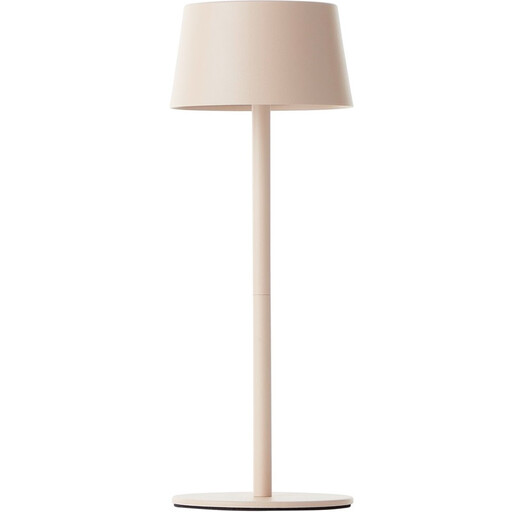
Why it suits this profile: This compact light is ideal for renters or beginners who want to add extra light to a balcony, table or patio without cables. The solar function can be supplemented with USB charging.
With a light output of 170 lumens, it is clearly designed for atmosphere rather than lighting an entire driveway. This helps prevent you from buying a small table lamp with unrealistic expectations.
3 dimmable settings, integrated LED, solar and USB charging, and IP44 splash protection.
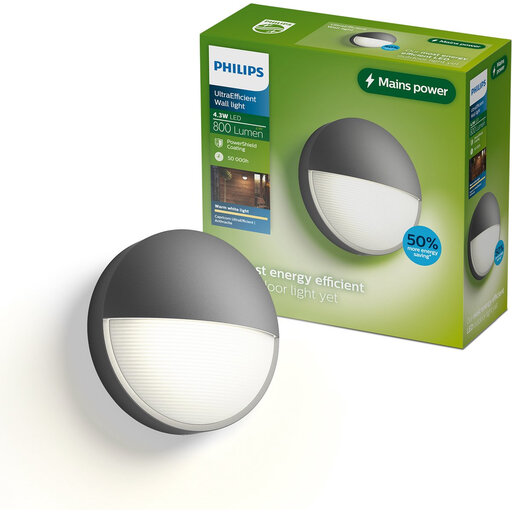
Why it suits this profile: For a permanent entrance or façade, this is a compact LED wall light with a discreet appearance and warm light. The fitting is designed for permanent connection to the mains.
The specifications state both 800 lumens and a power consumption of 4.3 W. This allows you to compare brightness and energy use objectively, rather than relying on general terms alone.
Integrated LED, 2700 K warm white light, 800 lumens and IP44. According to the product information, the LED light source cannot be replaced.

Why it suits this profile: This solar outdoor light with motion sensor is ideal for a garden path, shed or entrance without an existing power connection. According to the product specifications, it provides 1000 lumens and has two lighting modes.
The light has dusk and motion sensors, but still relies on sunlight for charging. Do not install it under an overhang or in deep shade.
1000 lumens, 3000 K, integrated motion and dusk sensors, no mains cable and IP44.
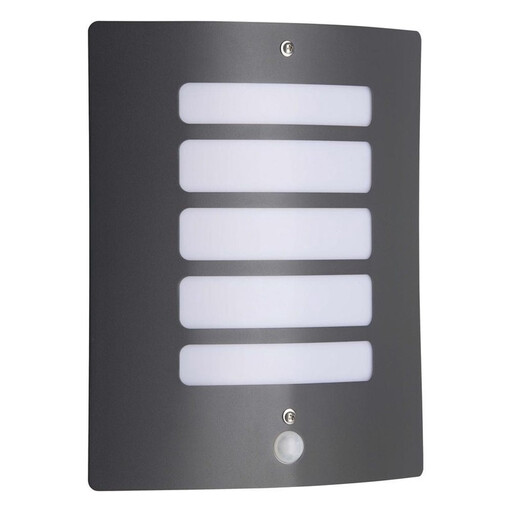
Why it suits this profile: This outdoor wall light combines an E27 fitting with an integrated motion sensor. It is practical by a front door or side entrance where you only need light when someone approaches.
The light is supplied without a light source. You can therefore choose your own LED bulb, but you must take the maximum 60 W and the cost of a suitable E27 bulb into account.
E27 fitting, motion sensor, anthracite-coloured housing and IP44. Connection to 230 V requires installation by a qualified electrician.
We have compiled a complete, up-to-date list of products that fully meet these strict selection criteria and the applicable European safety regulations.
An energy-efficient outdoor light usually uses LED technology. When comparing options, do not just look at wattage, but also consider lumens, operating time and how the light is controlled. A motion sensor can limit unnecessary operating hours, while a light that stays on all evening uses more energy, even if its power consumption is low.
Yes, IP44 outdoor lighting is suitable for many sheltered outdoor locations and can withstand splashing water. It does not protect against immersion, high-pressure water jets or prolonged direct exposure to water. Choose the installation location carefully.
For atmospheric garden lighting, around 100 to 300 lumens is often sufficient. For an entrance, garage or garden path, 300 to 1,000 lumens is generally more suitable. Larger areas may require brighter light, but also consider the direction of the beam and possible disturbance to neighbours.
A solar outdoor light can also work in winter, but its charging performance depends on direct sunlight, cloud cover, shade and the installation angle. If your façade is particularly dark, consider a model with a USB charging option or a fixed LED outdoor light connected to the mains.
