
Vandaag of morgen in huis

Kwaliteit gegarandeerd

Welkomstaanbiedingen ontgrendelen: GRATIS bezorging | Tot 80% korting | Gratis 30 dagen JoyPlus-proefperiode
Download de app
Good outdoor lighting needs to do more than look attractive in a product photo. In a Dutch garden, a light has to cope with rain, wind, dark winters and sometimes very little direct sunlight. If you focus only on design or a high lumen rating, you could end up buying a light that is unsuitable for its installation location or intended use.
A designation such as IP44 outdoor light does not mean that the light is completely waterproof. IP44 protects against splashing water from different directions and is mainly suitable for sheltered façades, entrances, balconies and covered areas. Direct water jets or immersion are not permitted.
IP65 outdoor lighting offers greater protection against dust and water jets. This makes it a more logical choice for an open driveway, shed wall or location where rain falls directly on the housing. Always check the full product description, though: the IP rating applies to the product concerned and does not automatically say anything about cable connections or mounting points.
Solar outdoor lighting does not use mains electricity, but its performance depends on the amount of sunlight available. A solar panel beneath a balcony, in the shade of a tree or on a north-facing façade will charge less reliably. Cloud cover, leaves and dirt on the panel also have an impact.
Pay attention to the stated charging time and operating time, but treat these as product specifications under particular conditions. According to the manufacturer's product information, a model might take 6 to 8 hours to charge and operate for 8 to 14 hours; in practice, the season, positioning and weather conditions are decisive.
Wattage indicates energy consumption, not directly how much light a lamp produces. When choosing an LED garden light, pay particular attention to lumens, colour temperature and light distribution. A 3000-lumen light is intended to provide functional lighting over a larger area, while warm light of around 2700K is better suited to atmospheric garden lighting.
Also check whether the light source is included. Some models have an integrated LED, while an outdoor wall light with an E27 or GU10 fitting may be supplied without a bulb. In that case, you need to factor in the cost and specifications of a suitable LED bulb.
Colour temperature is measured in Kelvin:
For a path or entrance, even lighting is more important than simply choosing a high lumen figure. For a tree, balcony edge or pergola, a string light with several small LEDs may be more suitable than one powerful lamp.
A solar-powered outdoor light is convenient when running cables is difficult. A fixed wall light running on 220–240V requires professional installation by a qualified electrician. Switch off the power before installation or maintenance.
An outdoor light with a motion sensor can be practical by a front door, garage or driveway. Look at the detection angle, range and adjustment options. A sensor that responds to people passing in the street or moving branches can switch on unnecessarily often. With solar lights, a motion sensor can also help to use the stored energy more efficiently.
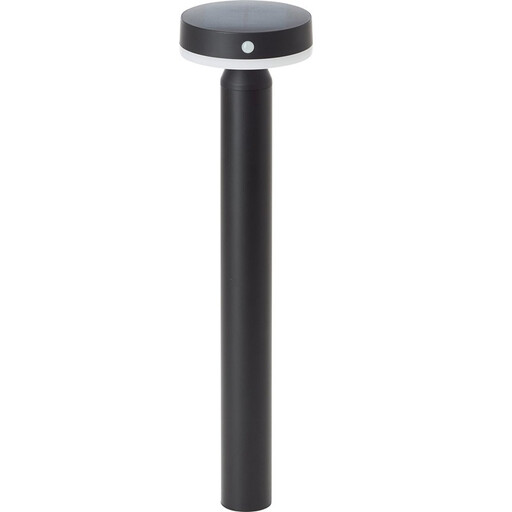
Why it suits this profile: This solar garden light works without a fixed power connection and features an integrated LED, motion sensor, 350 lumens and a height of 50.2 cm. That makes it easy to position along a path or in a flower bed.
Key details such as lumens, 4000K, IP44 and battery type are specified. However, place the light on a stable surface and bear in mind the limitations of splash protection.
Solar power, motion sensor, integrated LED and 350 lumens in a freestanding model measuring approximately 50 cm.
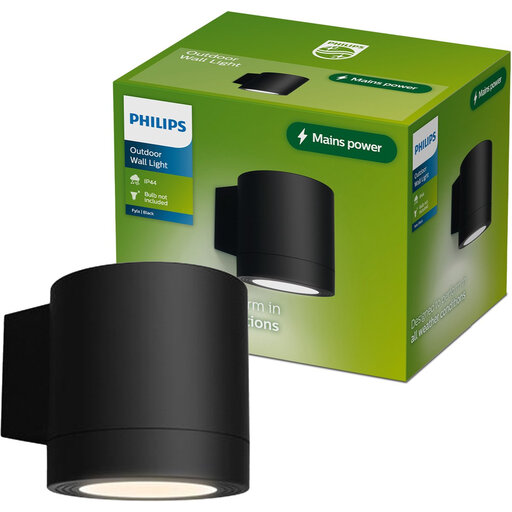
Why it suits this profile: This aluminium outdoor wall light has a GU10 fitting and is supplied without a spotlight bulb. You can therefore choose the colour temperature and brightness yourself, for example with a dimmable or smart GU10 LED.
The fitting is clearly stated and the light source can be replaced. Bear in mind the IP44 rating: install this light in a sheltered location and use a GU10 bulb with suitable specifications.
Aluminium housing, replaceable GU10 light source, compact size and downward-facing beam.

Why it suits this profile: For a driveway, garage or larger property, this solar floodlight offers three adjustable heads, a stated output of 3000 lumens and a motion sensor with a detection angle of 180 degrees.
The IP65 classification is better suited to an open installation location than IP44. The three modes and adjustable light heads help you direct the light towards the area you want to illuminate.
IP65, 302 LEDs, three adjustable heads, three lighting modes and installation without fixed wiring.
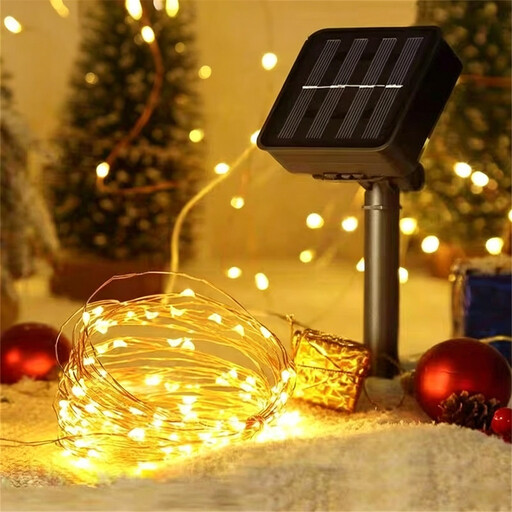
Why it suits this profile: Two 49 ft strings, each with 75 warm white LEDs, are suitable for a pergola, balcony railing, tree or patio edge. Eight modes offer variety for everyday use and special occasions.
The length, number of LEDs and colour temperature are clearly stated. The solar panel needs direct sunlight, so do not place it behind glass or in permanent shade.
Two strings, 150 LEDs in total, warm white light, eight modes and a memory function.
We have put together a complete, up-to-date list of products that fully meet these strict selection criteria and the applicable European safety regulations.
Before buying, check whether you are allowed to drill into the façade, especially if you are renting. For fixed outdoor wall lights connected to the mains, installation by an authorised professional is sensible and often necessary. Use cables, fixings and cable glands suitable for outdoor use, in accordance with the installation instructions.
These maintenance tips can help with solar lighting:
When choosing a branded product, such as Philips outdoor lighting or Brilliant outdoor lighting, focus on the specific product details rather than the brand name alone. For example, a Philips Fylx light with IP44 and a GU10 fitting requires a different installation location from an IP65 solar light.
An LED mains-powered light generally uses less energy than a comparable halogen lamp, but the actual cost depends on wattage, operating time and your energy tariff. Solar outdoor lighting does not use mains electricity while operating, but battery capacity and sunlight levels determine how long the light will work.
The lifespan varies depending on the model, battery, housing and exposure to the weather. An integrated LED is not always replaceable. With a model featuring a replaceable light source, such as a GU10 or E27 bulb, you can replace the light source separately. Also check the warranty and maintenance instructions.
Point the sensor towards the path, front door, garage or driveway and avoid direct sightlines to a busy road. With solar models, position the panel where it will receive as much direct daylight as possible. Test the detection angle after installation and adjust the light if necessary.
