
Vandaag of morgen in huis

Kwaliteit gegarandeerd

Welkomstaanbiedingen ontgrendelen: GRATIS bezorging | Tot 80% korting | Gratis 30 dagen JoyPlus-proefperiode
Download de app
Good outdoor lighting needs to do more than look attractive in a product photo. In the Netherlands, lights have to withstand rain, wind, fluctuating temperatures and sometimes limited sunlight. A low-cost purchase may therefore prove less suitable once installed outdoors.
The most common wrong purchases result from three marketing pitfalls:
The intended use determines which type of light is most suitable:
Also consider the colour temperature. Around 2700 to 3000 K generally produces warm white light for a patio or balcony. Cooler light can be more functional for a driveway or work area.
Lumens (lm) indicate how much light a lamp produces. Wattage primarily indicates energy consumption and does not directly determine brightness.
As a general guide:
Dimmable outdoor lighting gives you greater control during use. Check whether the dimming function is built into the lamp or whether you need a compatible dimmer and light source. With an outdoor GU10 lamp, you will also need to select a compatible LED bulb yourself.
The IP code consists of two digits. The first refers to protection against solid objects, while the second indicates protection against water.
An IP rating does not automatically make a lamp suitable for every location. Do not install an IP44 model where it will be exposed to direct water jets for extended periods. Always follow the manufacturer’s installation and safety instructions.
For a rented property, rechargeable or magnetic lights are practical because you often want to avoid installing cables. A compact table lamp or string light is a better fit for a balcony than a tall path light. For a driveway or rear entrance, lumens, mounting height and a motion sensor are more important than appearance alone.
Solar lighting works without a permanent mains connection, but performance depends on sunlight, season, temperature and battery condition. A USB-rechargeable lamp can therefore be a useful addition. For fixed outdoor wall lights operating at 220–240 V, installation by a qualified electrician is required whenever the product information specifies this.
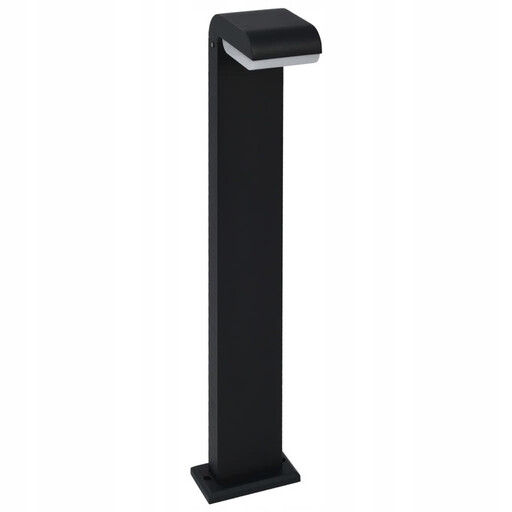
Why This Fits Their Persona: This freestanding lamp is a good match for anyone looking for a permanent lighting point along a garden path or border without having to choose a separate light source.
The integrated LED means you will not need to search for a suitable bulb later. The IP54 rating is clearly stated, but the model should not be installed in an area exposed to direct water jets.
9 W, 550 lm, integrated LED, aluminium housing and a height of 800 mm.
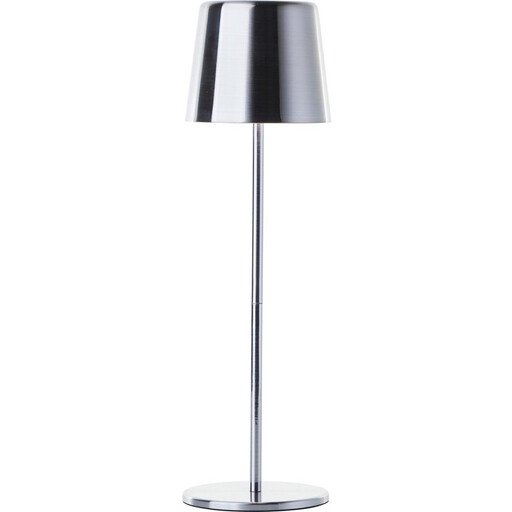
Why This Fits Their Persona: Designed for anyone looking for a rechargeable table lamp with adjustable colour temperature and a metal finish for a patio or balcony.
The specifications state IP44, making it clear that the lamp is splash-resistant and should be placed in a sheltered location. The battery can be recharged via USB.
300 lm, continuously dimmable, CCT from 3000 to 6500 K, integrated battery and touch control.

Why This Fits Their Persona: Suitable for a façade, shed or rear entrance where you want to use a solar outdoor light with daylight and motion sensors.
The lamp specifies two light modes and IP44 protection. According to Philips product information, the solar panel requires direct sunlight; check the installation location in advance.
Warm white light at 2700 K, motion sensor, daylight sensor and solar power without a permanent cable.

Why This Fits Their Persona: This smart solar pendant light is ideal for a balcony, pergola or patio where you want decorative lighting without wiring.
The product details specify solar power and Bluetooth control. However, check that the solar panel receives sufficient daylight and that 100 to 200 lumens is enough for your space.
Bluetooth Mesh, automatic activation in the dark, RGBCCT colours and a stated IP65 water-resistance rating.
We have curated an up-to-date selection of products that align with these practical buying criteria and relevant EU safety information.
For a sheltered location, IP44 may be suitable, as this rating indicates protection against splashing water. For an exposed façade or location subject to greater water exposure, a higher rating may be more appropriate. Always check the installation instructions and do not expose an IP44 lamp to direct water jets.
A solar outdoor light does not use electricity from the mains during normal operation. However, the lamp must receive sufficient sunlight, and the battery may lose capacity over time. Operating time can be shorter during the darker winter months. A USB-rechargeable model provides additional flexibility.
Service life depends on the LED module, battery, temperature, moisture exposure and usage. With integrated LED lighting, the light source often cannot be replaced by the user. Before purchasing, therefore, check whether the lamp is suitable for the intended location, what warranty applies and whether components such as a GU10 bulb can be replaced separately.
