
Vandaag of morgen in huis

Kwaliteit gegarandeerd

Welkomstaanbiedingen ontgrendelen: GRATIS bezorging | Tot 80% korting | Gratis 30 dagen JoyPlus-proefperiode
Download de app
The right outdoor lighting makes your entrance easier to see, creates atmosphere on the patio and helps you mark out a garden path safely. But an attractive product photo isn’t enough to help you make the right choice. A light that’s suitable for a sheltered veranda may not be right for an exposed driveway.
Before you buy, look out for these three common pitfalls:
The IP rating shows how well a product is protected against solid particles and moisture. An IP44 outdoor light is splashproof and suitable for a sheltered wall, balcony or covered patio, for example. Don’t install this type of light somewhere it will be directly exposed to powerful jets of water.
An IP65 outdoor light offers greater protection against dust and jets of water. This rating makes it a more practical choice for an exposed exterior wall, garage, driveway or another location that gets a lot of rain. Always check the installation instructions and the protection rating of the connection, though: the light’s IP rating doesn’t automatically tell you everything about the full electrical installation.
Colour temperature is measured in kelvins:
Also check the number of lumens. A compact garden path light needs less brightness than a floodlight for a driveway. Consider the direction of the light too: an outdoor wall light might shine downwards, spread light all around or highlight an exterior wall. An outdoor ground spotlight is ideal for illuminating a tree, flowerbed or architectural feature, but it won’t automatically prevent dark patches on a path.
A solar garden light works without fixed wiring, but needs an unshaded spot with plenty of daylight. For example, the Aigostar solar stake lights specify a polycrystalline solar panel, a NiMH battery, a charging time of 4 to 6 hours and a stated operating time of 8 to 12 hours. The actual duration may vary depending on cloud cover, shade and the age of the battery.
A mains-powered LED outdoor light generally provides a more consistent level of light, but a fixed connection must be installed by a qualified electrician. If you’re considering a GU10 outdoor light, also check whether the bulb is included. Several Brilliant models have a fitting, but don’t include a bulb.
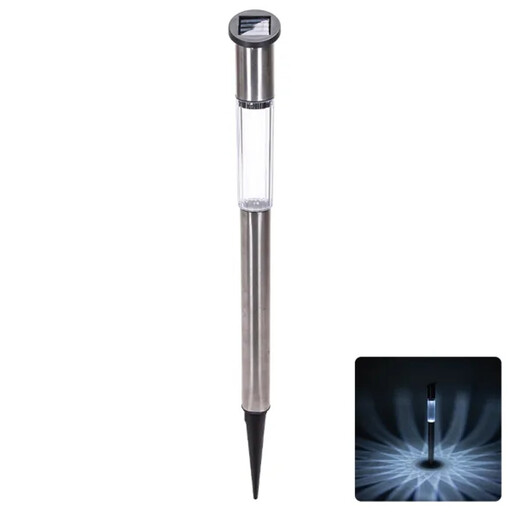
Why it suits this type of buyer: These solar garden lights are easy to push into the ground and don’t need fixed wiring. That makes them a good choice for a first lighting scheme along a garden path or flowerbed.
The specifications state IP44, making it clear that the light is splashproof and not designed to withstand direct jets of water.
Stainless steel housing, 550 mm high, with a solar panel and a stated battery life of 8–12 hours.
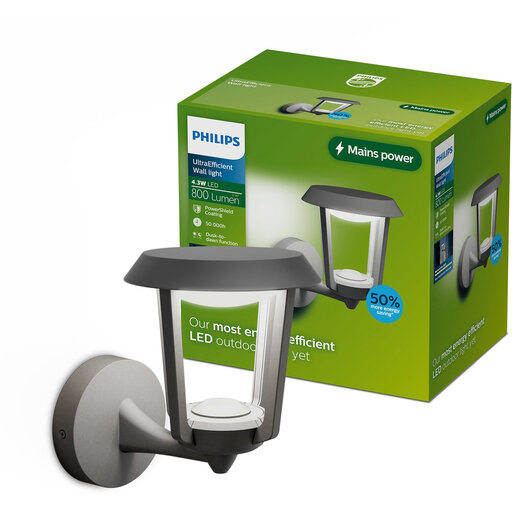
Why it suits this type of buyer: This fixed wall light is ideal for an entrance or exterior wall where you want even, warm light and an integrated LED solution.
The product details specify IP44, 800 lumens and 2700K. So you don’t have to rely on an atmospheric product photo alone.
Integrated LED, 800 lumens, 2700K warm white and a stated lifespan of 50,000 hours.

Why it suits this type of buyer: This solar outdoor light with a motion sensor is designed for a driveway, garage, patio or larger garden where you need plenty of light at certain times.
The listing specifies IP65 and a motion sensor with a stated detection range. For a better chance of charging, make sure the panel is in an unshaded spot.
302 LEDs, a stated light output of 3000 lumens, three lighting modes and three adjustable light heads.
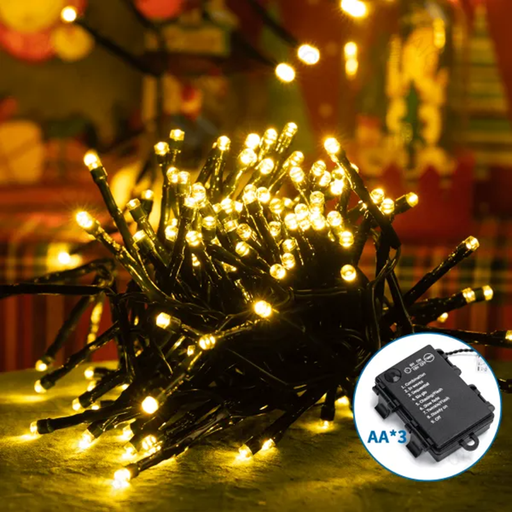
Why it suits this type of buyer: Outdoor string lights are a handy choice for a balcony, pergola, fence or patio where decorative lighting matters more than powerful illumination.
The 5-metre length, IP44 rating and battery power are all specified, making it clear that a sheltered spot is best.
200 LEDs, eight lighting modes, timer and memory functions, and power from three AA batteries.
We’ve put together a complete, up-to-date list of products that meet these strict selection criteria and comply with current European safety regulations.
Yes, IP44 is suitable for splashes and many sheltered outdoor settings, such as a covered veranda, balcony or exterior wall beneath an eaves. For a fully exposed spot that gets a lot of rain or jets of water, a product with IP65 may be a more practical choice. Always check the cable, plug and connection too.
How long they stay lit each evening depends on sunlight, the panel, battery capacity, temperature and lighting mode. Products sometimes state an expected running time or lifespan, but this isn’t guaranteed in every situation. Clean the solar panel regularly and replace the battery when its capacity to hold a charge has noticeably decreased.
LED outdoor lights generally use little energy compared with older types of light source. Consumption depends on the wattage, how many hours the light is on, and whether you use a sensor or timer. An outdoor light with a motion sensor can reduce the number of hours it stays on, while a fixed wall light left on all evening will use more electricity.
