
Vandaag of morgen in huis

Kwaliteit gegarandeerd

Welkomstaanbiedingen ontgrendelen: GRATIS bezorging | Tot 80% korting | Gratis 30 dagen JoyPlus-proefperiode
Download de app
Outdoor lighting makes a garden, balcony, patio, façade or driveway more usable after dark. However, an attractive product photo does not guarantee that a light is suitable for your situation. A small solar panel placed in the shade, an insufficient IP rating or a poorly adjusted motion sensor can quickly lead to disappointment.
As a Joybuy Product Recommendation Officer, I filter product information based on verifiable specifications. Below, you’ll find what to consider when choosing outdoor lighting in 2026, which purchasing pitfalls to avoid and which product types suit different use cases.
The term waterproof is used broadly in product marketing. That is why you should always check the IP code. IP44 means protection against solid objects larger than 1 mm and splashing water from different directions. This rating is suitable, for example, for a sheltered wall, covered area or balcony.
IP65 outdoor lighting offers better protection against dust and low-pressure water jets. This makes it more practical for garden paths, open borders and façades that are regularly exposed to rain. However, IP65 does not mean that you can submerge the light. Also check whether the connections, cables and mounting points are suitable for outdoor use.
More LEDs do not automatically mean that a light will illuminate a larger area effectively. When choosing LED outdoor lighting, look at lumens, which measure the luminous flux. A path light with 10 lumens per unit is intended for orientation and decoration, not for illuminating an entire driveway. Conversely, a powerful motion-sensor light may be too bright next to a seating area.
Also consider the colour temperature. Around 2700–3000 K produces warm white light for atmospheric garden lighting. A higher colour temperature appears cooler and may be suitable for functional lighting, but it does not always complement a patio or flower bed.
Solar garden lighting uses a solar panel and a built-in battery. According to the product descriptions of several models, direct sunlight for multiple hours is required to charge the battery properly. In the Netherlands, cloud cover, short winter days, trees and a north-facing façade can affect the operating time.
For this reason, do not choose the location of solar garden lights based on appearance alone. Check:
Use different lights for different functions:
Solar garden lighting can generally be installed easily using a ground stake. With a fixed wall light, check whether the product is supplied without a light source. A fitting such as E27 or GU10 gives you flexibility, but you will need to purchase a compatible LED bulb yourself.
According to the product information, a wired 230-volt light should be connected by a qualified electrician. Portable USB lights offer greater flexibility, but need to be recharged regularly and are often only splash-resistant.
Measure the space before ordering. A path light approximately 38 to 53 cm high creates a very different effect from a compact wall light measuring 10 to 29 cm. Also consider the distance between lights. Path lights placed too far apart create dark zones, while too many lights can make the overall design look cluttered.
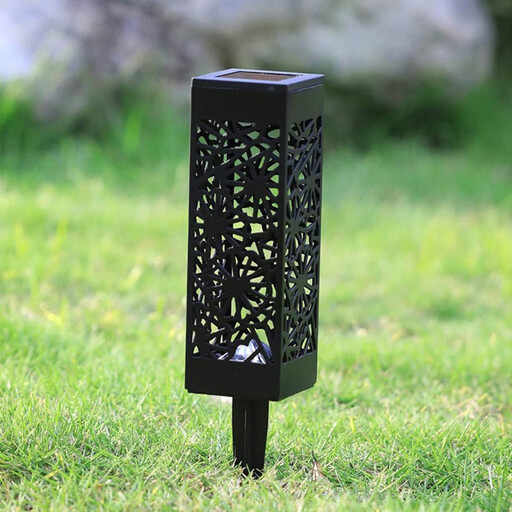
Why This Fits Their Persona: A six-piece set offers a simple way to mark a border, lawn edge or garden path without cables or power sockets.
The product description lists IP65, automatic on/off operation and a stated charging time of 4–6 hours in sunlight. Be sure to place the lights in a sunny location.
Six lights per set, warm-white LEDs and tool-free ground installation.
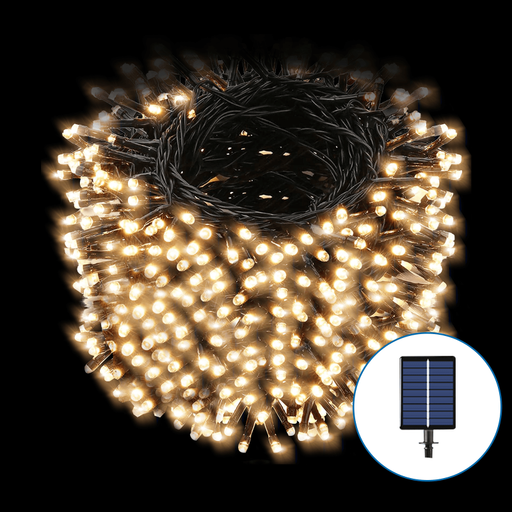
Why This Fits Their Persona: This outdoor string light is ideal for a patio, balcony, pergola or fence where the main priority is decorative illumination.
The product specifications list a 10-metre cable, IP65 protection and eight lighting modes. It is not a substitute for functional lighting near a door or staircase.
100 LEDs, solar power and a 2-metre cable between the panel and the string lights.

Why This Fits Their Persona: Suitable for a driveway, garage, backyard or larger façade area where substantial light is needed temporarily when movement is detected.
According to the product description, the light has IP65 protection, three lighting modes and motion detection up to 60 feet with a 180-degree angle. Check that the selected mounting location receives sufficient sunlight.
Three adjustable light heads, 302 LEDs and a stated luminous flux of 3000 lumens.
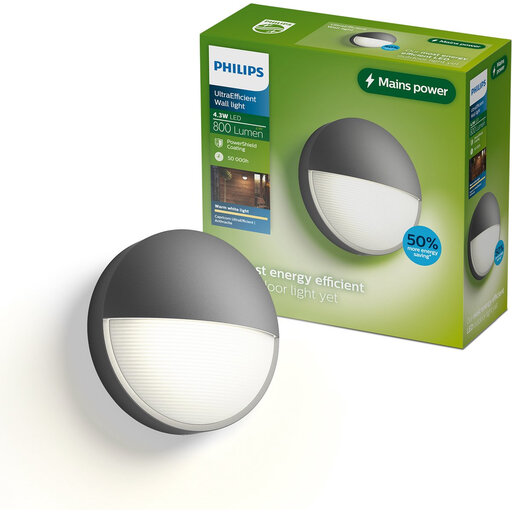
Why This Fits Their Persona: This fixed outdoor wall light suits an entrance, façade or balcony where a permanent connection is preferred.
The product specification lists IP44, not IP65. Use the light in a suitable location and have the permanent connection installed according to the instructions.
Integrated LED, 2700 K warm white light and a stated luminous flux of 800 lumens.
Browse a current selection of outdoor lights with verifiable specifications for different gardens, façades and walkways.
That depends on the location, the panel and the battery capacity. Reduced daylight and cloudy conditions can shorten both charging and operating times. Position the panel as unobstructed as possible and clean it regularly. With solar lighting, do not expect identical performance on every winter evening.
Consumption depends on the wattage, the number of operating hours and the power supply. Solar garden lights do not use mains electricity during normal operation, but their performance depends on sunlight. For fixed LED lights, you can compare energy consumption based on wattage and usage time.
For a sheltered wall or balcony, IP44 may be suitable when the light is protected from splashing water. For more exposed locations, such as an open garden path or driveway, IP65 outdoor lighting offers greater protection against dust and water jets. Always check the complete installation instructions and never use the light underwater.
