
Vandaag of morgen in huis

Kwaliteit gegarandeerd

Welkomstaanbiedingen ontgrendelen: GRATIS bezorging | Tot 80% korting | Gratis 30 dagen JoyPlus-proefperiode
Download de app
Choosing a new outdoor light seems simple, until you realise how many products are only suitable for a sheltered veranda, don’t provide enough light or quickly become less effective in winter. Features are sometimes described more generously than the specifications justify, especially for solar outdoor lights, motion-sensor lights and decorative models.
So don’t focus on looks alone. Before you buy, check the IP rating, light output, power supply and installation requirements. That way, you can choose the right light for your garden, patio, balcony, exterior wall, entrance or driveway.
An IP44 outdoor light is protected against solid objects larger than 1 millimetre and water splashes. That makes it suitable for many sheltered outdoor locations, but it doesn’t automatically mean it can withstand direct jets of water or immersion.
An IP54 outdoor light also offers greater protection against dust. With IP65 outdoor lighting, the housing is dust-tight and protected against water jets, in accordance with the rating. None of these ratings means you can submerge the light in water. Also consider where you’ll install it: a wall light beneath an overhang will face different conditions from one on an exposed driveway.
Wattage mainly tells you how much energy a light uses, not directly how much light it produces. So check the number of lumens. A 550-lumen path light, such as the vidaXL LED Outdoor Lamp, serves a different purpose from a powerful solar floodlight with a stated light output of 3000 lumens.
Warm light of around 2700 to 3000 K can create a pleasant atmosphere on a patio. For a practical entrance or driveway, neutral white light at around 4000 K may be more useful. A colour temperature of 6500 to 7000 K looks much cooler, so check that it suits your home and garden.
A solar outdoor light won’t perform independently of the weather at all times. Its performance depends on direct sunlight, the angle of the solar panel, shade and battery capacity. Don’t install a solar wall light beneath a solid balcony or beside a tall fence if the panel will get very little sun there.
The detection angle also matters for an outdoor light with a motion sensor. A sensor with a wide range can be useful on a driveway, but it may be triggered unnecessarily by passers-by or moving branches.
Use lumens to compare models. For decorative outdoor lighting and outdoor string lights, a soft spread of light is usually more important than maximum brightness. For garden paths, steps and entrances, the light needs to be directed where it’s needed.
Also consider:
A mains-powered LED outdoor light generally provides a steady power supply, but needs a socket or fixed connection. An LED outdoor light with an integrated light source is usually quick to install, while an outdoor light with a GU10 or E27 fitting lets you choose a separate bulb.
A solar outdoor light avoids the need for a fixed electrical connection, but its run time can vary. A rechargeable USB light is a flexible option for a balcony or table, but you’ll need to charge it regularly. Also check that cables, plugs and connections are suitable for the outdoor location where you plan to use them.
Aluminium, metal, plastic and glass each have their own properties. Check the dimensions, weight and fixing method. A ground spotlight or garden post light needs to be firmly secured in the ground. For a magnetic wall light, make sure the mounting plate is secure on a flat surface.
Clean solar panels and sensors regularly with a soft, damp cloth. Unplug outdoor string lights before cleaning them or replacing bulbs. For fixed wall lights, check whether installation by a qualified electrician is required.
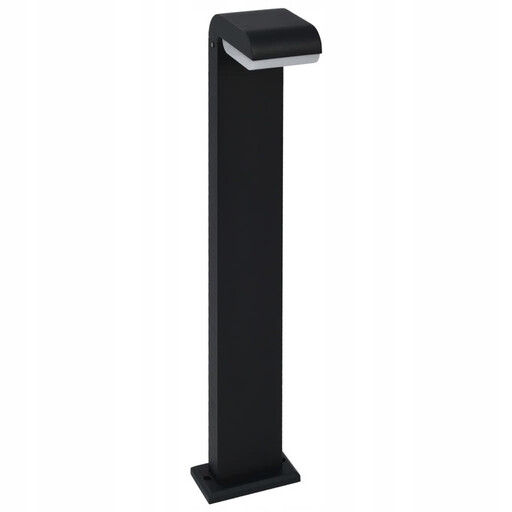
Why it suits this type of user: This compact garden light is designed for a fixed path or border and has an integrated LED light source. At 800 mm tall, it’s easy to see alongside a walkway.
The product details specify 550 lumens, 9 W and IP54. This lets you assess the light output and protection rating clearly, rather than relying on the design alone.
Integrated LED, die-cast aluminium and downward-facing light; suitable for a path or border where you don’t need a socket next to the light itself.
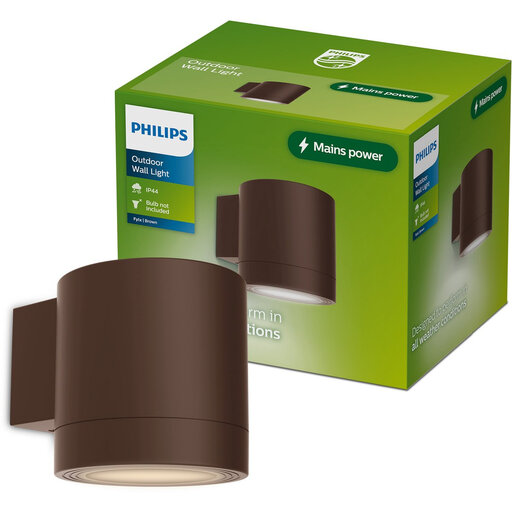
Why it suits this type of user: Ideal if you want to pair a simple outdoor wall light with your choice of GU10 bulb and install it permanently on an exterior wall.
The light is supplied without a GU10 spotlight bulb. This is clearly stated, so you can factor in the extra purchase and choose your preferred light colour and brightness.
GU10 fitting, aluminium housing, replaceable light source and IP44 protection, according to the product details.

Why it suits this type of user: Ideal for a driveway, garage or large garden where wireless, directional lighting and motion detection are important.
The specifications state a range of 60 feet, a 180° detection angle, three lighting modes and IP65. However, check that the installation spot gets enough direct sunlight.
Three adjustable light heads, a stated output of 3000 lumens, solar power and a 1800 mAh lithium-ion battery.
We’ve put together a complete, up-to-date list of products that meet these strict selection criteria and the applicable European safety regulations.
IP44 may be suitable for a sheltered exterior wall, balcony or patio. For a more exposed location, it’s worth considering a higher level of protection, such as IP54 or IP65. Always check the installation instructions and avoid direct contact with water if the manufacturer advises against it.
A solar outdoor light doesn’t use mains electricity while it’s on, but its practical value depends on the purchase price, battery performance and the amount of sunlight it gets. In dark or cloudy conditions, the run time may be shorter. A mains-powered LED light generally uses little energy, but still runs on electricity.
Lifespan varies depending on the model, how long it’s used, heat dissipation, battery and exposure to moisture. With an integrated LED, the light source often can’t be replaced by the user. With a GU10 or E27 outdoor light, you can replace the bulb separately. So don’t just check the stated lifespan; also find out whether the light and battery can be maintained.
