
Vandaag of morgen in huis

Kwaliteit gegarandeerd

Welkomstaanbiedingen ontgrendelen: GRATIS bezorging | Tot 80% korting | Gratis 30 dagen JoyPlus-proefperiode
Download de app
Outdoor lighting can instantly make a patio, balcony, garden path or entrance more inviting. But sometimes a product doesn’t live up to expectations in practice. A solar light may give off less light after a cloudy day, a cordless lamp may not be suitable for rain, or a mood light may use more batteries than expected.
As a Joybuy Product Recommendation Officer, I focus on details you can check: dimensions, brightness, battery type, controls and protection against moisture. That way, you can compare outdoor lights based on practical features rather than appearance or marketing claims alone.
Check the IP rating. A light with IP44 is protected against splashes and solid objects larger than 1 millimetre. This makes it suitable for many sheltered patios, balconies and gardens. However, IP44 doesn’t mean the light can be submerged or withstand direct jets of water.
So don’t place a water-resistant light in a puddle, beneath a leaking roof edge or somewhere it will be hit directly by a garden sprinkler.
A solar lantern charges in daylight. In the UK, cloud cover, short days, shade from trees and dirt on the panel can all affect how long it stays lit. So a stated running time isn’t guaranteed every evening.
When choosing solar garden lighting, look for:
According to the product description, the black Solar Lantern has an amorphous solar panel and a 1,2 V AA 300 mAh Ni-MH battery. It uses one warm yellow LED and has an on/off switch.
Colour temperature is measured in Kelvin (K). At around 2700–3000 K, the light looks warm and works well for atmospheric garden or patio lighting. At around 4000 K, it looks more neutral and is more practical for an entrance or path.
Brightness is usually measured in lumens (lm). A decorative light with a low lumen output is designed to create atmosphere, not to illuminate an entire garden path. So don’t just look for “LED”: check the lumen output and whether it suits the way you plan to use the light.
A solar light is handy if you don’t want to run a cable. It charges by itself, but needs enough daylight. A rechargeable USB light gives you more control: charge it indoors beforehand, then move it wire-free to a table, balcony or veranda.
A battery-powered light is flexible, but check which type of battery it needs and whether batteries are included. If you use it often, the cost of replacements can add up.
An outdoor light with a motion sensor only switches on when it detects movement. That’s useful for a driveway, shed or garden path. Check the detection angle and where you’ll place it. According to its specifications, the Brilliant Magua light has a 120° motion sensor.
For a dining table or a corner of the balcony, a light that stays on is often more pleasant. A touch dimmer or choice of colours can give you more control than a sensor.
Measure the space before you order. A 26 cm-high lantern won’t fit on every windowsill, and a standing lamp could topple on uneven ground. Also check the material:
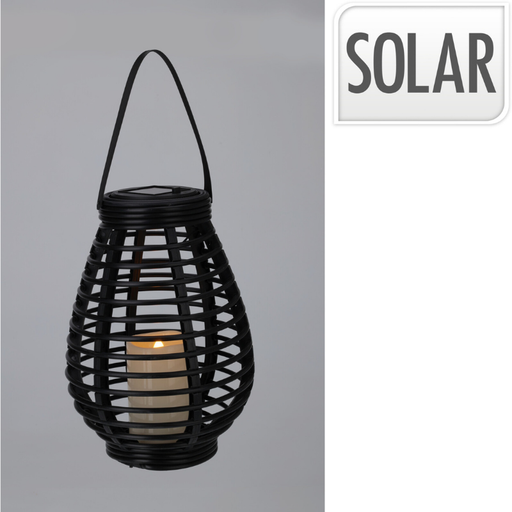
Why it suits this profile: This compact solar lantern is a good choice if you want to add warm light to a patio, garden path or balcony without using cables. Its dimensions are clearly stated, and it has a simple on/off switch.
The description specifies the solar panel, battery and warm yellow LED. This helps you judge in advance that it’s designed for soft ambient lighting rather than practical path lighting.
Amorphous solar panel, 1,2 V AA 300 mAh Ni-MH battery, one warm yellow LED and dimensions of 18 x 18 x 26 cm.
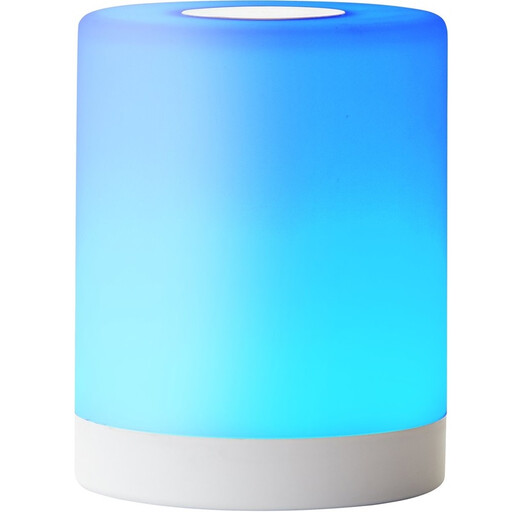
Why it suits this profile: This freestanding cordless lamp is ideal if you want to adjust the colour, brightness and position of the light on a patio, balcony or table.
The IP44 rating is clearly stated. The lamp is splash-resistant, but it isn’t designed to be submerged or exposed to severe weather.
1W integrated LED, 140 lumens, 3000K, RGB function, touch dimmer, USB charging and an 18650 lithium-ion battery.
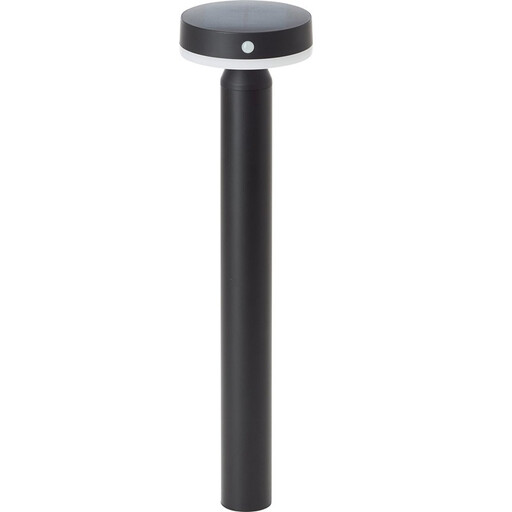
Why it suits this profile: This taller solar outdoor light is designed for an entrance, driveway or garden path, where a motion sensor and more neutral light can be useful.
The product specifications state both the 350-lumen output and the 120° motion sensor. IP44 is also listed, making it clear that the light is protected against splashes only.
50,2 cm high, 350 lumens, 4000K, integrated LED, solar-powered, motion sensor, and a metal and plastic housing.
We’ve put together a complete, up-to-date list of products that meet these strict selection criteria and the applicable European safety requirements.
How long it stays lit depends on the battery type, charge level, amount of daylight and selected light setting. A stated running time, such as up to 6 hours for some models according to their descriptions, is a product specification based on certain conditions, not a guaranteed daily result.
Sometimes, if it’s in a sheltered spot. However, IP44 protects against splashes, not submersion, direct jets of water or every type of weather. Always follow the safety warnings for the specific product. In freezing, stormy or persistently wet weather, it’s sensible to bring the light indoors if possible.
Solar and rechargeable lights don’t draw power from a mains socket while they’re on. With a solar light, the main costs are the purchase price and any replacement batteries. For a USB light, power consumption depends on the battery capacity and how often you recharge it. A dimmable light may also use less energy at a lower brightness setting.
