
Vandaag of morgen in huis

Kwaliteit gegarandeerd

Welkomstaanbiedingen ontgrendelen: GRATIS bezorging | Tot 80% korting | Gratis 30 dagen JoyPlus-proefperiode
Download de app
Buying a new lamp for the garden, exterior wall or balcony seems straightforward. Yet many purchases fail to live up to expectations. The lamp gives off less light than expected, the battery runs flat after a few dark days, or the fitting turns out not to be suitable for the place where you want to hang it.
With this practical guide, you can compare outdoor lighting based on the features that really matter: light output, power supply, motion sensor, IP protection and installation. This makes it easier to choose between solar outdoor lighting, an outdoor lamp with a motion sensor, a solar wall light or smart garden lighting.
A high number of LEDs does not automatically mean that a lamp will brightly illuminate a large area. Pay particular attention to the light output in lumens and the colour temperature. A 170-lumen lamp is suitable for atmospheric terrace lighting, while 1,000 or 3,000 lumens is more appropriate for a driveway, entrance or larger area of the garden.
With decorative lighting, such as a string light, the number of LEDs is mainly relevant to the distribution and lighting effect. For example, the M.TK Meteor Shower Lights have 192 multicoloured LEDs spread across eight hanging points. This makes them suitable for a decorative display, but not as the primary lighting for a pathway.
A product description may use terms such as weather-resistant or waterproof, but always check the IP rating. An IP44 outdoor lamp is protected against splashing water from different directions. That is not the same as being resistant to direct water jets or immersion.
IP44 is generally suitable for a sheltered exterior wall, balcony or covered terrace. For an exposed location with heavy rain or splashing dirt, IP65 outdoor lighting is a more suitable specification. IP65 does not mean that the lamp can be used underwater either.
A solar garden light only works effectively when its panel receives enough direct sunlight during the day. If you place the lamp under a solid canopy, next to a tall fence or in a north-facing location, its operating time may be shorter in practice.
Therefore, check:
Lumens indicate how much visible light a lamp produces. Use the following as a practical guide:
Colour temperature is measured in kelvin. Warm white light around 2700 to 3000 K creates a softer look. Cooler light can be more functional, but often appears harsher in a domestic setting. An LED outdoor lamp with an integrated light source is usually compact and energy-efficient, but check whether the LED can be replaced. This is not possible with many models.
Solar outdoor lighting does not require a permanent cable and is useful for rented homes, balconies and locations without a power socket. Performance does, however, depend on sunlight, battery capacity and the number of times the lamp is activated.
A lamp with USB charging offers greater flexibility in cloudy weather. Mains-powered lighting provides more consistent brightness, but requires a permanent connection. With a 230V wall light, such as some E27 models, installation must be carried out by a qualified electrician in accordance with local regulations.
An outdoor lamp with a motion sensor is practical by a front door, garage or driveway. Pay attention to the detection range and adjustment options. A sensor prevents the lamp from staying on all night, but it may also respond to pets, moving branches or traffic.
Smart garden lighting with Bluetooth can offer additional features such as colour selection, dimming, schedules and connection to multiple lamps. This is particularly useful if you want to control different areas of the garden. For simple orientation lighting only, a basic solar lamp is often sufficient.
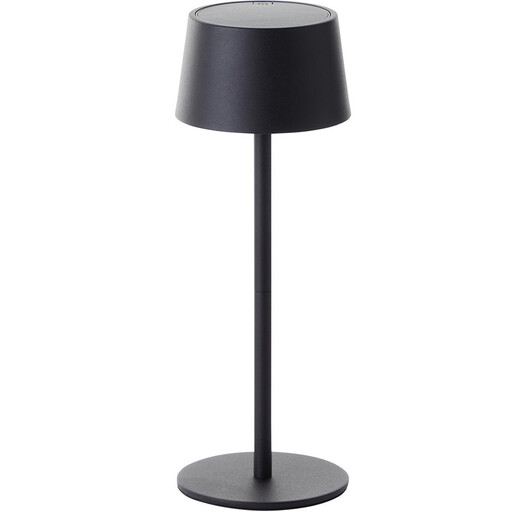
Why it suits this profile: This freestanding lamp is suitable for a balcony, table or small terrace. You can charge it using solar power or USB, with no permanent installation required.
The 170-lumen output makes it clear that this is an ambient light, not a security lamp. The USB option reduces reliance on sunny days.
3-stage dimming function, integrated LED, solar and USB charging, and IP44 splash protection.

Why it suits this profile: This solar wall light combines 1000 lumens with a motion sensor and two lighting modes. It is therefore suitable for an entrance, exterior wall or driveway where functional light is needed.
The stated light output makes its intended use clearer than the number of LEDs alone. Do bear the IP44 rating in mind: do not immerse the lamp or expose it to direct water jets.
1000 lumens, warm white light at 3000 K, daylight and motion sensor, and installation without permanent wiring.
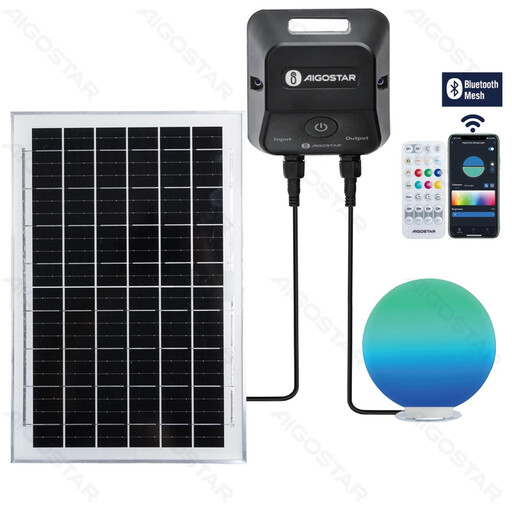
Why it suits this profile: This smart solar garden light is designed for users who want to control multiple light points. According to the product specifications, Bluetooth Mesh supports linking more than 200 devices.
The IP65 rating offers greater protection against dust and water than IP44. Even so, place the solar panel somewhere with sufficient daylight.
RGB+CCT lighting, brightness control, scheduling function, 120° beam angle and a stated battery life of up to 24 hours.
We have put together a complete, up-to-date list of products that fully meet these strict selection criteria and the applicable European safety regulations.
Mount a wall light on a stable surface and check beforehand where cables or pipes run. A fixed 220-240V lamp with an E27 fitting, such as a classic Brilliant wall light, is supplied without a light source. You can then choose a suitable LED bulb yourself, but the electrical connection must be carried out by a qualified installer.
Clean solar panels and sensor windows regularly with a soft cloth. Check screws, mounting plates and seals after stormy weather. With a magnetic lamp, the surface must be flat, clean and sufficiently magnetic. Place freestanding terrace lighting on a stable table, not on an edge where the lamp could easily fall.
For sheltered outdoor locations, IP44 is often suitable: the lamp is protected against splashing water. For a more exposed location, IP65 may be more practical, as this rating indicates protection against dust and water jets. Neither rating is intended for immersion.
Solar lamps do not use electricity from the mains while charging. This can keep running costs low. However, operating time and brightness depend on sunlight, battery capacity, temperature and the selected lighting programme. A lamp with a USB charging function provides an alternative on darker days.
Lifespan varies according to the product and the conditions in which it is used. Integrated LEDs sometimes have a stated lifespan, such as 10,000 or 30,000 hours. The battery, housing, seals and installation also affect the overall service life. Therefore, do not check only the LED specification; also look at the warranty, IP rating and whether parts can be replaced.
