
Vandaag of morgen in huis

Kwaliteit gegarandeerd

Welkomstaanbiedingen ontgrendelen: GRATIS bezorging | Tot 80% korting | Gratis 30 dagen JoyPlus-proefperiode
Download de app
Outdoor lighting needs to suit the location, how it will be used and the British weather. A light for creating ambience on a balcony has different requirements from driveway lighting or an outdoor light with a motion sensor by the garage. Yet many models look similar in online shops. As a result, you may sometimes pay for features you do not use, or choose a light that quickly causes problems in the wrong location.
A high lumen count sounds appealing, but more light is not always practical. For a patio, 170 to 300 lumens is often enough to create a soft ambience. More light can be useful for a driveway or dark garden. Also consider the light colour: 2700K to 3000K generally gives a warmer appearance, while 5000K to 7000K looks whiter and brighter.
Also check whether the light is distributed in a focused way. An adjustable lamp head or multiple light points can make more difference for driveway lighting than simply choosing a higher lumen figure.
The IP rating is more important than a general marketing term such as water-resistant. IP44 protects against splashing water and is often suitable for a sheltered wall, balcony or patio. Do not place this type of light where it will be exposed to direct jets of water, puddles or prolonged periods of severe weather.
IP65 offers greater protection against dust and water jets. This makes an IP65 outdoor light more suitable for an exposed wall, garage or garden fence. However, the rating does not mean that the light can be placed underwater. Always check the installation instructions.
A solar wall light or solar garden light needs direct daylight to charge its battery properly. A north-facing wall, dense tree or covered area can reduce its operating time. According to the product descriptions of many solar products, charging and operating times depend on sunlight, the season and weather conditions. So do not just look at the advertised operating time. Also consider:
Choose IP44 for sheltered outdoor locations, such as a covered balcony, a patio beneath an awning or a wall with limited exposure to rain. An IP65 outdoor light is better suited to open, damp locations where dust and rain come into more direct contact with the housing.
Also pay attention to the difference between a bulb and a fitting. An outdoor wall light with a GU10 or E27 fitting is sometimes supplied without a light source. You will then need to fit a suitable LED bulb yourself, with the correct fitting and wattage.
Solar outdoor lighting does not require fixed wiring and is practical for rented homes, gardens and areas without a power socket. Its performance does depend on the amount of sunlight available. Rechargeable USB table lamps offer more control: you can charge them indoors and then use them on the patio.
A fixed mains-powered LED outdoor light provides a predictable operating time, but it must be installed safely. If in doubt, have a hardwired outdoor wall light connected by a qualified installer.
A motion sensor is useful by an entrance, shed or driveway. Check the detection range, detection angle and whether the light only activates in darkness. For outdoor mood lighting, dimming settings, RGB functions or multiple light modes are more practical than a bright sensor light.
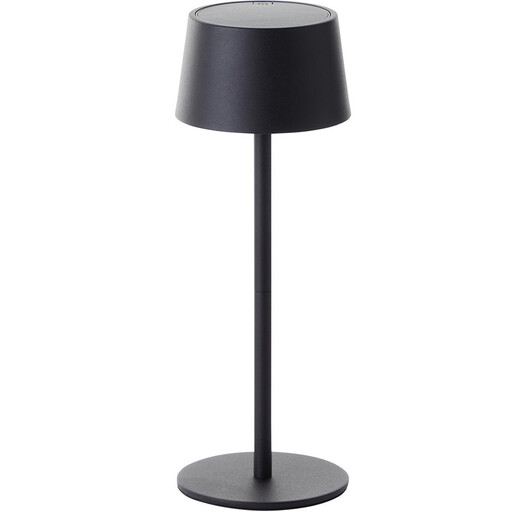
Why it suits this profile: This compact lamp works via solar power or USB and can be used freestanding on a balcony, patio or garden table.
The specifications clearly state 170 lumens, IP44 and two charging methods. This makes it clear that it is an ambient light rather than a powerful security light.
Solar and USB; three dimming settings; integrated battery; IP44 splash protection.

Why it suits this profile: A practical choice for an entrance or wall where you want to combine solar power, sensor control and a higher light output.
The product description lists two light modes, a motion sensor, dusk sensor and 1000 lumens. This makes the features easy to compare in concrete terms.
3000K warm white light; integrated LED; no mains power or wiring required; IP44.

Why it suits this profile: Designed for large gardens, garages, patios and driveways where wide light coverage and motion detection are important.
The product specifications list IP65, three light modes, three adjustable heads and a 180-degree detection angle. This makes its intended use clearer than a claim about “powerful lighting” alone.
3000 lumens according to the product listing; 60-foot detection range; IP65; installation without wiring.
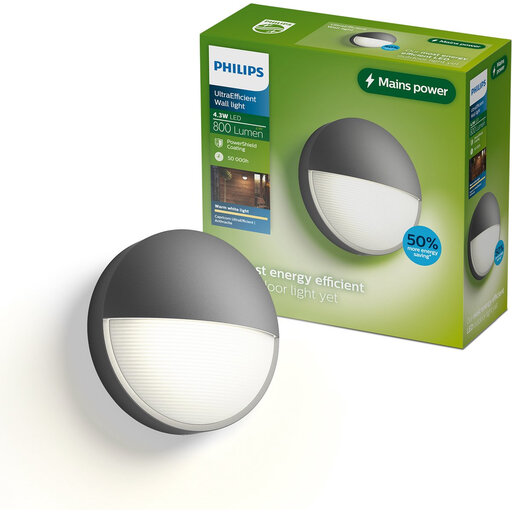
Why it suits this profile: Suitable for anyone looking to install a fixed LED outdoor light with an aluminium housing and warm light by a wall.
The fitting is integrated and the IP rating is listed as IP44. Bear in mind that this model requires professional mains installation.
800 lumens; 2700K; aluminium and plastic; integrated LED; IP44.
We have put together a complete, up-to-date list of products that fully meet these strict selection criteria and the applicable European safety regulations.
Place a solar wall light where the panel will receive as much direct light as possible. Clean the panel and sensor regularly with a soft, slightly damp cloth. Do not use harsh cleaning products, and do not submerge IP44 or IP65 lights.
For a fixed outdoor wall light, the power must be switched off before you begin the installation. Also check that the wall is suitable for the supplied fixings. If you are unsure about wiring or earthing, using a qualified installer is the safest option.
For a sheltered location, IP44 is often suitable. For an exposed wall, garage or location with more dust and direct rain, IP65 provides greater protection. Always check the specific installation instructions.
Solar outdoor lighting does not use mains electricity while it is operating. However, the light needs sufficient daylight and may run for less time in cloudy weather or during short winter days. A USB-rechargeable model is a practical addition when solar charging is not sufficient.
Lifespan varies according to the model, battery, operating time and weather conditions. With integrated LED, the light source usually cannot be replaced by the user. A light with a GU10 or E27 fitting offers greater flexibility, as the light source can be replaced separately.
