
Vandaag of morgen in huis

Kwaliteit gegarandeerd

Welkomstaanbiedingen ontgrendelen: GRATIS bezorging | Tot 80% korting | Gratis 30 dagen JoyPlus-proefperiode
Download de app
Good outdoor lighting needs to suit the location, how you’ll use it and the local weather. A light for a covered balcony has different requirements from one beside a driveway or a wall light exposed directly to the rain. Yet many shoppers focus mainly on the number of lumens, the appearance or the term ‘waterproof’. That can lead to the wrong purchase.
So watch out for these three common pitfalls:
Below, you’ll find a practical guide to the most important specifications, along with some popular choices for different uses.
An IP rating consists of two digits. The first indicates protection against solid objects, while the second refers to water.
An outdoor wall light with IP44 can work perfectly well beneath the eaves. For an exposed wall, a higher level of protection is often more practical.
Lumens indicate how much light a lamp produces. A lower light output works well for ambience, while a higher output is useful by a driveway, garage or back door.
Colour temperature is measured in kelvins:
Solar garden lights don’t need a fixed connection, but they do rely on sunlight. Don’t place the panel beneath a balcony, tree or deep eaves. Clean it regularly with a soft cloth.
Mains-powered lighting provides a more consistent run time, but requires a suitable outdoor connection. Have a fixed-wired GU10 outdoor light or E27 outdoor light connected by a qualified installer in accordance with local regulations.
Also check:
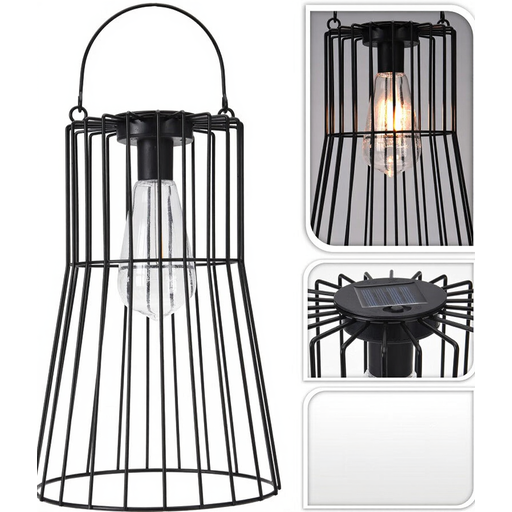
Why it suits this profile: This freestanding or hanging solar light is easy to place on a patio, balcony, windowsill or in the garden. It doesn’t need a fixed connection.
Its flexible placement means you can position the solar panel in a bright spot. Bear in mind that the stated run time depends on how much daylight it receives.
Built-in solar cell, automatic sensor control, metal housing and a stated lighting duration of up to 6 hours after a full charge.
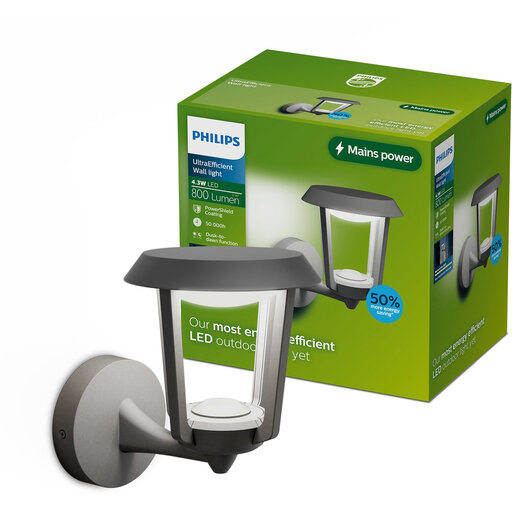
Why it suits this profile: This fixed wall light is ideal for an entrance, exterior wall, balcony or garden where you want warm, even lighting.
The specifications state that it has an IP44 rating and an integrated dusk sensor. It’s best to install the light in a sheltered spot and check the connection requirements beforehand.
Integrated LED, 800 lumens, 2700K warm white light, 4.3W power and an aluminium housing with PowerShield coating, according to the product information.

Why it suits this profile: This solar outdoor light is designed for larger areas, such as a driveway, garage, garden or back path, where you want motion-activated lighting.
The light has an IP65 rating and a stated detection range of 60 feet, with a detection angle of 180 degrees. However, check that the installation spot gets enough sun.
302 LEDs, a stated light output of 3000 lumens, three lighting modes, three adjustable light heads and an 1800mAh lithium-ion battery.
For a balcony or covered patio, a compact IP44 wall light, portable LED light or decorative solar light is often a practical choice. By an exterior wall or front door, you could choose a wall light with a dusk sensor or motion sensor.
For a driveway or large plot, an outdoor light with a motion sensor is more convenient than one that stays on continuously. An outdoor ground spotlight is ideal for highlighting a tree, flower bed or section of an exterior wall. If you choose a plug-in model, check that the socket and cable are suitable for outdoor use.
An outdoor string light is mainly for creating ambience. Choose a model with replaceable bulbs if long-term use and easy maintenance are important to you. Solar string lights are flexible, but their run time varies depending on the season and how much sunlight they get.
If you want a classic light fitting, you could choose a GU10 outdoor light or E27 outdoor light. Check whether the bulb is included. Some fittings are sold without a bulb, so you can choose your own colour temperature, dimmability and brightness.
We’ve put together a complete, up-to-date list of products that meet these strict selection criteria and the applicable European safety regulations.
Its lifespan depends on the type of LED, the battery, the quality of the solar panel and how much it’s exposed to the weather and dirt. Clean the panel and place the light somewhere that gets enough daylight. With lights that have integrated LEDs, the light source usually can’t be replaced separately, so check before you buy.
An LED outdoor light generally uses less power than traditional light sources with a similar light output. Actual energy use depends on the wattage and how many hours the light is on. A motion sensor or dusk sensor can reduce the time it stays on. Solar outdoor lighting doesn’t use mains electricity while in use, but still relies on sunlight to recharge.
No. IP44 protects against splashes of water, but not submersion or powerful water jets. It’s best to use an IP44 outdoor light beneath a covered area or in a sheltered spot. For a fully exposed location, an IP65 outdoor light may be more suitable, provided the installation and connection are suitable too.
