
Vandaag of morgen in huis

Kwaliteit gegarandeerd

Welkomstaanbiedingen ontgrendelen: GRATIS bezorging | Tot 80% korting | Gratis 30 dagen JoyPlus-proefperiode
Download de app
Good outdoor lighting should suit the location, weather conditions and purpose. Do you want to light up a dark driveway, mark out a garden path or mainly create a relaxing atmosphere on the patio? Then looks and the number of LEDs are not the only things that matter. The protection rating, power supply and installation method also determine whether a light continues to work well in practice.
A high lumen count sounds appealing, but more light is not automatically more useful. A bright light on a small balcony can be dazzling, while a subtle path light may not provide enough illumination for a driveway. So consider the combination of light output, beam angle and positioning.
Low-level lights are often sufficient for a garden path. For a garage or back door, an outdoor light with a motion sensor and a wider beam may be more practical.
Not every light designed for outdoor use can withstand prolonged exposure to rain, splashing water or direct jets of water. The IP code consists of two digits:
In practice, IP44 means protection against splashing water. This type of lighting is suitable for sheltered locations, such as a covered patio or a partially protected wall. IP65 offers greater protection against dust and jets of water and is generally more suitable for an exposed garden, driveway or fence. Always check the product description and installation instructions.
Solar lights for outdoors are easy to install, but the solar panel needs sufficient daylight. Under dense foliage, next to a tall north-facing fence or beneath a canopy, the battery may not charge as effectively. This can shorten the operating time in the evening.
Ideally, position solar garden lighting somewhere that receives several hours of direct sunlight. In winter and on dark, overcast days, output may be lower. This is not a fault, but a result of the amount of available light.
For an exposed garden, IP65 lights are a practical choice when the manufacturer confirms that they are suitable for this purpose. IP44 may be sufficient for a covered entrance or balcony. Also consider materials such as ABS plastic, aluminium and glass. Aluminium can provide a robust housing, while plastic is often lightweight and easy to install.
You should always consider a waterproof outdoor lighting claim alongside the specific IP rating. Some products include “weatherproof” or “outdoor” in the title, while the technical specifications only state IP44.
Colour temperature is expressed in Kelvin:
Lumens indicate the total light output. For example, a compact wall light of around 180 to 300 lumens is suitable for an entrance or balcony. A wider 3000-lumen floodlight is more likely to be intended for a driveway, garage or larger outdoor area.
Solar lighting works with an integrated battery and solar panel. Check the stated charging time and operating time, but bear the season and location in mind. A battery-powered light or one with USB charging is more flexible when there is limited sunlight.
Also consider the installation method:
A GU10 wall light may be supplied without a bulb. This allows you to choose a suitable LED bulb yourself, but installation by a qualified electrician is recommended for connection to 230 volts.
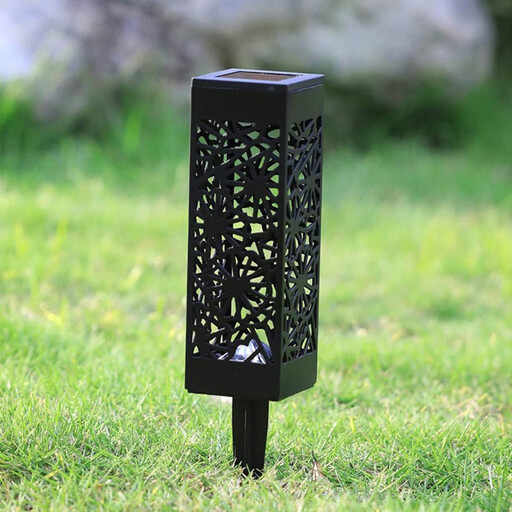
Why it suits this profile: This set is ideal for anyone who wants to mark out a garden path, flower bed or patio without installing cables. Simply place the six lights in the ground in a sunny spot.
The IP65 rating is more informative than a general statement that the lights are suitable for outdoor use. The lights do not need mains electricity, but they do require sufficient sunlight.
Set of six, warm-white LEDs, automatic switching on and off, and a stated operating time of 5–8 hours after a full charge.

Why it suits this profile: For a driveway, garage, patio or larger outdoor area, this solar floodlight provides broad coverage without a permanent power connection.
The specifications state 3000 lumens, three light modes, IP65 and a detection range of 60 feet with a 180-degree angle. When positioning the light, check that the panel receives direct sunlight.
Three adjustable light heads, 302 LEDs, an 1800 mAh lithium-ion battery and wall mounting without electrical wiring.
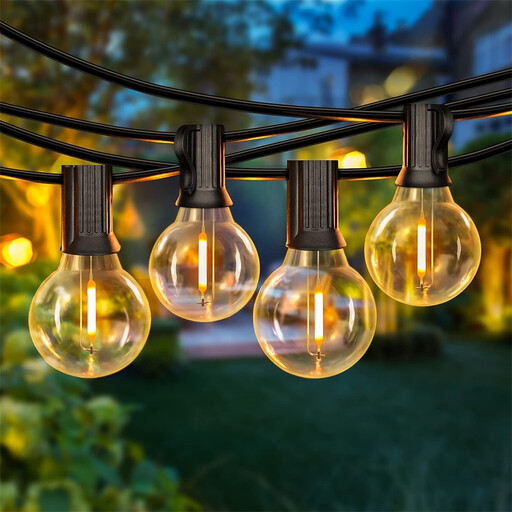
Why it suits this profile: These outdoor LED string lights are ideal for long fences, pergolas, balconies and patios where continuous atmospheric lighting is desired.
The lights use a plug, so you are not dependent on solar energy. However, the product information warns that connections should be kept away from standing water.
30-metre length, 50+2 LEDs, dimming function, timer, multiple light modes and replaceable G40 bulbs. According to the specification, up to 500 lights can be connected.
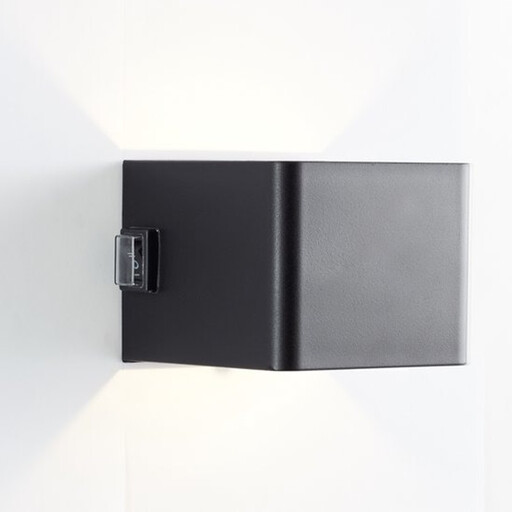
Why it suits this profile: This cordless wall light is handy on a balcony, veranda or sheltered entrance where you do not want to run a cable and may want to reposition the light regularly.
The IP44 rating makes it clear that the light is protected against splashing water, not immersion or direct jets of water. A sheltered installation location is therefore important.
300 lumens, 3000 K, integrated LED, motion sensor, magnetic mounting and USB-C charging. The battery and LED light source are integrated.
We have put together a complete, up-to-date list of products that fully meet these strict selection criteria and the applicable European safety regulations.
Solar garden lighting uses a solar panel and integrated battery. Portable LED lights with a USB-rechargeable battery also work without a permanent connection. For both options, it is important to check the stated charging method and operating time.
IP44 is designed to protect against splashing water and may be suitable for sheltered outdoor locations, such as a balcony, covered area or entrance. For a fully exposed location with heavy rain, a higher IP rating, such as IP65, is generally more practical. Always install the light according to the manufacturer’s instructions.
Usage depends on the wattage, number of lights and operating time. LEDs generally use little electricity compared with traditional light sources. A solar light does not need mains electricity while in use, but its performance depends on sunlight and battery capacity. For mains-powered LED string lights, you can calculate consumption using: wattage × operating hours ÷ 1000.
