
Vandaag of morgen in huis

Kwaliteit gegarandeerd

Welkomstaanbiedingen ontgrendelen: GRATIS bezorging | Tot 80% korting | Gratis 30 dagen JoyPlus-proefperiode
Download de app
Outdoor lighting makes an entrance safer, a patio more usable and a garden more atmospheric. However, an attractive product photo does not guarantee that a light is right for your situation. A solar light, for example, may be of little use on a shady wall, while a wall light with a motion sensor can respond inconveniently if it is aimed at a busy walkway.
So don’t just consider the price or design. Pay particular attention to the IP rating, light output, power supply and installation requirements. This will help you avoid having to buy a replacement after just a few months.
The term waterproof outdoor lighting is often used rather loosely. Always check the IP rating. IP44 means protection against splashing water from different directions, but not against immersion or powerful water jets. An IP44 light should therefore not be left in a puddle or placed directly beneath a roof gutter outlet.
For highly exposed locations, a higher IP rating may be more practical. Also check that the complete light, including its connections and solar panel, is suitable for the intended location.
Solar outdoor lighting only works well if the panel receives enough direct light during the day. As a result, a light beneath a canopy, between tall fences or on a north-facing balcony may not stay lit for as long. Cloudy weather, dirt on the panel and the low winter sun also have an impact.
Pay attention to the difference between charging time and operating time. The VIVREAL solar string lights, for example, specify a charging time of 6 to 8 hours and an operating time of 8 to 14 hours, depending on the weather conditions. These are product specifications, not guaranteed performance for every garden.
Wattage mainly tells you about energy consumption, not directly about brightness. When comparing an LED outdoor light, it is better to look at the number of lumens. A 300-lumen light will produce a different result from a 500-lumen light, even if their wattages appear similar.
Also consider the colour temperature:
For a covered entrance, IP44 may be sufficient if the light is not directly exposed to heavy rain. Always install an outdoor light according to the instructions and securely attach a wall light to a suitable surface. A magnetic light is easy to move, but the mounting plate must be flat, clean and able to support the weight.
An outdoor light with a motion sensor is practical by a front door, garden path or balcony. Check the light output in lumens and see whether the sensor can be switched on and off manually. A sensor that reacts to passing cars or moving branches may switch on unnecessarily often.
The Brilliant Iseo lights list specifications including 300 lumens, 3000 K, a motion sensor and IP44. The light runs on a rechargeable battery and is charged via USB-C. The integrated LED light source cannot be replaced, which is important to factor into your buying decision.
There are roughly four practical options:
For indoor use, you can install an indoor LED strip behind a TV unit, along a bookcase or beneath a cupboard. Check the IP rating carefully: a strip with IP20, such as the Philips Hue Flux, is designed for dry indoor spaces and not for outdoor use.
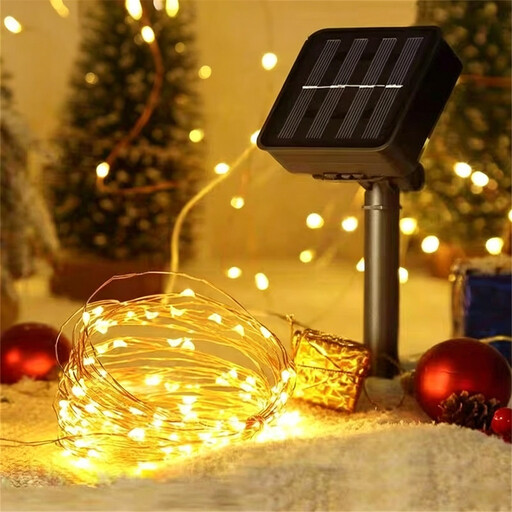
Why it suits this profile: Two solar string lights, each measuring 49 ft and featuring warm white light, offer an easy way to decorate a balcony, patio or shrub without permanent wiring.
The description lists eight lighting modes, a memory function and a solar panel. Make sure you place the panel in direct sunlight; operating time will still depend on the weather.
75 LEDs per string, warm white light, eight modes and two sets in one pack.

Why it suits this profile: This solar wall light is designed for a wall, entrance or patio where automatic lighting is wanted without running a cable to the light point.
The specifications mention a daylight sensor, motion sensor, two modes and IP44. This makes the functions easy to verify; IP44 still means splash protection, not protection against immersion.
Warm white light at 2700 K, integrated LED, two lighting modes and 400 lumens per light point according to the product information.
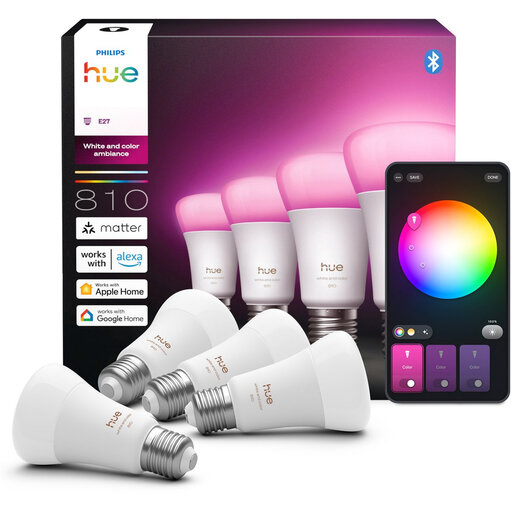
Why it suits this profile: Ideal if you want to control your home lighting centrally and set up multiple rooms or lighting scenes with smart LED lighting.
The E27 fitting and control via a wall switch, app and compatible voice assistants are clearly specified. Check beforehand whether a Hue Bridge is required for the functions you want to use.
Four A60 bulbs, RGBW light, dimming function, up to 810 lumens per light point and Matter support according to the product details.

Why it suits this profile: A large decorative wreath for a door, window, wall or canopy, with built-in lighting and a remote control.
The wreath has two hinged halves, supplied ties and timers. This makes it easier to store than a decoration consisting of one awkward, unwieldy piece.
48-inch diameter, 200 lights, eleven lighting modes, dimming function and three built-in timers.
We have put together a complete, up-to-date list of products that fully meet these strict selection criteria and the applicable European safety regulations.
It can be, provided the panel receives enough direct daylight. Performance depends on the season, cloud cover, shade and the condition of the panel. For a completely shaded location, mains-powered lighting or a rechargeable battery-powered light is often more practical.
IP44 means that the light is protected against solid objects larger than 1 millimetre and against splashing water. It does not guarantee that the light is waterproof when immersed or exposed to direct, powerful water jets. Place an IP44 light in a sheltered position and follow the manufacturer’s instructions.
An LED light generally uses little electricity compared with traditional light sources, but actual consumption depends on wattage, operating time and the number of lights. With smart lighting, features such as automation and standby consumption also play a part. So compare wattage, lumens and the expected number of hours of use before buying.
