
Vandaag of morgen in huis

Kwaliteit gegarandeerd

Welkomstaanbiedingen ontgrendelen: GRATIS bezorging | Tot 80% korting | Gratis 30 dagen JoyPlus-proefperiode
Download de app
Good outdoor lighting does more than make a garden or entrance look attractive. The right outdoor light helps you find your front door, creates a welcoming atmosphere on the patio and can make dark areas around a driveway easier to see. However, outdoor wall lights, solar lights, string lights and LED outdoor lights all have their differences.
Many disappointing purchases come down to three common pitfalls:
An IP code consists of two digits. The first indicates protection against solid particles, while the second indicates protection against moisture.
An IP44 outdoor wall light can work perfectly well under the eaves. For a fully exposed spot, a model with a higher level of moisture protection is more practical.
Lumens indicate the amount of visible light. For atmospheric lighting on an exterior wall or patio, a moderate light output is often more pleasant than a bright beam. A more powerful light may make more sense for a driveway or large garden.
Also consider the colour temperature:
Also look at the beam pattern. A downlight mainly illuminates the wall or ground directly beneath it. A model with several adjustable light heads spreads light across a larger area.
A solar outdoor light works without a fixed mains connection, but its performance depends on how much sunlight it receives and the battery’s charge level. So avoid placing the panel under a solid canopy or on a north-facing wall that is permanently in the shade.
A light with a USB-rechargeable battery is a flexible option for a balcony, shed or temporary location. Check how often it needs charging and whether the magnetic mount is secure enough.
A wired outdoor light must be connected in accordance with the applicable regulations. Have this done by a qualified electrician. Also check whether the bulb is included. E27 and GU10 models often come without a bulb, so you can choose your own LED bulb.
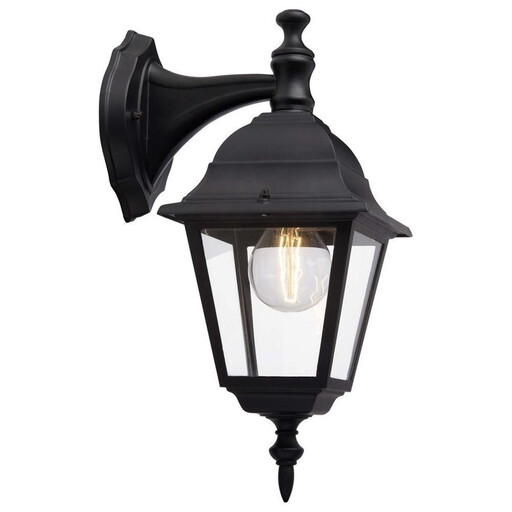
Why it suits this shopper: This wired outdoor wall light has an E27 socket and a classic black design. You can choose a suitable bulb to tailor the light colour and energy use to an entrance, veranda or sheltered patio.
The IP44 rating is clearly stated, so you won’t mistake this model for a light designed for a fully exposed spot. The bulb is not included, and this is clearly noted.
E27 socket, maximum 60 W, externally dimmable with a compatible bulb and dimmer, classic metal design.
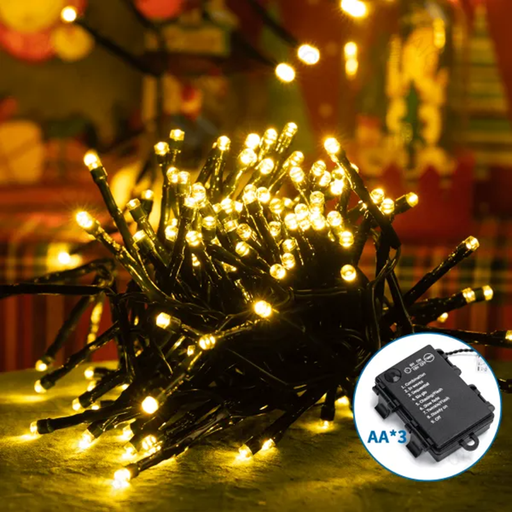
Why it suits this shopper: If you’re mainly looking to create a polished atmosphere on a balcony, patio or under a covered area, these outdoor string lights offer a straightforward solution without a fixed connection.
The length, number of LEDs and IP44 rating are clearly specified. This makes it easier to decide in advance whether five metres and splash protection are right for your space.
5 metres long, 200 LEDs, eight lighting modes, timer and memory function, powered by three AA batteries.

Why it suits this shopper: This solar outdoor light is designed for larger areas such as a garage, driveway, garden or rear path, where wide coverage and automatic activation are useful.
The product listing specifies 3000 lumens, three lighting modes, a detection range of 60 feet and IP65 protection. However, check that the solar panel receives enough direct sunlight each day.
302 LEDs, three adjustable heads, motion sensor with a stated 180° angle, solar-powered and IP65 protection according to the product information.
We’ve put together a complete, up-to-date list of products that meet these strict selection criteria and the applicable European safety regulations.
IP44 may be suitable for a sheltered spot, as long as the light is not exposed to direct jets of water. For an exposed exterior wall, garage or driveway, a higher rating such as IP65 may be more practical. Always check the installation and safety instructions for the specific model.
It depends on where you place it and the time of year. A solar outdoor light needs enough daylight to charge its battery. Position the panel out of the shade and clean its surface regularly. In darker or cloudier periods, the light may stay on for less time.
Energy use depends on the wattage, how long the light is on and the cost of electricity. An LED outdoor light generally uses less energy than a comparable traditional bulb, but be sure to compare the stated wattage and number of hours it runs for. A solar outdoor light doesn’t use mains electricity, but you should still consider the battery and how much sunlight is available.
