
Vandaag of morgen in huis

Kwaliteit gegarandeerd

Welkomstaanbiedingen ontgrendelen: GRATIS bezorging | Tot 80% korting | Gratis 30 dagen JoyPlus-proefperiode
Download de app
Choosing an outdoor lamp may seem straightforward. Yet many people buy a model that gives off less light after just a few weeks, does not suit the wall properly or cannot withstand rain sufficiently. With solar outdoor lighting in particular, expectations about brightness and runtime are sometimes higher than the reality allows.
So do not just look at the design or the number of LEDs. Consider the IP rating, light output, power supply and installation. This will help you make a more informed choice between garden lighting, an outdoor wall light, path lighting or outdoor security lighting.
The number of LEDs does not automatically determine how much light you will see. The relevant measurement is luminous flux in lumens. A decorative solar garden light with 10 lumens may be suitable for subtly marking a border or pathway, but not for brightly lighting a driveway.
For practical lighting by an entrance or garage, models with several hundred lumens are a more logical choice. A larger area may require a stronger outdoor lamp with a motion sensor.
An IP44 outdoor lighting model is protected against solid objects larger than 1 millimetre and splashing water. This makes IP44 suitable for many sheltered walls, balconies and patios, but not automatically for places exposed to direct jets of water or prolonged heavy rain.
IP65 outdoor lighting provides dust-tight protection and protection against water jets according to the classification. Always check the installation instructions as well. Incorrect positioning, an exposed connection or a damaged housing can reduce the level of protection.
Solar garden lighting uses a solar panel during the day to charge the battery. The actual runtime depends on direct sunlight, the season, shade and the condition of the battery. A model that states a runtime of 8 to 12 hours under optimum conditions may run for less time on a dark winter’s day.
Do not place the panel under a canopy, close to a tall fence or beneath trees. Clean the panel regularly and check that the switch is set to “on” before the first charge.
Colour temperature is expressed in kelvin:
As well as colour temperature, pay attention to the number of lumens. Low light output is often sufficient for path lighting, while outdoor security lighting requires more light.
An outdoor lamp with a motion sensor switches on when movement is detected. Do not just check whether a sensor is included, but also consider:
A sensor aimed at a busy pavement or road may switch on more often than you would like. Aim the lamp at the path, driveway or entrance you want to illuminate.
Solar wall lights and solar garden lights are convenient when you do not want to run cables. A USB-rechargeable lamp with magnetic mounting is flexible, but check that the surface is flat, clean and magnetic enough. For a fixed outdoor wall light connected to 230 volts, professional installation is required if you are not familiar with electrical connections.
An E27 or GU10 fitting gives you the freedom to choose your light source and colour temperature. An integrated LED lamp is often compact, but the light source generally cannot be replaced by the user.
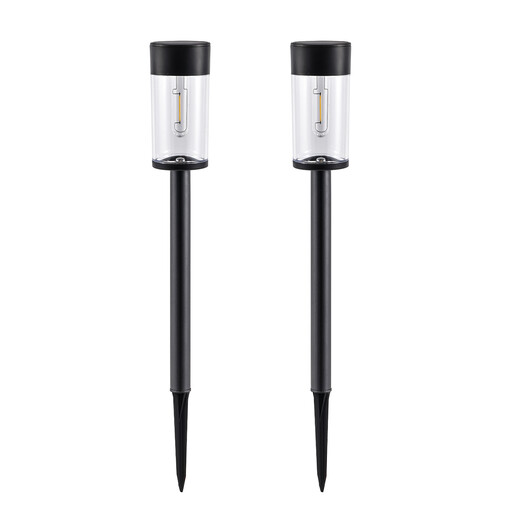
Why it suits this profile: This set is designed to mark garden paths, borders, lawn edges and the edge of a driveway without cables or a fixed connection.
The specifications state 10 lumens per lamp and IP65. This makes it clear that these are primarily atmospheric and directional path lights, rather than powerful area lights.
Two lamps, 3000K warm white light, automatic dusk-to-dawn switching and ground installation with the included stakes.
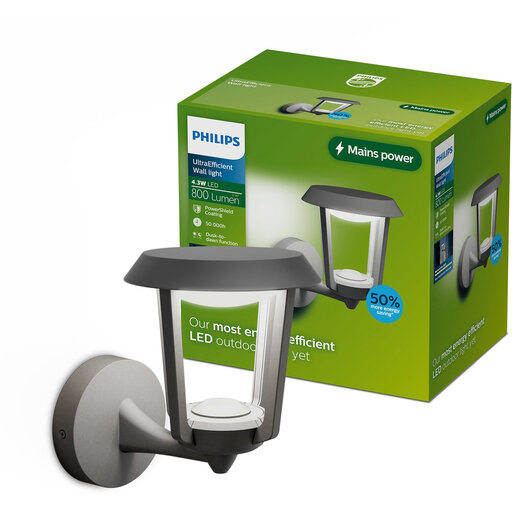
Why it suits this profile: This fixed wall light is ideal for a wall, balcony or patio where a smart appearance and consistent mains-powered lighting are required.
The product details specify 800 lumens, 2700K, integrated LED and IP44. This allows you to assess in advance whether warm wall lighting and splash protection are suitable for the installation location.
Aluminium housing, integrated LED, dusk sensor and a stated light output of 800 lumens.
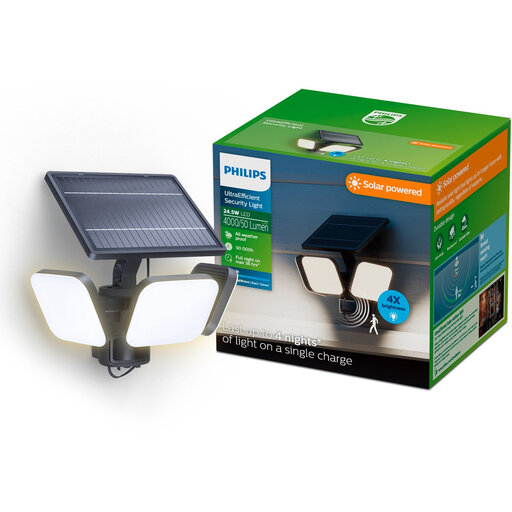
Why it suits this profile: The combination of solar power, an adjustable light head and motion detection is designed for driveways, garages, courtyards and larger outdoor areas.
The stated 4000 lumens and IP65 rating clearly distinguish it from decorative lamps. However, the lamp does require sufficient sunlight and secure installation.
4000 lumens, IP65, a motion detection range according to the product specification and two light modes with an adjustable head.
We have put together a complete, up-to-date list of products that fully meet these strict selection criteria and the applicable European safety regulations.
Check the following before buying:
Runtime varies depending on the model and weather conditions. Manufacturers often state a range based on optimum sunlight. Battery capacity, low temperatures, cloudy weather and dirt on the panel can affect operating time. Clean the solar panel regularly and do not replace a lamp immediately if it runs for less time after a dark day.
An integrated LED lamp generally uses little electricity compared with older light sources. With solar lighting, the energy comes from the solar panel. For mains-powered lighting, consumption depends on the wattage and the number of hours it is switched on. A motion sensor can help ensure that a lamp only switches on when needed.
IP44 is designed for splashing water and is suitable for many general outdoor applications. Preferably, do not place an IP44 lamp where it will be exposed to direct jets of water, puddles or prolonged water exposure. For an exposed wall or harsher weather conditions, a model with IP65 may be a better choice, provided it is installed correctly.
