
Vandaag of morgen in huis

Kwaliteit gegarandeerd

Welkomstaanbiedingen ontgrendelen: GRATIS bezorging | Tot 80% korting | Gratis 30 dagen JoyPlus-proefperiode
Download de app
Good outdoor lighting makes your entrance easier to see, adds atmosphere to your patio and helps you find your way around your home. But an attractive product photo doesn’t guarantee that an outdoor light is right for your needs. Three common pitfalls can lead to a disappointing purchase: insufficient IP protection, a light source that isn’t included, and a solar outdoor light that gets so little sun in a shady spot that it barely charges.
Checking the specifications, power supply and installation requirements can help you avoid disappointment. Read on to find out what to look for and which types of outdoor lights suit different situations.
An outdoor light rated IP44 is protected against solid objects larger than 1 millimetre and splashing water. This makes it suitable for places such as a sheltered exterior wall, balcony or covered area. IP44 doesn’t mean waterproof: don’t install a light with this rating where it will be constantly exposed to heavy jets of rain or a pressure washer.
An outdoor light rated IP65 offers greater protection against dust and water jets. This can be useful on a more exposed exterior wall, driveway or in the garden, but always check the installation instructions for the specific product too.
Some fittings are supplied without a bulb. With a GU10 outdoor light, you choose a suitable LED spotlight yourself, while an E27 outdoor light takes a standard LED bulb with a large screw fitting. This gives you more flexibility over the colour and brightness of the light, but you’ll need to buy the bulb separately.
An integrated LED outdoor light has a built-in light source. This often makes installation easier, but the light source may not be replaceable. Check that the light is suitable for how long you want to use it, and whether its light source can be replaced.
A solar outdoor light doesn’t need a fixed mains connection, but its panel needs enough direct sunlight during the day. In a completely shaded garden, under a balcony or on a north-facing wall, the light may not stay on for long. Cloudy days can also affect how much charge the panel collects.
An outdoor light with a sensor can save energy, but note the difference between a dusk sensor and a motion sensor. The first responds to darkness; the second switches on when it detects movement.
Lumens indicate how much light a bulb produces. A lower lumen output may be enough to create a welcoming glow by your front door. A driveway or dark passage will need more light. For example, the Philips Fyns solar wall light is listed as producing 1,000 lumens with a colour temperature of 3,000 K, which is generally perceived as warm white.
Also check the colour temperature:
A mains-powered wall light runs on 230 volts and should generally be connected by a qualified electrician. This applies, for example, to various GU10 and E27 fittings. Switch off the power before carrying out any maintenance and follow local installation requirements.
Solar and rechargeable lights are easier to install. However, check the position of the solar panel, the charging time and how the light is secured. A magnetic light is convenient, but make sure the mounting plate is firmly attached and suitable for the weight of the light.
Aluminium, glass, plastic and metal are commonly used for garden lighting. Look beyond the material to the finish and where you plan to install the light. Measure the available space on a wall or fence, and take opening doors into account.
For a path, you could use an outdoor ground spotlight or low spike lights. A ground spotlight often directs light towards a tree, flower bed or exterior wall. For an electric model, check that the cable is long enough and that the socket is suitable for outdoor use.
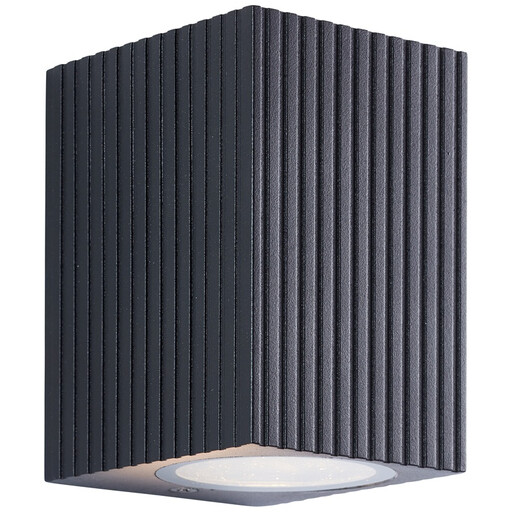
Why it suits this user: This compact fitting is a good choice if you’re looking for a simple outdoor wall light and want to choose the light source yourself. The GU10 fitting lets you add a suitable LED spotlight.
The product information clearly states that the light is supplied without a light source. It’s also rated IP44, so it’s best installed in a sheltered spot, away from direct water jets.
GU10 fitting, aluminium and glass construction, compact size and a maximum of 10 W per light point.

Why it suits this user: This solar wall light is ideal for an entrance, shed or driveway without a mains connection. Its built-in motion sensor and two light modes let you choose between automatic and continuous lighting.
The product specifications state that it’s solar-powered, rated IP44 and fitted with a motion sensor. Make sure you place the panel in direct sunlight; how well it works depends on the charging conditions.
1,000 lumens, 3,000 K, two modes, integrated sensor and no fixed wiring required.

Why it suits this user: This solar outdoor light is designed for larger areas such as a driveway, back garden, garage or patio, where broad light coverage is useful.
The product listing states that it’s rated IP65 and has three adjustable light heads and a 180-degree motion detection angle. Check in advance that the installation spot gets enough sunlight.
According to the product information, it has 302 LEDs, 3,000 lumens, three light modes and a detection range of 60 feet.
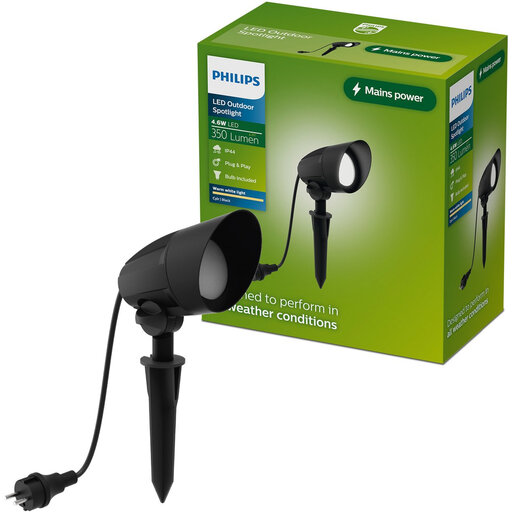
Why it suits this user: This outdoor ground spotlight is designed to highlight a shrub, tree or gate. Its spike fitting makes it relatively easy to move around the garden.
The light comes with a GU10 light source, so you won’t have to find a suitable spotlight unexpectedly. However, its IP44 rating means you should avoid direct water jets and submerging it.
350 lumens, 2,700 K, adjustable spotlight, 1.5-metre cable and a GU10 LED bulb included.
We’ve put together a complete, up-to-date list of products that meet these strict selection criteria and current European safety regulations.
IP44 may be suitable for a sheltered exterior wall or covered area, as long as the light isn’t exposed to direct water jets. IP65 may be a more practical choice for a more exposed spot where the light will face rain and dust. Always check the product instructions and install the light correctly.
No, a solar outdoor light uses a built-in battery that charges via the solar panel during the day. How long it stays lit depends on sunlight, the season, the panel’s position and the selected lighting programme. For constant lighting in a shady garden, a mains-powered light is often more reliable.
A motion sensor can limit how long the light stays on by switching it on only when movement is detected. This can reduce energy use, particularly with a mains-powered LED outdoor light or a battery-powered light. Adjust the detection angle and on-time to prevent unnecessary activation by pets or passing movement.
