
Vandaag of morgen in huis

Kwaliteit gegarandeerd

Welkomstaanbiedingen ontgrendelen: GRATIS bezorging | Tot 80% korting | Gratis 30 dagen JoyPlus-proefperiode
Download de app
Good outdoor lighting needs to do more than simply provide illumination. On a dark driveway, you want clear visibility; along a garden path, you want to avoid tripping; and on a terrace, you are primarily looking for pleasant ambient garden lighting. Even so, there are several common purchasing mistakes that can make a light less suitable than expected.
A high lumen count does not automatically mean that a light will work comfortably in every location. A powerful LED outdoor light may be suitable for a driveway but too bright beside a front door or seating area. You should therefore also consider the light colour, beam direction and installation height.
A path light with 550 lumens, such as the vidaXL LED Outdoor Lamp, directs most of its light downwards. This can be practical for garden path lighting, while a wide-angle solar light may be more suitable for a garage or back garden.
An IP44 outdoor light is resistant to splashing water, but it is not designed for immersion or powerful water jets. IP65 offers greater protection against dust and water jets. Even with IP65 outdoor lighting, correct installation remains important: prevent water from standing on connections or exposed cable joints for extended periods.
Also check whether the light is intended for sheltered outdoor areas. Some IP44 outdoor wall lights work well beneath a canopy but are less suitable for a completely exposed façade.
Solar outdoor lighting uses energy stored during the day. A north-facing balcony, a position beneath a dense tree or a façade with little direct sunlight can reduce operating time. According to the product descriptions of various solar products, direct sunlight is required for charging. Bear this in mind before buying a solar wall light or garden solar light.
Use the IP classification as your first filter:
The IP rating does not tell you everything about frost resistance, installation quality or the lifespan of the light source. You should therefore also review the material, warranty and installation instructions.
Colour temperature is expressed in Kelvin:
Lumens indicate the amount of light produced. For a decorative outdoor string light, ambience is often more important than high light output. For a driveway or large garden area, coverage, sensor angle and light distribution are more relevant.
Choose between:
When choosing an outdoor light with a motion sensor, check the detection range, detection angle and adjustable modes. A sensor aimed directly at a busy street or moving branches may switch on more often than desired.
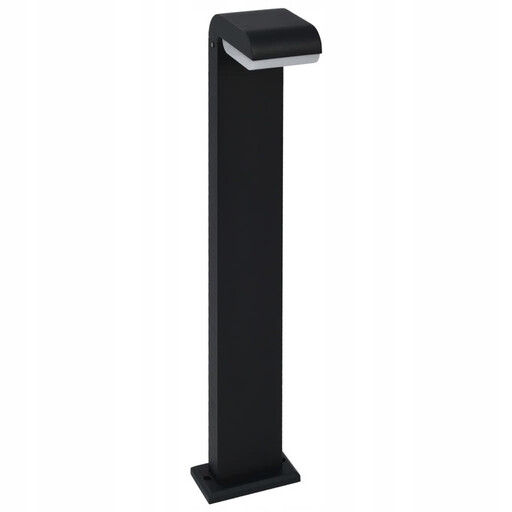
Why it fits: A fixed garden path light for homeowners looking for a simple, modern solution along a path, border or driveway.
The product information clearly states 9 W, 550 lm and IP54. This allows you to compare the light using concrete specifications rather than appearance alone.
Cast aluminium, integrated LED technology and a height of 800 mm. According to the description, the light shines downwards.

Why it fits: For an entrance, terrace or shed where you prefer not to install a power cable and appreciate warm white light.
According to the product specifications, the light has an IP44 rating. This makes it suitable for splashing water, but not for immersion or direct water jets.
Solar power, two lighting modes, a motion sensor and 2700 K warm white light. Installation without permanent wiring is possible.

Why it fits: For a spacious driveway, garage area or back garden where broad light coverage and automatic activation are desirable.
The specifications state a detection range of 60 feet, a 180-degree angle and IP65 protection. However, check that the installation location receives enough direct sunlight.
Three adjustable light heads, 302 LEDs, three modes and a stated light output of 3,000 lumens according to the product listing.
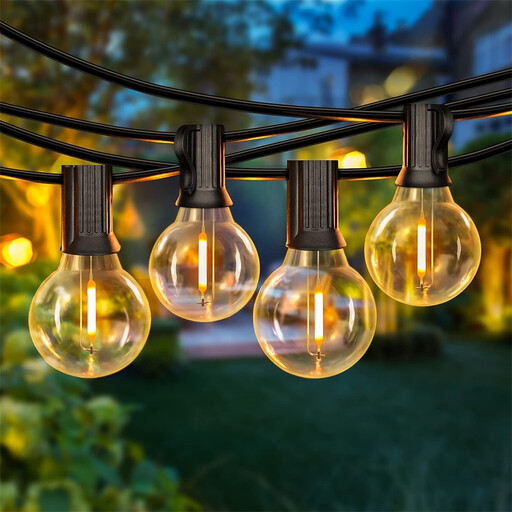
Why it fits: For long terraces, balconies, pergolas and garden parties where continuous warm light is desired.
The product information warns that connections must be kept away from standing water. This is decorative lighting, not underwater lighting.
30-metre length, 50+2 LEDs, dimming function, multiple lighting modes and replaceable bulbs. Power is supplied via a plug.
Explore a current selection of outdoor lighting for terraces, façades, balconies and other outdoor spaces. Compare design, power supply, IP rating and brightness for each product.
Position a solar wall light so that its panel receives direct sunlight during the day. Clean the panel occasionally with a soft, slightly damp cloth. When installing a fixed outdoor wall light, the power must be switched off and the connection must comply with local regulations. Have work involving 230 volts carried out by a qualified electrician.
For garden path lighting, allow sufficient space between the lights so that no dark gaps are created. Also check that ground stakes are firmly secured and do not create a trip hazard. For a magnetic LED outdoor light, attach the mounting plate to a flat, clean surface.
Consumption depends on the wattage and the number of hours the light is on. A 4 W lamp operating for 1,000 hours uses approximately 4 kWh. Sensor lighting and timers can reduce the number of operating hours. Solar outdoor lighting does not use mains electricity, but its performance depends on sunlight and battery capacity.
It can be, particularly on a sheltered balcony, beneath a canopy or at an entrance. IP44 means protection against splashing water, not complete waterproofing. For an open, highly exposed location, a model rated IP54 or IP65 may be a more suitable choice. Always check the complete product description.
Lifespan varies according to the product and operating conditions. An integrated LED is generally not designed to be replaced by the user. With a GU10 or E27 outdoor wall light, you can replace the light source separately, provided you use a suitable bulb within the specified maximum wattage. In addition to the light source, also consider battery ageing in solar and rechargeable models.
