
Vandaag of morgen in huis

Kwaliteit gegarandeerd

Welkomstaanbiedingen ontgrendelen: GRATIS bezorging | Tot 80% korting | Gratis 30 dagen JoyPlus-proefperiode
Download de app
Good outdoor lighting needs to suit the place where you use it. A light for a garden path needs different features from an outdoor wall light by your front door. Yet many buyers focus mainly on appearance or terms such as “waterproof” and “energy-efficient”. As a result, a light may disappoint in practice.
Look out for these three common pitfalls:
Solar outdoor lighting is useful in places where you don’t want to run a cable. A solar wall light or garden path light uses a built-in battery that charges during the day. According to the product descriptions for several Philips models, no connection to the mains is needed. The actual operating time depends on sunlight, the season, panel size and battery capacity.
Solar lighting is particularly suitable for:
A mains-powered light makes more sense when you need reliable light for long periods, for example on a driveway or patio. Models with an E27 or GU10 fitting also give you the flexibility to choose your own LED bulb and light colour. Have the 230-volt connection installed in accordance with local regulations; if in doubt, use a qualified installer.
An IP rating consists of two numbers. The first indicates protection against solid particles, while the second indicates protection against water.
A product title that describes an “outdoor waterproof light” can therefore be misleading if the specification only states IP44. Always check the technical data sheet. Correct installation helps maintain the stated level of protection; fastenings, seals and the position of the fitting are all important.
Lumens indicate how much light a lamp produces. A low light output is often enough for subtle garden lighting. You’ll generally need more light for an entrance, driveway or security-focused application.
Kelvin describes the colour of the light:
Also consider the direction of the light. A downlight mainly illuminates the wall beneath it or the path. A fitting with a diffuse glow spreads light more widely. A motion sensor can be useful by an entrance, but check the detection angle and position the light so it doesn’t unnecessarily detect people passing by.
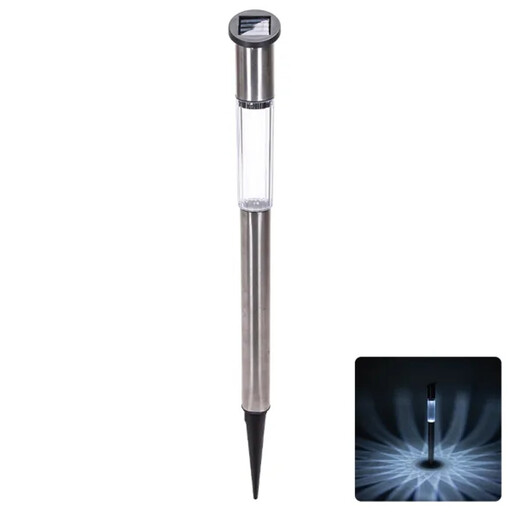
Why it suits this profile: This solar garden path light is cordless and supplied as a single light. That makes it a good choice for a first lighting project along a flower bed or path.
The specifications clearly state that it has a polycrystalline solar panel, a charging time of 4–6 hours and an IP44 rating. Be sure to place the light in a sunny spot; the stated operating time is 8–12 hours under the conditions described.
Stainless steel housing, a 6500K light colour and a height of 550 mm. Suitable for outdoor use without wiring.
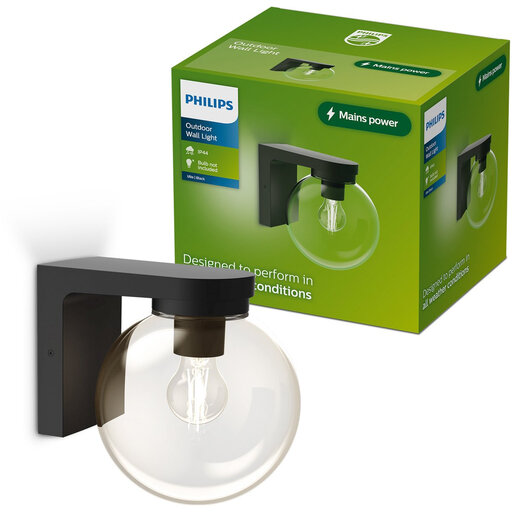
Why it suits this profile: This aluminium and glass wall light is a good fit for an entrance, exterior wall or covered patio. You can choose your own E27 LED bulb, and with it, your preferred light colour.
The fitting is clearly specified as E27, and the light is supplied without a bulb. You’ll know in advance that you need to buy a suitable LED bulb separately.
IP44 protection, diffuse light distribution and a black design in aluminium and glass. The bulb is replaceable.

Why it suits this profile: This solar outdoor light is designed for larger areas such as a driveway, garage, patio or garden. Its three adjustable heads and motion sensor are practical features for targeted lighting.
The product details state IP65, three lighting modes, a 180° detection angle and a stated light output of 3000 lumens. Before installation, check that this level of brightness is right for your surroundings.
IP65 protection, three adjustable light heads and installation without mains power. The manufacturer lists a solar panel and a built-in 1800 mAh battery.
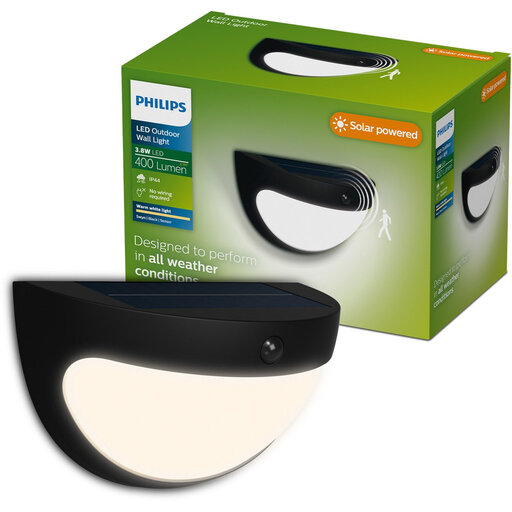
Why it suits this profile: This solar wall light combines warm white light with a motion sensor. It’s a good fit for a front door, balcony or shed where you want automatic lighting without cables.
The product information lists two lighting modes, a daylight sensor, a motion sensor and IP44 protection. Hang the light where the panel will receive direct sunlight, and don’t immerse it in water.
400 lumens, warm white light at 2700K and cordless installation. According to the product description, the light has an integrated LED light source.
We’ve put together a complete, up-to-date list of products that meet these strict selection criteria and the applicable European safety regulations.
A modest light output is often enough for ambient lighting on a patio or along a flower bed. You’ll need more light for an entrance, driveway or motion-activated security light. Always compare the lumen output with the size of the area to be lit and the light distribution you want.
Yes, IP44 outdoor lighting is designed for general outdoor use and protection against splashing water. The light must not be immersed and isn’t automatically suitable for direct water jets. For a very exposed location, IP65 outdoor lighting may be a suitable choice, provided the installation instructions allow for it.
The operating time each night depends on sunlight, charging time, battery capacity and the selected lighting mode. Product information may, for example, state 5–8 or 8–12 hours, but these are product specifications based on particular conditions. In winter and during prolonged cloudy weather, the light may stay on for less time.
