
Vandaag of morgen in huis

Kwaliteit gegarandeerd

Welkomstaanbiedingen ontgrendelen: GRATIS bezorging | Tot 80% korting | Gratis 30 dagen JoyPlus-proefperiode
Download de app
Good outdoor lighting should suit the location, purpose and British weather. A light for creating ambience on a balcony has different requirements from a bright wall light for a driveway. Yet many buyers focus mainly on the design, colour or a high lumen rating. This can lead to problems: the light is not bright enough, the battery runs out quickly or the housing is unsuitable for the chosen location.
A high lumen count sounds appealing, but it does not indicate how widely or narrowly the light is distributed. A 200-lumen light with a wide beam may be more suitable for a garden path than a powerful spotlight that illuminates only a small area. You should therefore also consider the beam angle, mounting height and intended purpose.
For ambient lighting, warm white shades of around 2700 to 3000 K are often pleasant. For a driveway or rear entrance, neutral or cool white light may be more practical. RGB outdoor lighting is particularly interesting for decorative applications; for visibility and orientation, white light is usually the more logical choice.
Solar outdoor lighting does not require mains electricity, but the solar panel needs to receive enough direct light during the day. Under a canopy, next to a high fence or on a north-facing wall, the battery may not charge sufficiently. Also check the stated operating time and charging time. These figures depend on sunlight, temperature, battery age and the selected light setting.
A light with a motion sensor only uses energy when movement is detected. This can extend the operating time, but check that the sensor is not constantly triggered by passing cars, pets or moving branches.
The IP rating indicates the influences against which a product is protected. IP44 indicates protection against solid particles from 1 millimetre in size and splashing water from various directions. This type of water-resistant outdoor light is suitable for many sheltered or standard outdoor locations, but it should not be submerged or exposed to a powerful, direct jet of water.
For an exposed wall or a low position near the ground, IP65 may be a more practical choice. You should also always check the installation instructions, cable entry and charging connector. The IP rating does not automatically apply to an open connection or damaged housing.
An LED outdoor light generally has low power consumption and an integrated or replaceable light source. With integrated LED, there is no separate fitting for installing a different bulb later. This makes installation straightforward, but it also means that the light source cannot simply be replaced if it develops a fault.
Choose between:
A WiFi light such as a WiFi LED light does not automatically work as an outdoor light. According to the product information, the Alecto SMARTLIGHT40 and TP-Link Tapo L530E are intended for indoor use. Only use them outdoors if they are installed in a suitable protective fitting and the manufacturer permits this.
An outdoor light with a motion sensor is useful by a front door, shed or rear entrance. Pay attention to the detection range, response time and whether the lighting duration can be adjusted. With smart outdoor lighting, the protocol and required app are also important. Bluetooth Mesh lighting can connect multiple devices, while a smart light using WiFi connects directly to a network. Check compatibility with Android, iOS, Amazon Alexa or Google Home in advance.
The choices below are based on verifiable specifications from the product information. Brand claims about performance, battery life or weather resistance are not presented as guarantees for every situation.
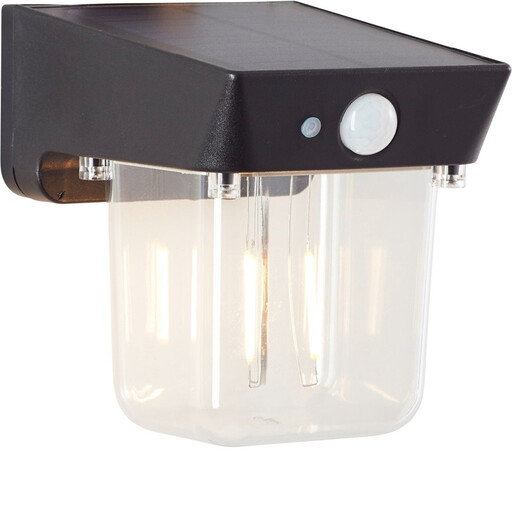
Why it suits this profile: This solar wall light works without fixed wiring and combines LED lighting with a motion sensor for an entrance, balcony or patio.
The specifications state 180 lumens, 2700 K, IP44 and one integrated 18650 Li-ion battery. This makes the basic expectations clear.
Solar power, integrated LED, motion sensor and a compact size of 11.5 × 10 × 11 cm.
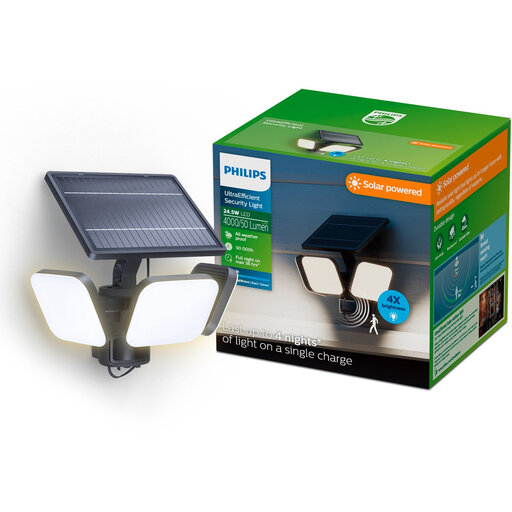
Why it suits this profile: The high light output and adjustable lamp head are suitable for a driveway, large garden or façade where visibility is more important than soft ambient lighting.
The difference between ambient lighting and security lighting is clear here: the product information states 4000 lumens, 5000 K, IP65 and a sensor range of up to 8 metres when approached directly.
IP65, adjustable lamp head, solar power and a stated detection range of up to 16 metres for sideways movement.
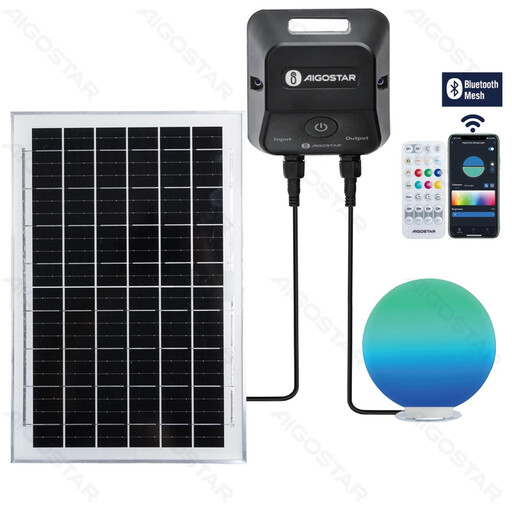
Why it suits this profile: This ground light is designed for garden paths, borders and decorative areas where colour control and linking multiple lights are desirable.
The stated 200 lumens makes it clear that this model is primarily intended for ambient lighting and route accents, not for illuminating an entire driveway.
Bluetooth Mesh for more than 200 devices, RGBCCT lighting, IP65 and a stated battery life of up to 24 hours.
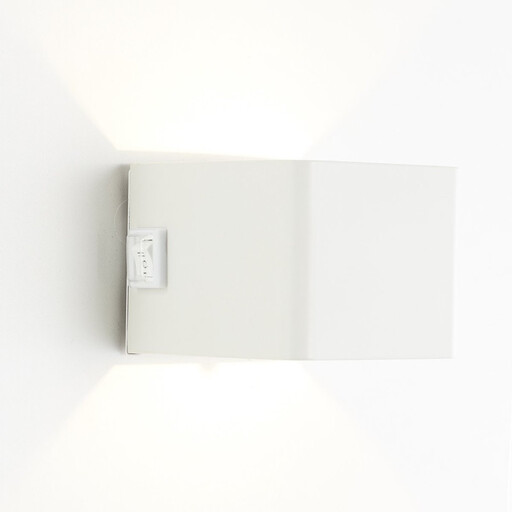
Why it suits this profile: The cordless magnetic mounting is convenient for tenants or locations where drilling and fixed wiring are not desirable.
The product information explicitly states IP44 and protection against splashing water. Do not place the light under a direct jet of water or somewhere it could be submerged.
300 lumens, 3000 K, built-in motion sensor, integrated battery and magnetic mounting.
We have put together a complete, up-to-date list of products that fully meet these strict selection criteria and the applicable European safety regulations.
A solar wall light or cordless battery-powered outdoor light is suitable when wiring is not available. Solar lighting does require a location with sufficient direct sunlight. For a balcony under a canopy, a rechargeable light may be more practical. With IP44 models, check how sheltered the location is and charge the battery according to the instructions.
Lifespan varies by model and operating conditions. Product information for various models states figures of approximately 10,000 to 50,000 operating hours. This is a quoted technical value, not a guarantee of the total lifespan of the complete light. With solar lighting, the battery may wear out before the LED light source.
With a wired light, energy consumption depends on the wattage, operating time and your electricity tariff. A 5-watt light operating for four hours a day theoretically uses around 7.3 kWh per year. Solar outdoor lighting does not use mains electricity, but the purchase price and any battery replacement should still be included in the total cost. A motion sensor or timer can help limit unnecessary operating hours.
