
Vandaag of morgen in huis

Kwaliteit gegarandeerd

Welkomstaanbiedingen ontgrendelen: GRATIS bezorging | Tot 80% korting | Gratis 30 dagen JoyPlus-proefperiode
Download de app
Good outdoor lighting should suit the location, the weather and the way you intend to use it. A lamp for the dining table on the patio has different requirements from an outdoor light by the front door or a powerful lamp with a motion sensor for the driveway.
Yet purchases often go wrong. An attractive design says little about light output, and ‘water-resistant’ does not mean that a lamp can withstand unlimited rain or a powerful jet of water. Use these practical checks to compare outdoor lights based on their specifications rather than marketing language.
An IP44 outdoor light is protected against splashing water and solid particles of a certain size. This makes it suitable for many sheltered patios, balconies and entrances. However, IP44 does not mean that the light can be submerged or withstand direct jets of water.
For an exposed location where the light will receive a lot of rain, a higher protection rating such as IP65 may be more suitable. Always check the safety information for the specific product as well.
Wattage mainly indicates how much electrical power a lamp uses. To determine the amount of light, look at lumens. A small LED outdoor light producing 140 lumens is mainly intended to create ambience. A 300-lumen wall light is more suitable for an entrance or pathway. A wider driveway may require a more powerful floodlight.
Colour temperature determines the appearance of the light:
Solar outdoor lighting only works well if the panel receives enough daylight. In a Dutch garden, shade from a fence, trees and short winter days can affect charging capacity. A USB-charged light or rechargeable outdoor lamp offers greater flexibility in these situations.
When choosing solar products, pay attention to the battery, lighting modes and position of the solar panel. A motion sensor can help to limit energy consumption, but the actual operating time depends on usage and charging conditions.
First decide what the lamp needs to do. For ambient lighting, an outdoor table lamp, a compact fitting or outdoor string lights are often sufficient. For visibility by a door, garage or path, an outdoor LED wall light with a higher light output is more practical.
Integrated LEDs require little maintenance, but on many models they cannot be replaced. An outdoor lamp with a GU10 or E27 fitting gives you the option of choosing or replacing a suitable LED bulb later. Check the maximum wattage and whether the lamp is supplied without a light source.
There are three common options:
Magnetic mounting is quick to install, but check that the surface is flat, clean and strong enough to support the lamp. For a freestanding lamp, a stable, level surface is important to prevent it from toppling over.
Plastic is lightweight and practical for portable lamps. Aluminium, metal and glass can offer a different look and construction, but they also require installation in a location suited to the IP classification. Also check the cables, mounting materials and maintenance instructions.
For claims about lifespan, energy efficiency or weather resistance, always check the technical specifications. Statements made by brands about operation or performance are not a general guarantee for every situation.
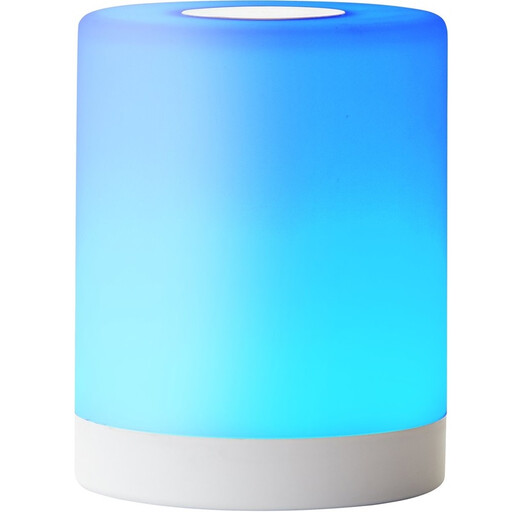
Why it suits this profile: This compact outdoor table lamp is freestanding, USB rechargeable and suitable for a balcony, table or sheltered patio. Its integrated LED produces 140 lumens of warm white light at 3000 K.
The product information clearly states 140 lumens and IP44. The lamp is therefore intended for ambient lighting and protection against splashing water, not submersion or direct jets of water.
Touch dimmer, RGB function, memory function and an integrated rechargeable battery.

Why it suits this profile: This solar outdoor light is intended for an entrance, façade or patio where no power point is available. The product specifications state IP44, two lighting modes and a motion sensor.
The lamp is installed in a location with direct sunlight, so you are accounting in advance for the main limitation of solar lighting. IP44 still only protects against splashing water and is not suitable for underwater use.
400 lumens per light point according to the product information, plus automatic operation via daylight and motion sensors.

Why it suits this profile: This solar floodlight is designed for larger areas such as a driveway, garage, garden or rear path. The product listing mentions three lighting modes, three adjustable heads and broad light coverage.
The specification states IP65 rather than IP44. Nevertheless, check the installation location and keep the solar panel free from dirt and shade.
302 LEDs, a stated light output of 3000 lumens and motion detection up to 60 feet according to the product description.
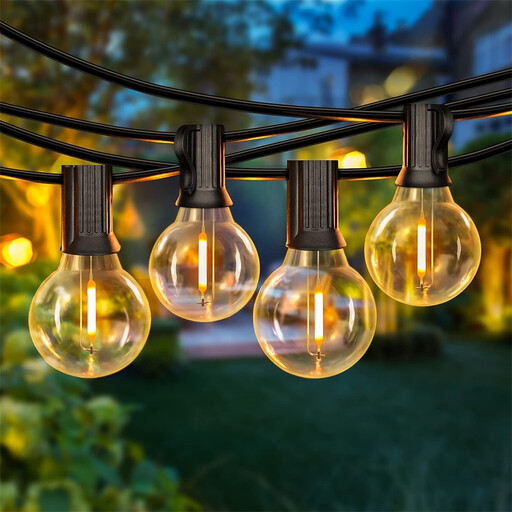
Why it suits this profile: For a patio, balcony, veranda or party venue, these outdoor string lights provide 30 metres of cable with 50+2 LEDs. The mains connection is suitable when you want continuous lighting without having to recharge the lights.
The product information states that the bulbs are replaceable, dimmable and include a timer. Before installation, check that the connections will remain clear of standing water.
30-metre length, multiple lighting modes and replaceable G40 LED bulbs according to the product description.
We have put together a complete, up-to-date list of products that fully meet these strict selection criteria and the applicable European safety regulations.
That depends on the location. IP44 provides protection against splashing water and is often suitable for a sheltered balcony, patio or entrance. For a more exposed location, IP65 may be appropriate. In addition to the IP code, check the manufacturer’s warnings; no classification makes a lamp suitable for submersion unless this is explicitly stated.
Solar lighting does not use mains electricity during normal operation, but performance depends on sunlight, battery capacity and the number of hours the light is on. In shady gardens or during darker periods, a USB-rechargeable outdoor light may be more practical. So compare not only the power source, but also the desired operating time and installation options.
Lifespan varies according to the model, operating conditions and battery. With an integrated LED, you usually cannot replace the light source. A fitting with a GU10 or E27 socket offers more maintenance options, but requires a suitable light source. Check the product specifications and keep the instructions for future maintenance.
