
Vandaag of morgen in huis

Kwaliteit gegarandeerd

Welkomstaanbiedingen ontgrendelen: GRATIS bezorging | Tot 80% korting | Gratis 30 dagen JoyPlus-proefperiode
Download de app
Good outdoor lighting should do more than just create atmosphere. For a driveway, front door or garden path, sufficient light is important for practical use. On a patio or balcony, it's more often about light colour, dimmability and easy installation. Yet many consumers buy an outdoor light based on looks or a striking marketing claim. That can lead to disappointment later on.
IP44 outdoor lighting is protected against solid objects and splashing water. That doesn't mean the light is suitable for submersion, direct water jets or a spot where water can pool for long periods. So check not only the IP rating, but also the manufacturer's installation instructions.
A wall light under an overhang, for example, faces different conditions to a light that's fully exposed on a wall. Cable connections, plugs and junction boxes must also be suitable for outdoor use.
A solar outdoor light doesn't need a mains connection, but the solar panel must receive enough direct light during the day. On a north-facing balcony, under a dense canopy or behind a tall fence, the run time can be disappointing. Cloudy days and the sun's position also affect charging.
Also pay attention to the difference between decorative and functional lighting. A solar outdoor light with 170 lumens is fine for a table, balcony or patio, but won't light up the same area as a model with 400 or 1,000 lumens.
With an LED outdoor light, the light source is sometimes integrated. That saves space and keeps the design compact, but the LED module on some models can't be replaced by the user. With a fitting that takes E27 or GU10 bulbs, you choose your own bulb and can replace or upgrade it later.
So check before you buy:
Light output is given in lumens. For a decorative garden path, a modest light output can be enough. For an entrance, driveway or security function, more light is desirable. Place several lower-output lights if you want even illumination, rather than one very bright source.
Colour temperature is given in kelvin:
A dimmable outdoor light gives you extra control, but check whether the dimming function works internally, via a remote control or with an app.
Mains-powered lighting generally gives consistent performance, but requires a suitable outdoor socket or professional connection. A plug-in ground spotlight is relatively easy to install, as long as the cable doesn't create a trip hazard. A fixed wall light often needs to be connected by a qualified electrician.
Solar lighting is easier to mount. However, the brightness and run time depend on charging. A model with USB charging can be handy in spots that don't get much sun.
Aluminium and glass generally feel sturdier, while plastic is often lighter. However, the material alone doesn't determine whether a light is suitable for your situation. Pay attention to the mounting method, the stability of a ground spike and the cable route.
With IP44: suitable for splashing water, but not for direct water jets or submersion. Clean outdoor lights according to the product instructions, usually with a soft, dry cloth.
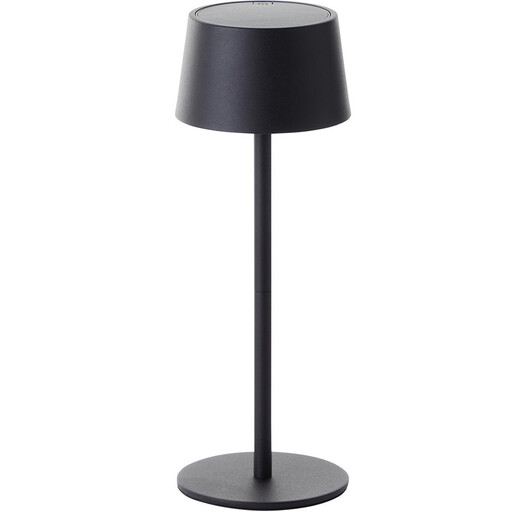
Why this fits the profile: This freestanding light is suitable for a balcony, garden table or small patio without fixed wiring. According to the product specifications, charging is possible via solar energy or USB.
You're not completely reliant on sunlight: when output is low, you can charge the integrated battery via USB. The IP44 rating should be seen as splash protection, not waterproofing.
170 lumens, warm white light at 3,000 K, three dimming levels and two charging methods.
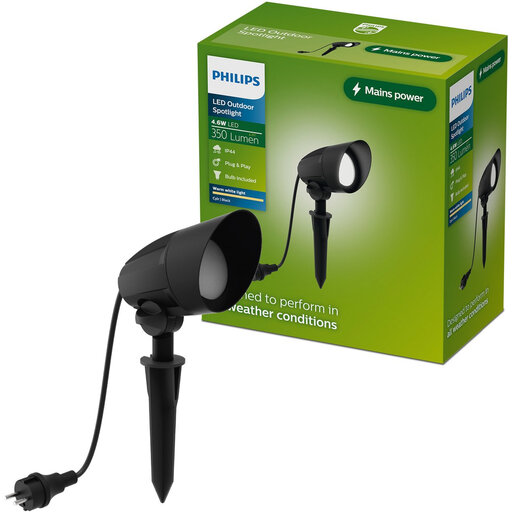
Why this fits the profile: This adjustable ground spotlight is ideal for anyone who wants to highlight a shrub, tree or driveway with a mains connection.
The included GU10 LED bulb makes it clear what you're getting. The light has IP44 protection; don't place it in an area with direct water jets.
350 lumens, 2,700 K warm white light, aluminium and glass, with a 150 cm cable.

Why this fits the profile: This set is designed for garden paths, borders and decorative accents. According to the product information, app and voice control with Alexa or Google Assistant are possible via Tuya Smart.
The light colour and brightness are adjustable, so you're not stuck with one atmosphere. Bear in mind an 8-metre power cable, wifi for full smart features and the risk of tripping.
Three lights, 660 lumens, dimmability, RGB and adjustable colour temperature from 3,000 to 6,500 K.

Why this fits the profile: This solar outdoor light is aimed at an entrance, shed or passageway where lots of light is needed temporarily when movement is detected.
The motion and dusk sensors limit unnecessary running time. Place the panel in a spot with direct sunlight and keep it free of dirt.
1,000 lumens, 3,000 K warm white light, two light modes and installation without a mains cable.
We've put together a full, up-to-date list of products that fully meet these strict selection criteria and current European safety regulations.
Yes, IP44 outdoor lighting is designed for use in places where splashing water can occur. The rating doesn't make a light fully waterproof. Install the light according to the manual and avoid submersion or direct high-pressure jets.
A solar outdoor light doesn't use mains power during normal use. The battery is charged during the day via the solar panel. The actual run time depends on sunlight, season, temperature, battery capacity and the chosen light setting.
The lifespan varies by model and usage conditions. Some product descriptions mention, for example, 15,000, 25,000 or 50,000 hours of use. With integrated LED, the entire fitting usually needs to be replaced when the light source reaches the end of its life. With E27 or GU10 fittings, you can replace the bulb separately.
