
Vandaag of morgen in huis

Kwaliteit gegarandeerd

Welkomstaanbiedingen ontgrendelen: GRATIS bezorging | Tot 80% korting | Gratis 30 dagen JoyPlus-proefperiode
Download de app
Good outdoor lighting needs to do more than look attractive in a product photo. A lamp by the front door should switch on reliably, a solar outdoor light needs enough sunlight, and a decorative string light must be able to withstand splashing water safely. Yet important details are often overshadowed by terms such as “powerful”, “weatherproof” or “energy-efficient”.
That is why you should focus on specifications you can verify. This helps prevent a lamp from producing less light after a few months, failing to cope with the Dutch weather or turning out to be unsuitable for the place where you want to install it.
A waterproof outdoor lamp is not automatically suitable for prolonged immersion. Check the IP protection rating. IP44 outdoor lighting is protected against splashing water from different directions. This is suitable, for example, for a covered balcony, patio or façade where the lamp is not constantly exposed to heavy rain.
IP65 outdoor lighting offers greater protection against water jets and dust. This makes this rating more practical for a more exposed façade or a location where the lamp is more directly exposed to rain. Even with IP65, you must not submerge the lamp. Also protect plugs, adapters and connection points from direct water.
A solar wall light does not need a fixed power connection, but the solar panel must receive enough direct daylight. Shade from a roof edge, tree or neighbouring property can reduce charging performance. In winter, the days are shorter and sunlight is weaker, so the operating time may vary.
Therefore, check whether the panel can be positioned facing a sunny direction. Clean it regularly with a soft cloth and check the stated battery capacity or operating time. A motion sensor can help save energy, as the lamp only becomes brighter when movement is detected.
A high lumen output is useful for a driveway or entrance, but can be too bright on a small balcony. For ambience, a warm colour temperature of around 2700K to 3000K and a dimming function are often more suitable. Cool white light around 5000K to 6500K creates a bright, daylight-like appearance and is better suited to functional lighting.
Also consider the direction of the light. An adjustable head can be useful for façade lighting, while a wide beam angle works better for general garden lighting. A lamp with a GU10 fitting gives you the option of choosing a different light source yourself later on.
Use at least IP44 for sheltered outdoor locations and look for IP65 when the lamp will be more exposed to rain and dust. The IP code does not tell you everything about installation. Also check:
An outdoor LED wall light with an integrated light source is often compact, but the light source usually cannot be replaced. With a fitting that uses a GU10 socket, you can replace the bulb later.
Compare lumens rather than just wattage. Lumens indicate how much light the lamp produces according to the product specifications. Wattage mainly tells you about power consumption. An LED lamp can provide sufficient light while using relatively few watts.
An outdoor lamp with a motion sensor is practical for an entrance. Check the detection range and adjustment options. A lamp that detects movement up to 8 metres straight ahead and 16 metres to the sides can be used differently from a compact model designed for a balcony.
For decorative lighting, extra features such as dimming, memory settings or an RGB LED lamp may be appealing. Use these features to complement the desired light output, not as a substitute for an appropriate IP rating.
A solar wall light is convenient when you do not want to run a cable. A lamp with a 220-240V adapter, on the other hand, requires a suitable earthed socket and a safe cable route. Switch off the power during installation and have fixed electrical connections installed in accordance with the applicable regulations.
An LED ceiling light with an RGB+CCT function is primarily intended for indoor use. For example, the Aigostar model in the product information has IP44, 2700 lumens and adjustable colour temperatures from 3000K to 6500K. The description states that the lamp is suitable for indoor use. Therefore, do not automatically use this type of model as an outdoor lamp.
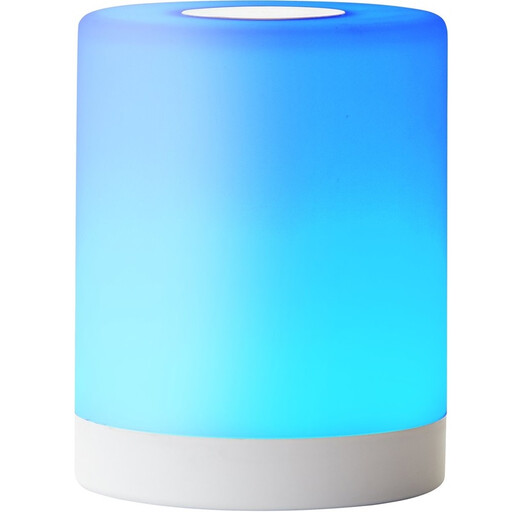
Why it suits this profile: This compact lamp can be placed freely on a table, balcony or patio and does not need to be mounted on a wall.
The specifications state IP44 and warn against immersion. This makes the installation limitations clearer than the general term “weatherproof”.
Rechargeable battery, USB connection, touch dimmer, RGB function and integrated 1W LED.
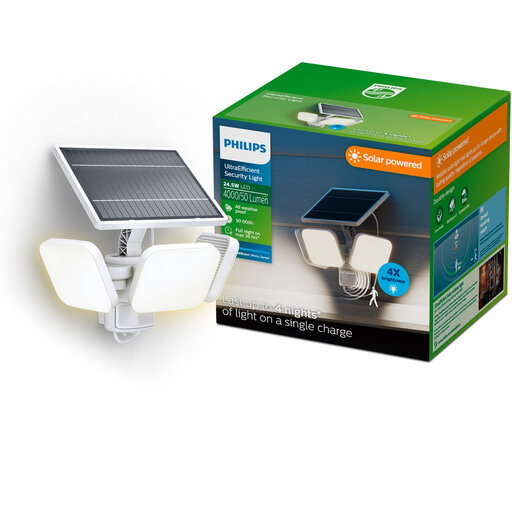
Why it suits this profile: This solar wall light is designed for an exposed façade, driveway or entrance where a wide detection range and bright, functional light are desired.
The product specification states IP65, with a motion detection range of 8 metres straight ahead and 16 metres to the sides. Positioning in direct sunlight remains essential.
4000 lumens, adjustable lamp head, dusk sensor and, according to the product description, up to four nights of lighting after a full charge.
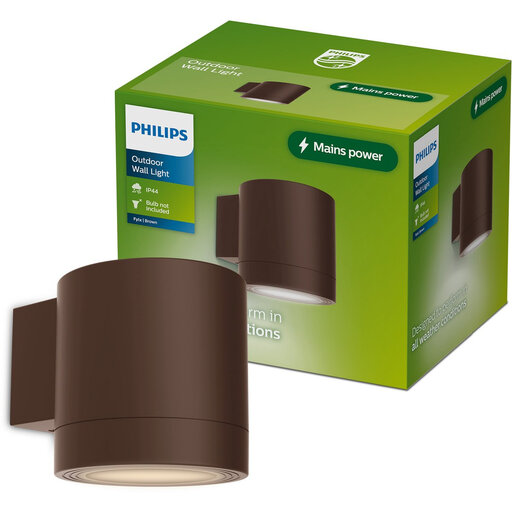
Why it suits this profile: This fitting is ideal for anyone who wants to choose their own light source for façade lighting, garden paths or a sheltered entrance.
The GU10 bulb is not included. This is clearly stated in advance, so you can choose and buy an LED bulb with your preferred colour and light output.
GU10 fitting, replaceable light source, aluminium housing and IP44 protection.
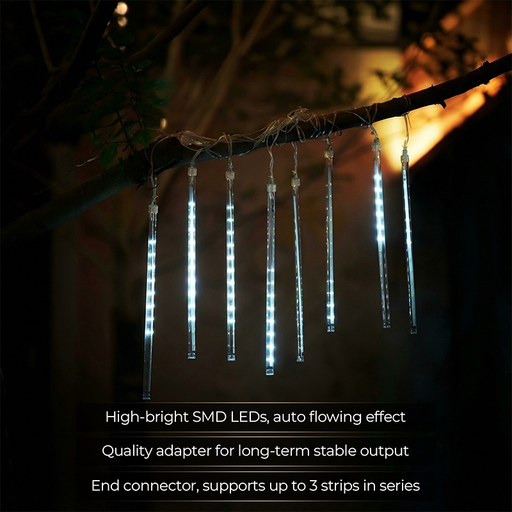
Why it suits this profile: This string light is intended for decorative lighting, for example around a window, along a balcony edge or on a Christmas tree.
The specifications explicitly state IP44 and warn that the adapter and connections must not be exposed to direct water.
192 LEDs, cool white light at 6500K, 8 hanging points, 5-metre extension cable and memory function.
We have put together a complete, up-to-date list of products that fully meet these strict selection criteria and the applicable European safety regulations.
That depends on the intended use. Lower light output is usually sufficient for ambient lighting. More light is practical for an entrance, driveway or motion sensor. Also compare the beam angle and mounting height, as these affect the size of the area that is illuminated.
It can in a sheltered location, provided the lamp is installed correctly and is not submerged. Check the product information and protect plugs, adapters and connections from direct moisture. For an exposed façade, IP65 outdoor lighting may be a more suitable choice.
A solar outdoor lamp does not use electricity from the mains while it is lit. However, performance depends on sunlight, battery capacity, temperature and how the motion sensor is used. Position the panel away from shade and keep it clean for the most predictable operation possible.
