
Vandaag of morgen in huis

Kwaliteit gegarandeerd

Welkomstaanbiedingen ontgrendelen: GRATIS bezorging | Tot 80% korting | Gratis 30 dagen JoyPlus-proefperiode
Download de app
Good outdoor lighting makes an entrance more visible, creates ambience on the patio and helps illuminate dark paths around the home. However, an appealing product photo does not guarantee that an outdoor light is suitable for your situation. A balcony, sheltered veranda and open driveway each place different demands on brightness, installation and protection against moisture.
As a Joybuy Product Recommendation Officer, I filter the key product specifications so you can more easily compare marketing claims with the information actually stated on the product label.
An LED outdoor light with a high lumen output can be useful beside a garage or driveway, but overly bright lighting is impractical next to a seating area. Therefore, pay attention to the luminous flux in lumens:
The stated colour temperature is also important. Around 2700 to 3000 K generally produces a warmer appearance. 4000 K looks more neutral, while 6500 to 7000 K is distinctly cooler. Check this before buying a garden light intended primarily to create ambience.
An IP44 outdoor light is protected against splashing water, but is not designed for immersion or direct, powerful water jets. This applies, for example, to various solar wall lights and compact outdoor wall lights. A product with IP54 offers greater protection against dust and splashing water. IP65 is better suited to an exposed façade, driveway or location where rain and dust are more likely to reach the light directly.
The IP code does not determine every aspect of the installation location. An IP44 outdoor light may be perfectly suitable beneath a canopy, while a light mounted on an exposed wall requires greater protection. Always follow the manufacturer’s installation instructions.
A solar outdoor light does not operate independently in the same way as mains-powered lighting. Its battery must be charged during the day via the solar panel. Shade from a roof edge, tree or north-facing wall can affect the operating time. According to the product descriptions from Philips and UME, direct sunlight is important for charging.
When choosing a solar outdoor light, therefore check:
Do not look at wattage alone. For an LED outdoor light, lumens provide a clearer indication of the amount of light produced. Wattage primarily indicates energy consumption. An integrated motion sensor can be practical by an entrance or garage, but check its detection angle and range.
For example, UME Solar Outdoor Lights list a detection distance of 60 feet, a 180-degree angle, three lighting modes and an IP65 rating. These details come from the product description; actual performance depends, among other things, on mounting height, surroundings and battery charge.
There are three common options:
A magnetic light is easy to reposition, but the surface must be flat, clean and strong enough to support its weight. With a wall light featuring a motion sensor, secure mounting is more important than quick installation.
Aluminium can provide a robust appearance, while plastic is often lighter. Also check the dimensions. A path light measuring 80 cm in height may look imposing in a narrow border, but be ideal along a garden path. The vidaXL LED Outdoor Lamp, for example, is 800 mm high, has a power rating of 9 W, a luminous flux of 550 lumens and IP54 protection.
Also pay attention to details such as:
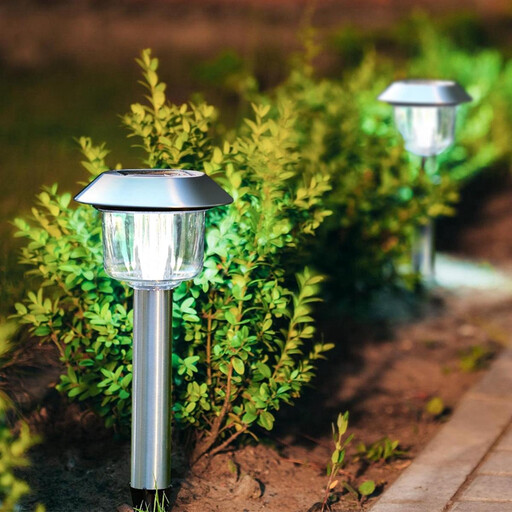
Why it fits: A straightforward solar garden light for borders, paths and small patios without wiring.
The light uses solar energy, so you do not need to run a power cable to the border. Place it in a sunny location.
Stainless steel and plastic construction, a height of 36.6 cm and 12 batteries included according to the product information.
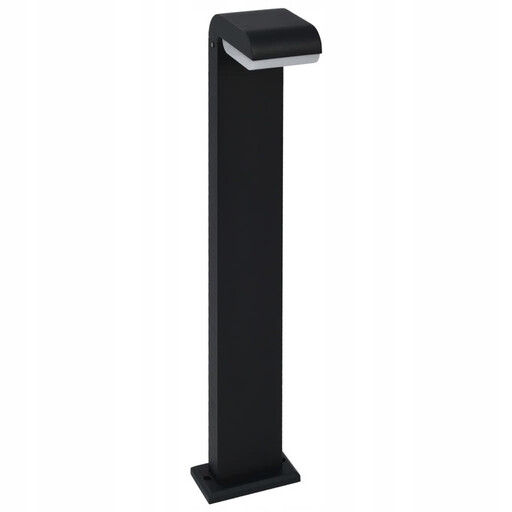
Why it fits: For homeowners who want to position a permanent black garden light along a path or border.
The stated IP54 rating makes clear that this is not a light to be cleaned with a high-pressure jet.
Integrated LED, 550 lumens, 9 W and an aluminium housing; height 80 cm.

Why it fits: For larger gardens, garages, patios and driveways where a motion sensor and broad light coverage are desirable.
The IP65 rating and stated 180-degree detection angle are verifiable details for an exposed installation location.
Three light heads, a stated luminous flux of 3000 lumens, three modes and an 1800 mAh lithium-ion battery according to the product description.
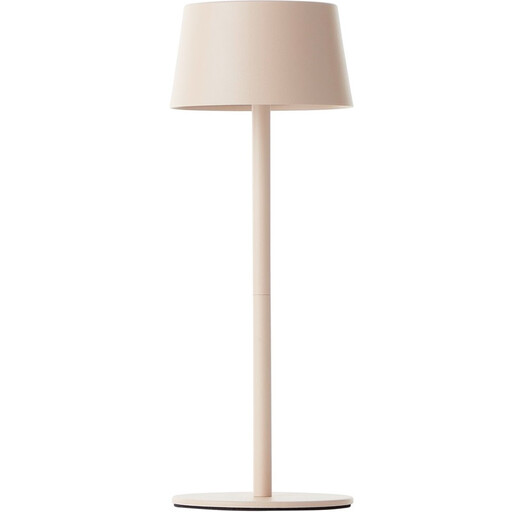
Why it fits: Portable patio lighting for a table, balcony or sheltered seating area.
The product information lists IP44 and splash-water protection, so do not place the light in a puddle or directly beneath a water jet.
170 lumens, 3000 K, three dimming levels and charging via solar power or USB. The light is 25 cm high.
Browse a current selection of outdoor lighting and compare lights by brightness, IP rating, power supply and installation.
For a sheltered location, IP44 may be suitable, provided the light is not exposed to direct water jets. For a more exposed façade or driveway, IP54 or IP65 is generally the more appropriate choice. Always check the installation instructions and the extent to which the light will be exposed to rain and dust.
A solar outdoor light does not use electricity from the mains. This means there are no mains electricity costs during use, but the light remains dependent on sunlight and battery capacity. In winter or in shaded locations, a USB-rechargeable or wired outdoor light may be more practical.
Lifespan varies by model, operating conditions and battery. Some product descriptions state a lifespan for the integrated LED, but this does not guarantee the total lifespan of the light. Keep the solar panel and sensor clean, prevent damage and replace an integrated LED only in accordance with the manufacturer’s instructions.
