
Vandaag of morgen in huis

Kwaliteit gegarandeerd

Welkomstaanbiedingen ontgrendelen: GRATIS bezorging | Tot 80% korting | Gratis 30 dagen JoyPlus-proefperiode
Download de app
Buying new outdoor lighting seems simple, until you have to choose between an outdoor wall light, a solar-powered outdoor light, garden lighting or an outdoor LED string light. Many products look similar but vary greatly in brightness, moisture protection and installation.
If you only focus on the design or the number of LEDs, you could be in for some unpleasant surprises. Below, you can read about the pitfalls to avoid and which specifications are important for a British garden, facade, driveway, balcony or patio.
An IP code indicates how well a product is protected against dust and water. IP44, for example, means it's protected against solid objects larger than 1 mm and splashing water. This makes a light suitable for many sheltered outdoor locations, but not automatically for a spot where rainwater or a garden hose might spray directly onto it.
For a wall under a canopy or porch, IP44 may be sufficient. For an open garden, driveway or a wall that's exposed to heavy rain, IP54 or IP65 is often more practical. Always check the full product description and the recommended mounting location.
A solar-powered outdoor light doesn't need a connection to the mains, but its performance depends on the amount of direct sunlight it receives. In the UK, short winter days, cloudy weather and shade can affect charging performance. Therefore, don't place the panel under the edge of a balcony, a tree or a gutter if you expect reliable performance in the evening.
Pay attention to the battery capacity, charging time, light modes and whether it has a motion sensor. A light that only turns on briefly when it detects movement typically uses less energy than one that stays on continuously all evening.
Wattage indicates energy consumption, not directly brightness. For light output, you need to look at lumens. A path light with 550 lm creates a different effect than a decorative string light with warm, diffused lighting.
For creating atmosphere on a patio, dimmed light is often more pleasant. For an entrance, garage or driveway, focused lighting and sufficient lumens are more important. Also, check the colour temperature: around 2700–3000 K provides warm white light, while a higher value can appear cooler.
It's best to use IP44-rated lights on a sheltered facade, balcony or patio. Products with an IP54 or IP65 rating offer more protection against dust and water, according to their classification. However, the rating is no substitute for correct installation: cables, connections and mounting points must also be suitable for outdoor use.
This is a practical guideline. The shape of the shade, the beam angle and the mounting height also determine how much light you actually get in the desired spot.
A fixed 230V outdoor wall light must be installed by a qualified electrician, according to the product information. A GU10 or E27 light gives you the option to choose a different bulb later, but always check the maximum wattage.
An integrated LED light source is compact and easy to use, but if it fails, it usually cannot be replaced separately. Wireless lights with a USB-rechargeable battery or solar panel are easier to install but require attention to charging, sunlight and secure mounting.
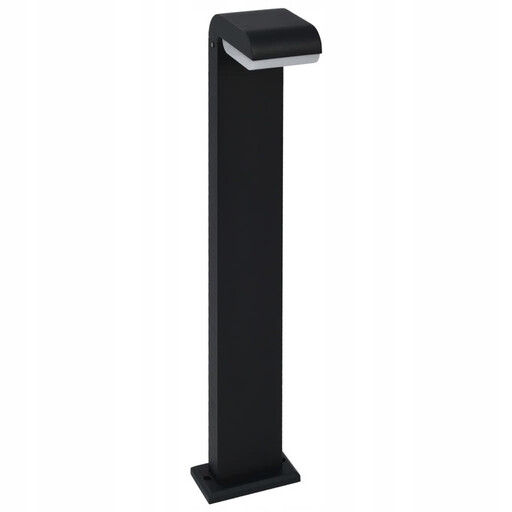
Why it's a good match: This freestanding garden light is suitable for those looking for a fixed light source along a garden path or border without having to choose a separate bulb. The light has an integrated 9 W, 550 lm LED and stands 80 cm tall.
The specified 550 lm gives a clearer idea of the brightness than wattage alone. The IP54 rating is suitable for many outdoor locations, but check the mounting spot for direct exposure to water.
Die-cast aluminium, integrated LED, 550 lm and IP54 protection.
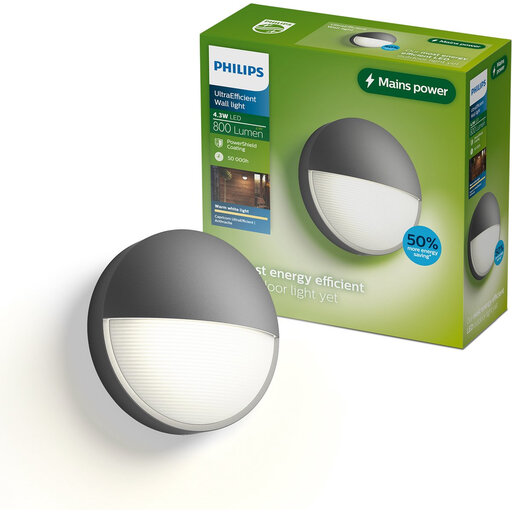
Why it's a good match: This fixed outdoor wall light is designed for homeowners looking for sleek facade lighting with a warm white glow. The product specifications list 800 lm, 2700 K, 4.3 W and IP44.
The combination of lumens, colour temperature and wattage provides clear information about the light and its consumption. However, the IP44 rating means installation in a sheltered location is wise.
800 lm, warm white 2700 K, 4.3 W and an aluminium housing.

Why it's a good match: This solar-powered outdoor light with a motion sensor is aimed at driveways, garages, patios or larger garden areas. The listing mentions 302 LEDs, 3000 lm, three light modes, three adjustable heads and a 180-degree detection angle.
The three modes allow you to choose between continuous light and motion-activated use. According to the product specification, its IP65 rating makes it suitable for a location with more exposure to rain, provided it is installed correctly.
3000 lm, IP65, solar-powered and a 180-degree motion detection angle.
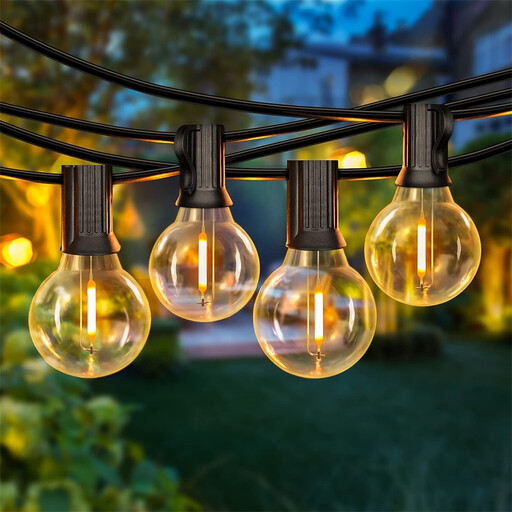
Why it's a good match: For a patio, balcony, pergola or festive garden, a dimmable outdoor LED string light is more practical than a bright security light. This string is 30 metres long and has 50+2 LEDs.
The dimming function and multiple modes help prevent the decorative lighting from being too bright. The product is not intended for submersion; keep connections away from standing water.
30-metre length, dimmable, replaceable bulbs and mains-powered.
We've put together a complete, up-to-date list of products that meet these strict selection criteria and comply with current European safety regulations.
Before you buy, make a simple plan:
For a magnetic or wireless light, the mounting plate must be securely fastened. Also, regularly check fixings, cables, sensors and solar panels. Clean a solar panel with a soft, slightly damp cloth and follow the product's maintenance instructions.
That depends on its power rating and how many hours it's on. A 4 W light that is on for 1,000 hours uses approximately 4 kWh. So, for LED outdoor lights, look at both the wattage and the usage time. A motion sensor can reduce the number of hours the light is on. Solar lighting doesn't use mains electricity during operation, but its performance depends on sunlight and battery capacity.
For a sheltered entrance or covered balcony, IP44 may be suitable. For a more exposed spot, IP54 or IP65 is often more sensible. Always check if the manufacturer states that the light is suitable for the specific mounting location. No IP rating makes a light suitable for submersion unless explicitly stated.
The lifespan varies depending on the model, heat dissipation, battery and operating conditions. For an integrated LED source, an expected lifespan is sometimes mentioned, but this is not a guarantee for every use case. A light with a replaceable GU10 or E27 bulb can be more practical if you want to change the light colour or brightness later on.
