
Vandaag of morgen in huis

Kwaliteit gegarandeerd

Welkomstaanbiedingen ontgrendelen: GRATIS bezorging | Tot 80% korting | Gratis 30 dagen JoyPlus-proefperiode
Download de app
Outdoor lighting needs to do more than look good. You want to be able to walk safely to the front door in the evening, see a garden path or create a welcoming atmosphere on your patio. However, there are several common pitfalls to watch out for. For example, a lamp with a high light output may be too bright beside an entrance, while solar outdoor lighting on a shady wall may not charge sufficiently.
Joybuy Product Recommendation Officer selects products based on verifiable specifications. This means you can compare outdoor lights not just by design, but also by protection, power supply, installation and intended use.
IP44 outdoor lighting is protected against solid objects and splashing water. This does not mean that the lamp is suitable for submersion or direct water jets. It is therefore best to install an IP44 outdoor wall light under a canopy or on a sheltered wall.
IP65 outdoor lighting offers greater protection against dust and water jets. This can be more practical for an open driveway, garage or exposed wall. Always check the installation instructions: an IP rating does not automatically make a product suitable for every extreme weather condition.
Lumens indicate the total light output, but they do not tell you everything about how comfortable the light will be to use. An outdoor LED light with 4,000 lumens is suitable for a large area, but may be unnecessarily bright beside a front door or on a small balcony. For atmosphere, a lower light intensity and a warm colour temperature, such as 2,700 or 3,000 K, are often more suitable.
For orientation and security, bright white light may be more functional. Also consider the beam angle and whether the lamp heads can be adjusted.
A solar-powered outdoor lamp only works effectively when the panel receives enough direct light during the day. Trees, walls and a north-facing position can limit charging performance. In winter and during long periods of cloudy weather, the operating time may also decrease.
So do not choose where to install solar wall lights and other solar outdoor lighting based solely on the desired location. Also consider where the panel will be positioned and whether you can clean it regularly.
An outdoor lamp with a motion sensor can reduce energy consumption because it only switches on when movement is detected. However, check the detection range and detection angle. A wide angle is useful for a driveway, but less desirable if passers-by on the street could repeatedly activate the lamp.
Colour temperature is measured in kelvin:
Also pay attention to the lumen value. Garden path lighting with a few hundred lumens may be sufficient for orientation. An outdoor ground spotlight with an adjustable beam is more suitable for highlighting a tree, façade detail or flower border.
Aluminium, plastic, glass and stainless steel are commonly used for outdoor lights. The material partly determines the weight, appearance and maintenance requirements, but it is not a substitute for an IP rating.
Before buying, check:
A GU10 or E27 fitting supplied without a bulb gives you more choice, but you will need to buy the light source separately. With an integrated LED outdoor lamp, the light source is already built in, so replacement options may be limited.

Why it suits this profile: This compact solar garden lighting is easy to push into the ground and is designed for garden paths, borders and small accent areas.
The specifications state a charging time of 4 to 6 hours, an operating time of 8 to 12 hours and an IP44 rating. This makes it clear that positioning the light where it receives sufficient sunlight is important, and that it is not intended for submersion.
Stainless steel housing, solar panel and ground stake; 6,500 K light colour for clear orientation along a path.

Why it suits this profile: Suitable for anyone looking for a powerful solar wall light for a driveway, garage or large garden, with a preference for a greater detection range.
The product information states IP65, 4,000 lumens, a motion detection range of 8 metres when approached directly and 16 metres sideways. However, check that the bright 5,000 K lighting is suitable for your surroundings.
IP65 rating, adjustable lamp head and integrated motion and dusk sensor according to the product description.

Why it suits this profile: This solar floodlight is designed for large outdoor spaces such as driveways, garages, gardens or patios where broad illumination is needed.
The lamp has three adjustable heads, a stated 270-degree angle and three lighting modes. The IP65 rating is clearly specified; positioning it in direct sunlight remains essential.
302 LEDs, a stated light output of 3,000 lumens, motion detection up to 60 feet and wall mounting without a mains cable.
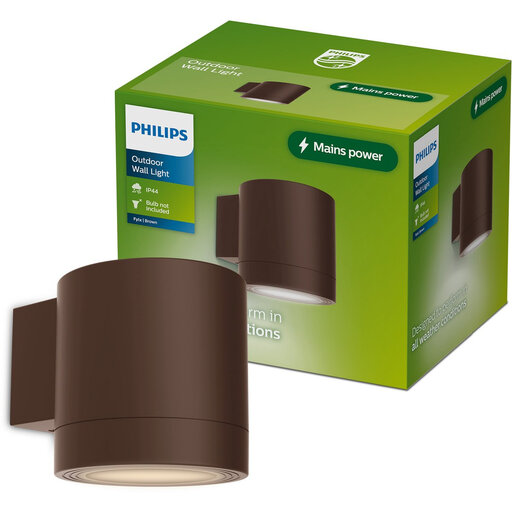
Why it suits this profile: A suitable choice for a homeowner or tenant who wants to choose their own GU10 light source and colour temperature for an entrance, balcony or patio.
The lamp is supplied without a GU10 spotlight. This avoids being stuck with an unsuitable included light colour, but it does mean that you need to choose and purchase the light source separately.
GU10 fitting, aluminium housing, compact size and IP44 splash protection for use in a suitable outdoor environment.
We have put together a complete, up-to-date list of products that fully meet these strict selection criteria and the applicable European safety regulations.
For a sheltered location, IP44 may be sufficient, for example under a canopy. For an exposed wall, garage or driveway, IP65 may be more practical. Always check the installation instructions and avoid submersion, even when a product has a higher IP rating.
Solar lighting can also work in winter, but its performance depends on daylight, cloud cover, shade and the position of the panel. Shorter days and less direct sunlight can reduce the operating time. Position the panel in an unobstructed location and clean it regularly.
A solar outdoor lamp does not use mains electricity during normal operation. According to product information from brands, this means that no electrical connection is required. However, bear in mind the purchase price, possible battery replacement in the long term and panel maintenance. With mains-powered lighting, energy consumption depends on the wattage, the number of hours it is lit and the current electricity price.
