
Vandaag of morgen in huis

Kwaliteit gegarandeerd

Welkomstaanbiedingen ontgrendelen: GRATIS bezorging | Tot 80% korting | Gratis 30 dagen JoyPlus-proefperiode
Download de app
A dark driveway, poorly lit entrance or uninviting patio calls for a practical solution. Outdoor lighting comes in many forms, from LED outdoor lamps and outdoor wall lights to solar outdoor lamps, outdoor ground spotlights and path lighting. However, an attractive design says little about whether a light is suitable for your situation.
Pay particular attention to three common pitfalls:
The IP code consists of two digits. The first digit refers to protection against solid particles, while the second refers to moisture.
So, do not place an IP44 lamp where water can collect. For an open driveway or a façade that catches a lot of rain, a higher protection rating may be the more logical choice.
Lumens indicate how much light a lamp emits. Moderate light output is often sufficient for path lighting. A wider driveway or back garden may benefit from more light. Also consider the colour temperature:
An outdoor lamp that shines downwards reduces direct glare and helps direct light onto the walking surface.
A fixed outdoor wall light is generally connected to the mains. Have the installation carried out by a qualified electrician when the lamp is connected to 230 volts. A wireless outdoor lamp with a rechargeable battery or disposable batteries is easier to install, but requires attention to charging times and mounting.
Also check whether the light source can be replaced. With an integrated LED outdoor lamp, the LED module forms part of the fitting. With a GU10 outdoor lamp, you can generally choose and replace the bulb yourself, provided you observe the maximum wattage.
The recommendations below are based on verifiable specifications such as IP rating, light output, material, power supply and installation method. The stated performance and features are taken from the product descriptions provided by the brands or sellers.
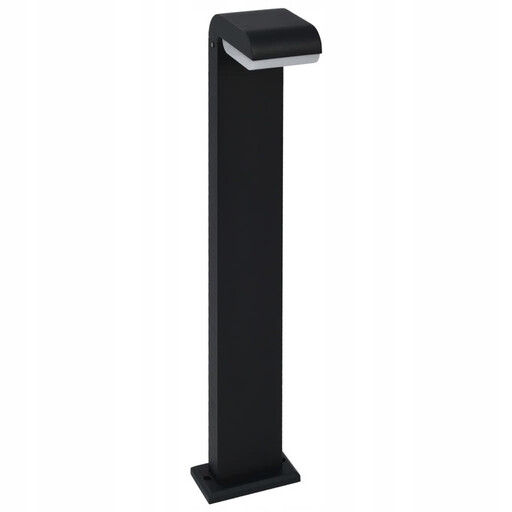
Why it suits this profile: This black outdoor lamp is designed for anyone looking for a fixed light along a garden path or entrance without needing a separate light source. According to the product specifications, the integrated LED delivers 550 lumens at 9 watts.
The light output and energy consumption are clearly stated in advance. With IP54 protection, the lamp is not dependent on open, unprotected positioning where it would be exposed to direct water jets.
Integrated LED, black cast aluminium, 800 mm high and IP54 protection.
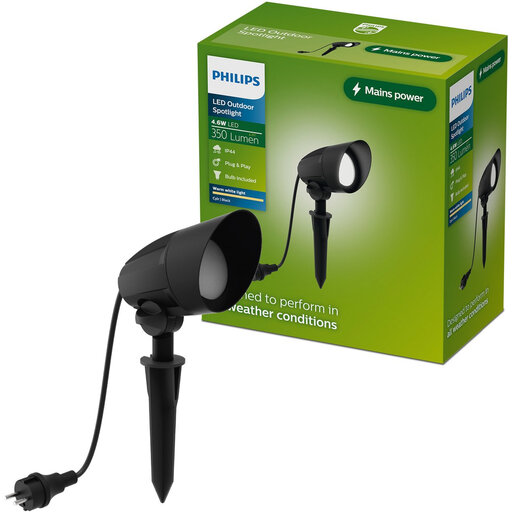
Why it suits this profile: This outdoor ground spotlight is suitable for anyone wanting to illuminate trees, shrubs, a driveway or a gate. According to the product specifications, the supplied GU10 LED bulb has a colour temperature of 2700 K and an output of 350 lumens.
The light source is included, so you do not first need to find a suitable GU10 bulb. IP44 makes it clear that outdoor installation is possible, but not underwater or where the lamp is exposed to direct high-pressure jets.
Rotatable in-ground installation, aluminium and glass construction, 1.5-metre cable and a supplied GU10 LED bulb.

Why it suits this profile: This solar outdoor lamp is designed to provide broad illumination for a garden, garage, patio or driveway without a fixed power connection. According to the product description, the model has three lighting modes, three adjustable heads and a motion sensor.
The required power supply, detection angle and IP rating are stated. For reliable operation, the solar panel must receive sufficient direct daylight; positioning it in the shade may affect charging performance.
302 LEDs, stated light output of 3000 lumens, IP65 rating and a detection angle of 180 degrees.
We have put together a complete, up-to-date list of products that fully meet these strict selection criteria and the applicable European safety regulations.
Before buying, check the dimensions and installation location. A path light measuring 800 mm in height needs sufficient space beside the walkway. A wall light must be securely attached to a flat surface. For magnetic models, the mounting plate must be able to support the weight, and the lamp must not be mounted above an area where falling could cause damage or injury.
For an outdoor lamp with a motion sensor, pay attention to the detection direction and range. Do not point the sensor directly at a busy street or moving branches, as this can cause unwanted activation. Clean solar panels and sensor windows regularly with a soft cloth.
For a sheltered façade or covered area, IP44 outdoor lighting may be suitable. For greater exposure to dust and rain, IP54 or IP65 is worth considering. Always check the exact installation instructions and prevent immersion.
LED lamps generally use little power in relation to their light output. Actual energy consumption depends on the wattage and the number of hours the lamp is switched on. A motion sensor or timer can prevent the lamp from staying on unnecessarily long.
That depends on the amount of daylight, its positioning and the battery capacity. Position the panel as free from shade as possible and keep its surface clean. During darker periods, the operating time may be shorter than in sunnier months.
