
Vandaag of morgen in huis

Kwaliteit gegarandeerd

Welkomstaanbiedingen ontgrendelen: GRATIS bezorging | Tot 80% korting | Gratis 30 dagen JoyPlus-proefperiode
Download de app
A dark driveway, poorly lit garden path or uninviting balcony does not automatically call for the most powerful lamp. With outdoor lighting, the right choice depends on its intended use, brightness, protection against the elements and ease of installation. Marketing copy often highlights high lumen ratings, “waterproof” housings and long run times. In practice, performance also depends on sunlight, positioning, materials and maintenance.
More light is not always better. A bright lamp next to a seating area can cause glare, while a subtle light along a path mainly creates atmosphere. So start by considering what the light is for:
An LED outdoor lamp with a motion sensor can provide plenty of light temporarily, but is less suitable as ambient lighting for a garden or patio.
An IP code consists of two digits. The first indicates protection against solid particles, while the second relates to water. IP44 offers protection against splashing water and is suitable for sheltered locations. IP65 indicates dust protection and protection against water jets. This does not mean that the lamp can be placed underwater or exposed to a garden hose for long periods.
Also check the installation location. An IP44 wall lamp under a canopy is exposed to different conditions from the same lamp mounted on an unprotected façade.
Solar garden lights charge during the day via a solar panel. Shade from a fence, tree or balcony can reduce the run time. The charging and run times stated in product information generally depend on the conditions. According to the manufacturer’s own information, UME path lighting can provide 8 to 12 hours of illumination with 6 to 8 hours of direct sunlight. In winter in the Netherlands, or in cloudy weather, the results may differ.
Position the solar panel as openly as possible and clean it regularly with a soft, damp cloth.
Colour temperature is measured in Kelvin:
As well as Kelvin, pay attention to lumens. Wattage mainly indicates energy consumption and does not directly tell you how much visible light is produced. Integrated LED lighting often uses little energy, but on some models the LED module cannot be replaced by the user.
For outdoor use, the IP rating and housing are more important than appearance alone. Aluminium can be a sturdy choice for an outdoor wall lamp, while ABS plastic is lightweight and easy to install. Also check the fixing materials and corrosion resistance, especially for a façade near the coast or on a balcony.
For example, a product with IP65 is better suited to an exposed location than a model with IP44. View more options for IP65 waterproof lamps.
Solar lighting works without mains electricity or cabling, but it needs direct sunlight. USB-rechargeable models offer greater flexibility during prolonged periods of poor weather. A lamp with a motion sensor is practical for a driveway or back door. Check the detection range, detection angle and available lighting modes.
A fixed 230-volt wall lamp must be professionally installed by a qualified electrician. Always switch off the power before installation and use fixing materials suitable for the wall.
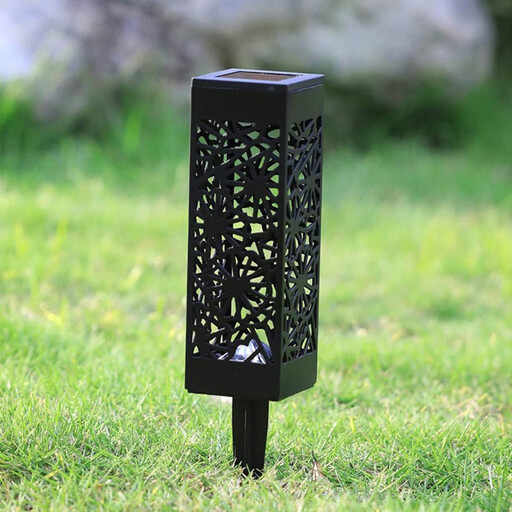
Why it suits this profile: Six individual lights offer an easy way to mark a garden path, border or balcony edge without cables or tools.
The IP65 specification is clearer than a general claim that the product is waterproof. The lights are designed to be pushed into the ground; do not place them where they could become submerged.
Set of 6, warm white LED light, automatic on/off operation and, according to the product information, 4 to 6 hours of charging time in sunlight.
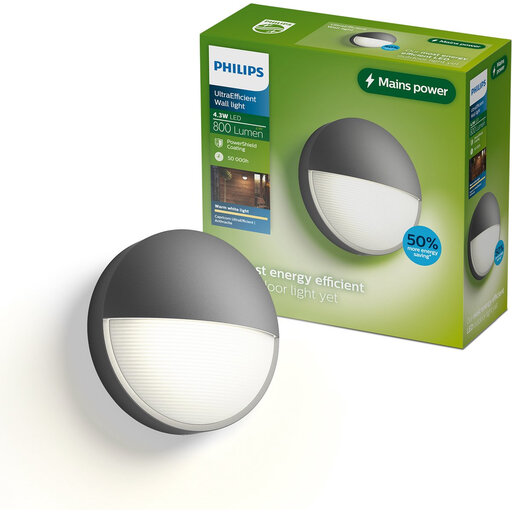
Why it suits this profile: This fixed wall lamp is ideal for an entrance, balcony or façade where an even light source and clean design are important.
The product information specifies IP44 rather than using a more general term such as fully waterproof. Allow for a fixed connection and have the lamp installed in line with local regulations.
Integrated 800-lumen LED, warm white 2700K light, aluminium housing and a stated lifespan of up to 50,000 operating hours, according to Philips.

Why it suits this profile: Ideal for a driveway, garage, back door or larger garden area where plenty of temporary light is needed without mains electricity.
The product details specify three lighting modes, motion detection up to 60 feet and an IP65 rating. This makes the intended use clearer than simply claiming that it is “suitable for all weather conditions”.
302 LEDs, a stated light output of 3000 lumens, three adjustable heads and installation without electrical cabling.
We have compiled a complete, up-to-date list of products that fully meet these strict selection criteria and the applicable European safety regulations.
For a decorative garden path, a few dozen lumens per lamp are often sufficient. Solar path lighting with, for example, 10 lumens per light provides mainly orientation and atmosphere. For a driveway or back door, a higher light output is more practical, optionally combined with a motion sensor.
The run time depends on the battery, the efficiency of the solar panel, the amount of daylight and the selected lighting mode. Manufacturers often state a range, such as 5 to 8 or 8 to 14 hours. According to the brand’s own information, this can be achieved with sufficient sunlight; in winter, the actual run time may be shorter. Cleaning and positioning the light in a sunny location help maintain charging performance.
Solar lamps use solar energy during the day and do not need a permanent mains connection. A USB-rechargeable lamp can also be charged manually. LED outdoor lamps are generally more energy-efficient than traditional light sources, but actual consumption depends on power, operating time and sensor use. A lamp with a motion sensor usually only comes on when needed.
