
Vandaag of morgen in huis

Kwaliteit gegarandeerd

Welkomstaanbiedingen ontgrendelen: GRATIS bezorging | Tot 80% korting | Gratis 30 dagen JoyPlus-proefperiode
Download de app
A lamp for the garden, exterior wall or driveway may seem easy to choose. Yet many poor purchases only reveal their shortcomings after a few weeks. The battery runs out quickly, the light turns out to be too dim or the lamp is not actually resistant to rain. Checking the right specifications helps you avoid paying for features that offer little value in your situation.
The number of lumens indicates how much light a lamp produces according to its product specifications. It does not automatically tell you whether the light distribution is pleasant. A bright beam can cause glare, while a lamp with fewer lumens may illuminate a path more evenly.
So also consider the light colour, beam direction and where you are going to install the lamp. Warm white light of around 2700 to 3000 K often works well on a patio or by an entrance. For a driveway or security lighting, neutral or bright white light may be more practical.
A water-resistant outdoor lamp should have a suitable IP rating. The first digit indicates protection against solid particles; the second digit relates to water.
An IP rating does not automatically make a lamp suitable for every location. For example, do not place an IP44 lamp directly beneath a drain where water is constantly running over it.
A solar outdoor lamp or solar-powered outdoor lamp only works well when the panel receives enough light during the day. Shade from a fence, tree or canopy reduces charging performance. In winter and on overcast days, the lighting duration may also be shorter.
According to Philips’ own information, the Hara and Swyn lamps work without a mains connection. This makes installation easy, but the position of the solar panel remains crucial. If there is little sunlight, opt for an LED outdoor lamp with mains power or a model that can also be charged via USB.
Lumens (lm) indicate the light output. Wattage indicates energy consumption or rated power, but it is not a direct measure of brightness. An integrated LED outdoor lamp can provide a useful amount of light with relatively low wattage.
As a practical guide:
A dimmable outdoor lamp is useful when you want to use the same lamp both during a dinner party and for practical lighting. Check whether the dimming function is built in or depends on a suitable external light source.
An outdoor lamp with a sensor switches on automatically when it gets dark or when movement is detected. Note the difference:
With outdoor lighting featuring a motion sensor, the detection angle, distance and switch-on duration are more important than simply having a sensor. Position the lamp so that passers-by on the street are not unnecessarily illuminated.
Aluminium can provide a sturdy housing, while plastic is often lighter. Also check the weight and fixing method. An outdoor ground spotlight must be firmly secured in the ground and must not create a trip hazard. An outdoor wall lamp requires a stable surface; installation by a qualified electrician is necessary for a wired 230V connection.
An integrated LED is generally not designed to be replaced yourself. So check the stated lifespan, warranty terms and whether a separate GU10 bulb can be replaced. Clean solar panels and light fittings with a soft, dry cloth.
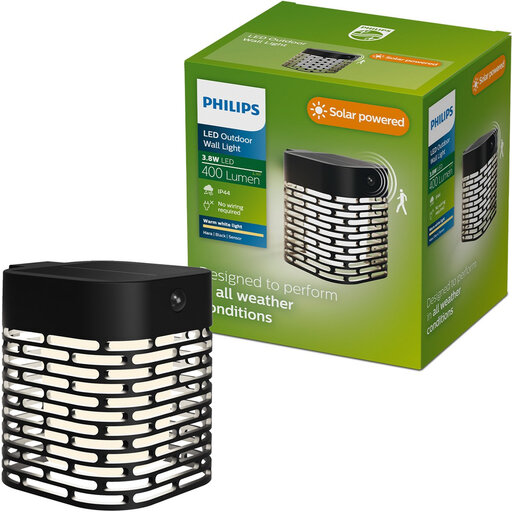
Why it suits this profile: This solar outdoor lamp works without fixed wiring and has a warm white colour temperature of 2700 K. This makes it suitable for an entrance, balcony or sheltered patio wall.
The IP44 rating clearly defines where it can be used: splashing water is permitted, but immersion is not. Also avoid placing the solar panel in constant shade.
Two lighting modes, integrated LED and a stated light output of 400 lumens per light point. Installation without a mains cable.
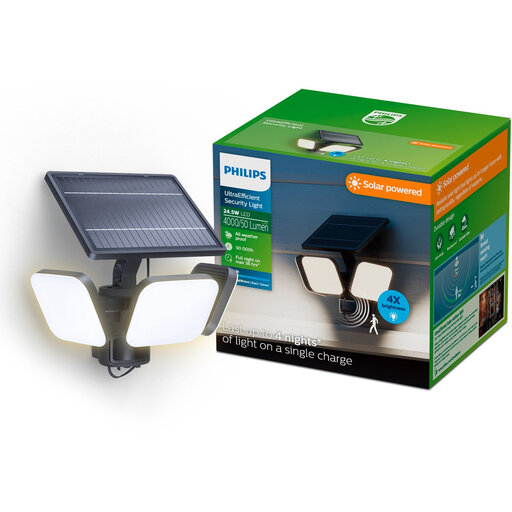
Why it suits this profile: For anyone who wants to illuminate a large driveway, back garden or exterior wall brightly without wiring. The adjustable lamp head helps direct the light more precisely.
The product information states IP65, giving the lamp greater protection against dust and water than an IP44 model. The sensor and dusk functions help prevent unnecessary operation.
According to the product specifications: 4000 lumens, 5000 K, a PIR detection range and battery life of up to four nights under the stated conditions.
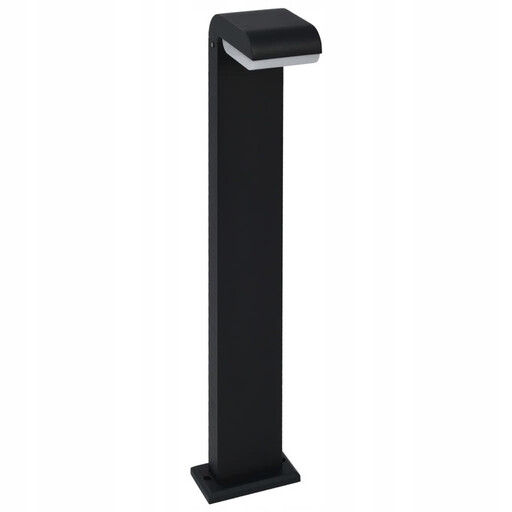
Why it suits this profile: A fixed 80 cm garden lamp for anyone who wants to mark out a path, border or entrance with downward-facing light.
The fixed mains connection is less dependent on sunlight than solar lighting. The specifications state IP54; nevertheless, choose a location away from direct water jets.
Integrated 9 W LED, 550 lumens, an aluminium housing and an opal diffuser for downward-facing light.
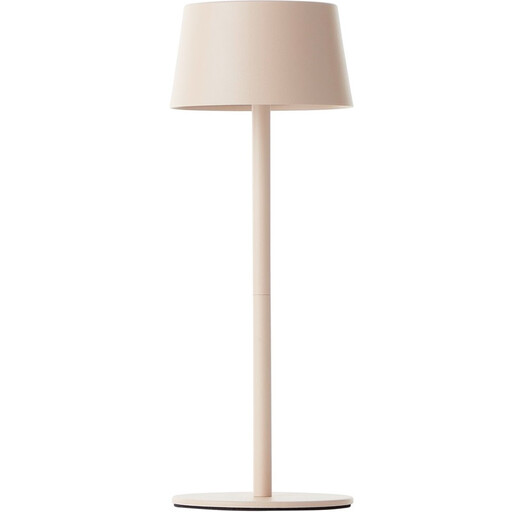
Why it suits this profile: This outdoor table lamp is suitable for a table, balcony or covered lounge area where flexible positioning matters more than a wide lighting range.
The combination of a solar panel and USB charging reduces dependence on sunny days. IP44 makes the limitation clear: splashing water is permitted, but immersion is not.
170 lumens, three dimming settings, 3000 K warm white light and two charging options. The lamp is freestanding and requires no wiring.
We have compiled a complete, up-to-date list of products that fully meet these strict selection criteria and the applicable European safety regulations.
For mood lighting on a table or balcony, 100 to 300 lumens may be sufficient. For a garden path, entrance or small driveway, 300 to 600 lumens is often more suitable. A large exterior wall or security area requires more light, but also check the light direction and sensor settings to prevent bothersome glare.
Lifespan varies depending on the model and conditions of use. Some products, for example, state 15,000, 25,000 or 30,000 hours of operation. With an integrated LED, you generally cannot replace just the light source. So check the warranty, intended environment and maintenance instructions in advance.
A solar-powered lamp does not use mains electricity during normal operation. According to information from various brands, this is an important advantage of solar lighting. However, bear the charging conditions, battery capacity and season in mind. A model with USB charging can be useful when several overcast days prevent the battery from charging fully.
