
Vandaag of morgen in huis

Kwaliteit gegarandeerd

Welkomstaanbiedingen ontgrendelen: GRATIS bezorging | Tot 80% korting | Gratis 30 dagen JoyPlus-proefperiode
Download de app
Good outdoor lighting makes a driveway, façade, balcony or garden more usable once it gets dark. However, an attractive product photo is no guarantee that a light is suitable. If you focus only on design or a high number of LEDs, you could end up with insufficient light, a battery that runs flat quickly or a fitting that cannot withstand the Dutch rain.
Use these checkpoints to compare garden lighting, solar lights, wall lights and smart solutions in a practical way.
A product may be described as water-resistant even though its level of protection is limited. IP44 means protection against splashing water from different directions, but not against immersion or powerful water jets. IP65 offers greater protection against dust and water jets, but this still does not mean that a light can be placed underwater.
It is therefore best to install an IP44 outdoor light beneath a canopy or on a sheltered wall. For an exposed garden path or flower bed, a higher level of protection may be more practical.
Solar outdoor lighting works without a fixed power connection, but the result depends on the location, season and weather. A panel in the shade of a fence, tree or building will charge less efficiently. Short winter days can also reduce the operating time.
So check:
For example, a manufacturer may state an operating time of 8 to 14 hours. Treat this as a product specification under certain conditions, rather than a guaranteed result every night.
Wattage mainly tells you about energy consumption. To determine the amount of light, look at lumens. A decorative solar garden light with 10 lumens is suitable for subtly marking a path or flower bed, but not for brightly illuminating an entire driveway. An outdoor wall light with 500 lumens provides a clearly more functional level of brightness.
Also consider the colour temperature:
Choose the level of protection based on the location. IP44 may be suitable for a sheltered outdoor wall. For a completely exposed garden path, it is worth considering a model with a higher level of protection, such as IP65. Also check whether cables, plugs and connection points are suitable for outdoor use. The light’s IP rating does not automatically indicate the suitability of every part of the installation.
An integrated LED outdoor light generally uses little electricity and does not require a separate bulb. With a fitting that uses an E27 socket, you can choose a suitable light source yourself. When doing so, check the maximum wattage. For example, the Brilliant Todd and Newport wall lights have an E27 fitting for up to 60 watts and are supplied without a light source.
An integrated light is easy to use, but according to the product information, the light source cannot be replaced by the user. For intensive use, it is therefore sensible to keep the warranty terms and product specifications.
Solar lights are practical along a flower bed or garden path because no fixed wiring is required. A mains-powered light often provides more consistent brightness, but it must be installed safely. Have a permanent 230V connection installed by a qualified electrician and follow local regulations.
Garden post lights or pathway lighting are suitable for walkways. An outdoor wall light with a motion sensor may be more convenient by a front door. For a patio or balcony, an outdoor string light or portable lamp may be a better fit. If you want to control several zones, consider smart garden lighting with app or voice control.
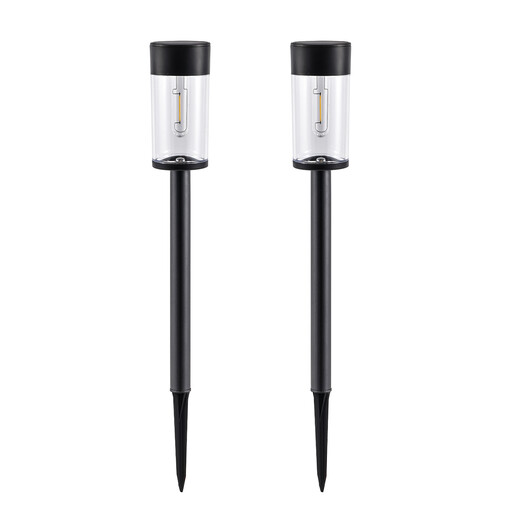
Why it suits this profile: This set is designed for easy installation along a path, lawn edge, driveway or flower bed. The ground spikes eliminate the need for fixed wiring.
The product specification states IP65, automatic dusk activation and a recommended charging location with 6 to 8 hours of direct sunlight. The limitations of solar charging remain clear.
Two lights per set, 3000K warm white light, 10 lumens per light and a stated operating time of 8 to 12 hours under suitable conditions.

Why it suits this profile: This fixed garden post light is ideal if you want a clear line of light along a driveway, patio or garden path and value a metal housing.
The product specification states IP44 and warns that the light must not be placed underwater or in the path of a direct high-pressure jet. This makes the positioning limits clear.
Aluminium and plastic construction, 800 lumens per light point, 2700K warm white light and a stated lifespan of 50,000 operating hours according to the product description.
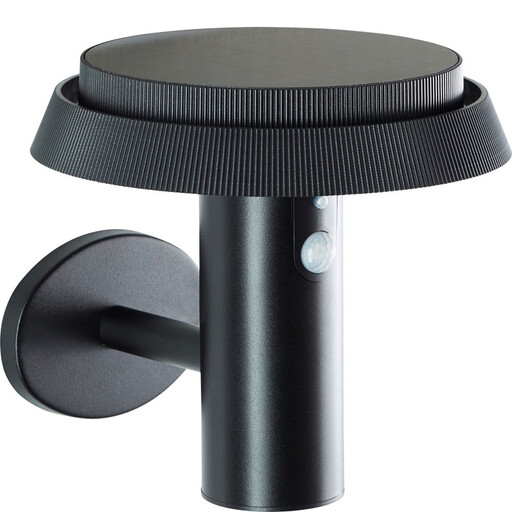
Why it suits this profile: This solar outdoor wall light is designed for entrances, façades and garden paths where light is only needed when movement is detected.
The product specification states that it has a built-in motion sensor, solar power and IP44 protection. Mount the light securely and avoid placing it where water can hit the housing directly.
500 lumens, 3000K warm white light, integrated LED and automatic activation when movement is detected, with no fixed wiring required.

Why it suits this profile: This set is suitable for anyone who wants to control garden lighting via an app or voice assistant and adjust the colour, brightness and colour temperature.
The product specification states IP44 and makes it clear that app functionality requires Wi-Fi, app installation, account registration and data sharing.
Three lights, 660 lumens in total, dimming function, RGB, adjustable CCT from 3000K to 6500K and control via Tuya Smart.
We have compiled a complete, up-to-date list of products that fully meet these strict selection criteria and the applicable European safety regulations.
Solar lights do not use mains electricity while operating. However, their performance depends on sunlight and battery capacity. An LED light connected to the mains can also be energy-efficient; in that case, consider the lumens in relation to the wattage and the desired operating time.
IP44 is suitable for splashing water and many sheltered outdoor applications, such as a façade beneath an overhang. It does not protect against immersion or direct powerful water jets. For an exposed and vulnerable location, a higher IP rating may be more suitable.
The operating time per night is affected by hours of sunlight, temperature, battery status and dirt on the panel. Product information may state 8 to 12 hours, for example, but cloudy days and limited direct sunlight can reduce the actual operating time. So do not just check the stated hours; also look at the battery, warranty and whether replacement is possible.
