
Vandaag of morgen in huis

Kwaliteit gegarandeerd

Welkomstaanbiedingen ontgrendelen: GRATIS bezorging | Tot 80% korting | Gratis 30 dagen JoyPlus-proefperiode
Download de app
Good outdoor lighting needs to do more than look attractive in a product photo. A light for the driveway has different requirements from an atmospheric lamp for the balcony. Even so, many shoppers focus mainly on colour, shape and lumens. This can lead to problems: a solar outdoor light may not get enough sunlight, an outdoor wall light may not withstand direct rain, or a motion sensor may switch on too often.
With this practical buying guide, you can compare LED outdoor lights, path lights and outdoor lights with motion sensors based on the factors that really matter in the Netherlands.
The lumen count indicates how much light a lamp produces according to its product specifications. It does not automatically tell you how large an area it will illuminate. A 170-lumen lamp may be suitable as a table lamp, but not bright enough for a driveway. For functional lighting, you should also consider the beam direction, mounting height and light distribution.
Also pay attention to the colour temperature. Around 2700 to 3000 K usually produces warm white light for a patio or entrance. 6500 K is much cooler and may be better suited to bright orientation lighting, but not everyone finds it pleasant as atmospheric lighting.
An IP rating consists of two digits. The first indicates protection against solid particles and the second against water. IP44 provides, among other things, protection against splashing water; it does not mean that a lamp can be exposed to a direct jet of water or submerged. IP54 offers protection against dust and splashing water, while IP65 indicates a higher level of protection against dust and water jets.
Always check the full product description. A listing may, for example, describe a product as “weather-resistant”, while the safety information states that the lamp is not waterproof.
A solar-powered garden light is easy to install, but its performance depends on the amount of direct sunlight it receives. A panel beneath a balcony, next to a tall fence or under a dense tree may not receive enough energy. In winter and during overcast weather, the operating time may also be shorter.
So do not choose based on the word “solar” alone. Check the battery capacity, stated charging time, recommended positioning and whether USB charging is possible. For permanent lighting around a dark entrance, a mains-powered lamp may be more practical.
An integrated LED outdoor light generally uses little energy and does not require a separate light source. However, check whether the LED can be replaced. With many compact lamps, the light source is integrated and the entire lamp must be replaced when it stops working.
Dimmable functions are useful for atmospheric lighting. Dimmable outdoor lighting can be set to a softer level during dinner and made brighter for practical lighting. Check whether the dimming function is controlled on the lamp itself, via a remote control or through an app.
A product with an E27 or GU10 fitting is often supplied without a light source. This gives you flexibility, but it also means you will need to purchase a suitable LED bulb separately.
Aluminium, plastic and stainless steel have different properties. Check the stated dimensions, weight and mounting method. A magnetic light should only be attached to a suitable, flat surface. A light with a ground spike must be firmly secured in the soil and must not create a trip hazard.
For a fixed 220–240 V connection, installation must comply with local regulations. Switch off the power before carrying out maintenance and have fixed wiring installed by a qualified installer.

Why it suits this profile: This compact path lighting runs on solar power and is installed using a ground spike. This makes it easy to set up along a garden path, border or balcony planter.
The product details state a charging time of 4–6 hours, an operating time of 8–12 hours and IP44. However, position the lamp somewhere with sufficient direct sunlight.
Stainless steel housing, 6500 K light colour, polycrystalline solar panel and a stated lifespan of 15,000 hours.
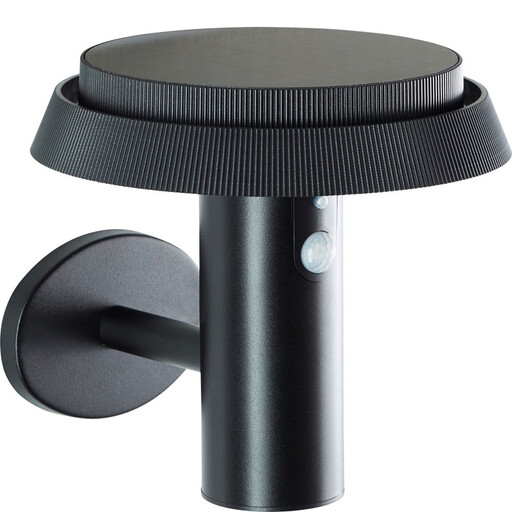
Why it suits this profile: This solar-powered outdoor wall light is designed for a fixed position by a façade, patio or entrance, without the need to install a power cable.
The specifications mention a daylight sensor, motion sensor, two lighting modes and IP44. This describes the functions more precisely than simply calling it “smart lighting”.
400 lumens per light point, warm white light according to the product information and an anti-UV plastic housing.

Why it suits this profile: This solar outdoor light with three adjustable heads is designed to provide wide-area lighting for a driveway, garage, garden or patio, for example.
The product listing specifies IP65, three lighting modes, a detection range of 60 feet and a detection angle of 180 degrees. Before installation, check that there is sufficient sunlight.
According to the product details, 302 LEDs, 3000 lumens, three adjustable light heads and installation without fixed wiring.

Why it suits this profile: This system is ideal for garden enthusiasts who want to adjust lighting along borders, plants or a path using an app.
The specifications explicitly state IP44, an 8-metre cable and a plug. Keep cables away from walkways and bear Wi-Fi, app installation and account registration in mind.
Set of three, dimmable, RGB and CCT settings, with control via Tuya Smart, Alexa or Google Assistant according to the product information.
We have put together a complete, up-to-date list of products that fully meet these strict selection criteria and the applicable European safety regulations.
That depends on the location. For a sheltered entrance, IP44 may be suitable if the lamp is only exposed to splashing water. For a more exposed position, it is worth considering a higher level of protection, such as IP54 or IP65. Always check the manufacturer’s instructions and avoid direct water jets unless the product information permits them.
The lifespan varies depending on the model, operating conditions and power supply. Some product listings state 10,000, 15,000 or 20,000 operating hours, for example. This is a stated specification, not a guarantee of a particular service life in every situation. With integrated LEDs, the complete lamp generally needs to be replaced when the light source fails.
A solar outdoor light does not use electricity from the mains during normal operation. The costs mainly consist of the purchase price and the possible replacement of the battery in the longer term. The practical operating time depends on sunlight, the season, battery capacity and the selected lighting mode. Position the panel as unobstructed as possible and clean it regularly in accordance with the maintenance instructions.
