
Vandaag of morgen in huis

Kwaliteit gegarandeerd

Welkomstaanbiedingen ontgrendelen: GRATIS bezorging | Tot 80% korting | Gratis 30 dagen JoyPlus-proefperiode
Download de app
An outdoor light with a motion sensor seems like a simple purchase—until it lets you down. You arrive home in the dark, and the light by the front door only switches on when you've nearly walked into it. Or worse: after a few heavy autumn downpours, it stops working altogether. Many outdoor lights are sold with promises that don't hold up in practice.
Before you make a choice, it's wise to understand the most common pitfalls. This will prevent you from spending money on a light that needs replacing after just one season.
solar-powered outdoor light often has a small solar panel and a weak battery. During the dark winter months, the light won't get enough power and will barely, if at all, stay on at night.outdoor security light and reduces its convenience.To make an informed choice, you don't need to pore over a technical manual. Just pay attention to a few key specifications that mark the difference between a durable investment and a disappointment.
The IP rating indicates the degree of protection against dust and water. This is a crucial factor for outdoor lighting.
wall-mounted outdoor light with a sensor that is installed in a sheltered location, such as under an overhang, a carport, or on a covered balcony. It is protected against rain but not against direct jets of water.These two values determine the brightness and colour of the light.
LED outdoor light with a sensor of 1000 lumens or more is a better choice.The choice of power source depends on the location and intended use.
outdoor security light.Based on objective product specifications, we have selected a number of lights that suit different needs and situations.

Why This Fits Their Persona: Ideal for illuminating a driveway, back path, or shed. The high light output and bright daylight effectively deter unwanted visitors, while the solar-powered design ensures simple installation.
With an IP65 rating, this lamp is fully equipped to handle the harshest downpours. The sensor has a wide range (up to 16 metres laterally), preventing 'blind spots'.
A very powerful 4000-lumen output and an efficient solar panel that, according to Philips, can provide up to 4 nights of light on a full battery.
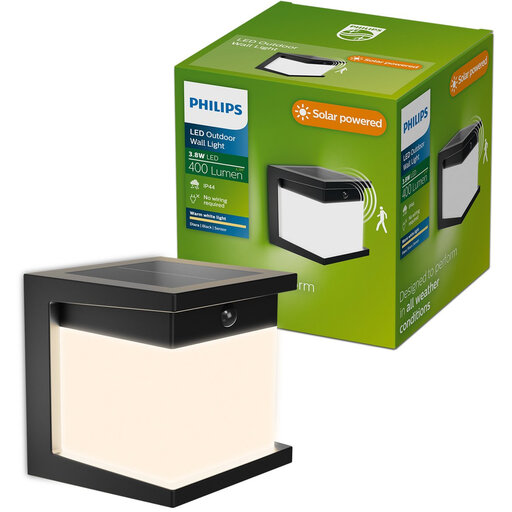
Why This Fits Their Persona: Perfect for a balcony, fence, or patio where you want to relax in the evening. The warm light creates an inviting atmosphere without being too bright, and installation is a breeze.
Although designed for ambiance, the sensor still offers convenience by activating automatically. The IP44 rating is sufficient for sheltered areas, which is precisely what this lamp is intended for.
Simple, wire-free installation and a warm white light colour (2700K) for a cosy ambiance. Works entirely on solar power.
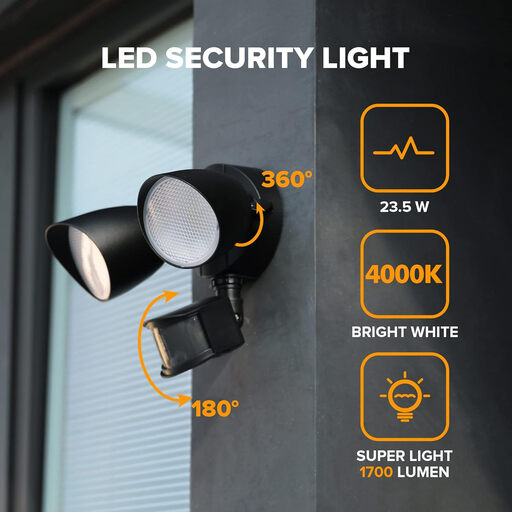
Why This Fits Their Persona: This wall light connects to your mains power, ensuring consistent, reliable performance for securing a yard, garden, or commercial space, regardless of the weather or amount of sunlight.
Because this lamp isn't dependent on solar energy, you'll never have to worry about a dead battery during dark winter days. Its performance is always guaranteed, which is essential for security.
Reliable power via mains (230V), a powerful 1700-lumen beam, and two adjustable heads to direct the light exactly where it's needed.
We've compiled a complete, up-to-date list of products that meet these selection criteria. Find the light that's a perfect fit for your situation.
This depends heavily on the quality of the lamp. Cheaper models with small solar panels and batteries will struggle to last through the dark and often cloudy winter days. Higher-quality models, like the Philips Zyren, are designed with more efficient panels and larger batteries. According to the manufacturer, these can function for multiple nights on a full charge, even with limited sunlight.
An outdoor light with a dusk-to-dawn sensor (also known as a day-night sensor) detects the amount of ambient light. The lamp automatically switches on (often in a dimmed mode) as soon as it gets dark and switches off again when it gets light. The motion sensor reacts to movement and switches the lamp to full brightness. Most modern lights combine both sensors for optimal convenience and energy efficiency.
Yes, in many cases. A solar-powered outdoor light is typically very easy to install yourself, as no wiring is involved. You just need to screw the lamp to a wall in a sunny spot. For lights that run on mains power (230V), it is recommended to have the installation carried out by a certified electrician to ensure safety.
