
Vandaag of morgen in huis

Kwaliteit gegarandeerd

Welkomstaanbiedingen ontgrendelen: GRATIS bezorging | Tot 80% korting | Gratis 30 dagen JoyPlus-proefperiode
Download de app
An outdoor light with a motion sensor seems like a simple purchase. It should switch on when you arrive home and deter unwanted visitors. Yet, many of these lights end up on the scrap heap after just a few months. They prove unable to withstand a typical British downpour, the sensor is triggered by every passing leaf, or the battery is dead after just a few overcast days.
As a Joybuy Product Recommendation Officer, I see where things often go wrong. Before you make a choice, it's wise to be aware of three common pitfalls:
solar-powered outdoor light sounds ideal: sustainable and no running costs. However, many cheaper models have a solar panel that underperforms during the dark British winter months, making the light unreliable.security light outdoor that only switches on when you're already standing right underneath it, or one that is constantly triggered by the neighbour's cat. A poor sensor renders the light useless.To avoid a bad purchase, it's essential to look beyond the marketing buzzwords. Pay attention to the following objective specifications that determine whether a light is suitable for your situation.
The IP (Ingress Protection) rating indicates how well a light is protected against dust and moisture. This is a crucial factor for the lifespan of your led outdoor lighting.
wall light outdoor with sensor mounted on an exposed facade.The choice of power source depends on the location and your preferences regarding ease of installation and reliability.
garden light with sensor.wireless outdoor light on batteries offers maximum flexibility. You can place it anywhere without running cables. The downside is that you will need to periodically recharge the battery.Not every light needs to illuminate the entire street. The right brightness (expressed in lumens) and colour (in Kelvin) depend on the purpose.
security light outdoor by the driveway or back door, a high light output (e.g., 1000 lm or more) is desirable to brightly illuminate a large area. For ambient lighting on a patio, 300-500 lm is often sufficient.Based on these criteria, we have selected several popular choices that suit different user profiles.
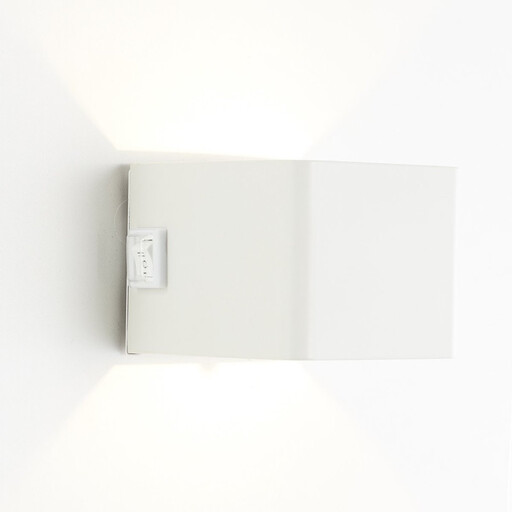
Why This Fits Their Persona: Ideal for those who can't or don't want to drill holes. This rechargeable outdoor light is wireless and, thanks to its magnetic mount, can be easily placed on metal surfaces like a drainpipe or steel doorframe. Perfect for a balcony or as a temporary solution.
It completely bypasses the installation problem. No fuss with cables or drilling into walls. The IP44 rating is sufficient for the sheltered spots where this light is best used.
Flexible Placement: Magnetic and USB-rechargeable. Sufficient Light: 300 lumens with a warm white colour (3000K) for functional yet atmospheric light.
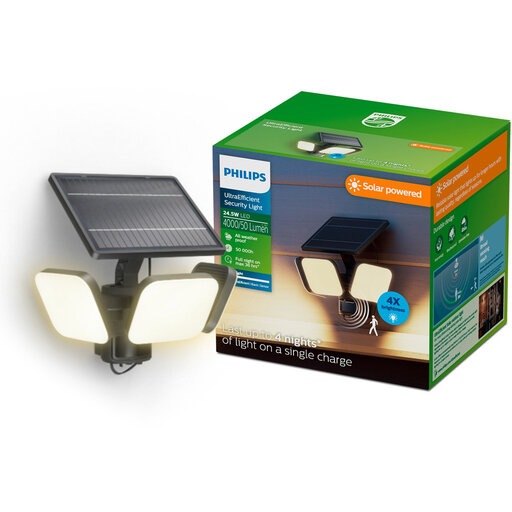
Why This Fits Their Persona: For those who prioritise security and visibility. This powerful solar-powered security light illuminates a large area and effectively deters unwanted visitors, without adding to your energy bill.
The high IP65 rating ensures the light can withstand the harshest British downpours. According to Philips, its efficient solar technology ensures reliable performance even in less sunny weather.
Very High Light Output: 4000 lumens for maximum visibility. Robust and Sustainable: Solar-powered with an IP65 rating.
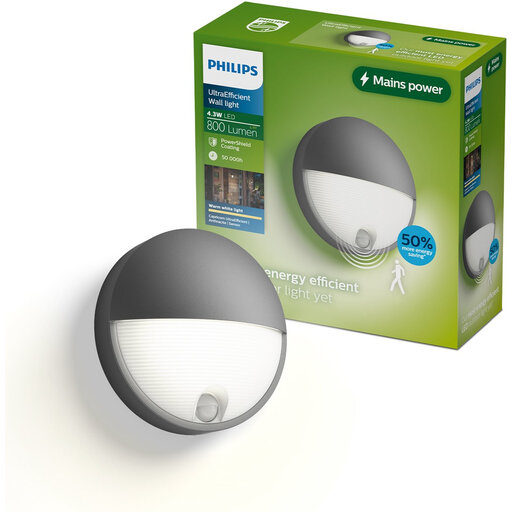
Why This Fits Their Persona: For those who want to combine functionality with modern design. This wall light is a stylish addition to a facade or fence and creates an inviting atmosphere in the garden or on the patio with its warm light.
The high-quality aluminium and PowerShield coating (according to Philips) prevent corrosion and discolouration. The warm light (2700K) avoids the cold, uninviting glare of many functional outdoor lights.
Stylish and Robust: Modern aluminium design. Atmospheric Light: Warm white light (2700K) with a functional output of 800 lumens.
We have compiled a complete, real-time list of products that fully satisfy these strict selection criteria and UK safety regulations.
Modern solar-powered outdoor lights are equipped with efficient panels and batteries that store energy even on overcast days. For optimal performance, it is important that the solar panel is positioned where it can catch as much direct light as possible during the day. During the darkest winter days, the runtime may be shorter than in the summer, but a quality model will remain functional.
The rule of thumb is simple: Is the light sheltered under an overhang, eave, or in a porch? Then IP44 (splash-proof) is sufficient. Will the light be exposed to direct rain and wind on an open wall? Then opt for the security of IP65 or higher.
That depends on the power source. A rechargeable outdoor light or a solar-powered model can usually be installed yourself with just a few screws. For a light that needs to be connected to the 230V mains, it is strongly recommended to hire a certified electrician to ensure a safe installation. Always check the product's manual.
