
Vandaag of morgen in huis

Kwaliteit gegarandeerd

Welkomstaanbiedingen ontgrendelen: GRATIS bezorging | Tot 80% korting | Gratis 30 dagen JoyPlus-proefperiode
Download de app
A light that only switches on when someone walks past is practical for your front door, driveway, shed, patio or a dark garden path. However, not every outdoor light with a motion sensor is suitable for every location. A high lumen count, the word “waterproof” in the product title, or a wide detection range says little on its own about its day-to-day usability.
The three most common pitfalls:
The IP rating consists of two digits. The first indicates protection against solid particles, and the second against water.
An IP rating doesn't mean you can submerge the light in water. Always check if the installation manual permits direct rain, water jets and frost. A 'waterproof' outdoor light is not automatically suitable for every application.
Lumen indicates how much light a lamp produces. For a small outdoor wall light, 180 to 500 lumens can be enough for orientation. For a driveway or a larger garden, a higher light output may be more practical.
Colour temperature is expressed in Kelvin:
Also, pay attention to the light distribution. A light with adjustable heads or multiple light sources can illuminate a larger area. This isn't always necessary for a front door, but it's useful for a garage, a wide driveway or a large garden.
Don't just look for the presence of a sensor; also consider:
A solar-powered outdoor light doesn't require a fixed power connection. However, its performance depends on the amount of direct sunlight it receives and its battery capacity. A 230-volt light often requires professional installation. An integrated LED outdoor light doesn't have a separate fitting, whereas an E27 lamp offers the flexibility to choose your own light source.
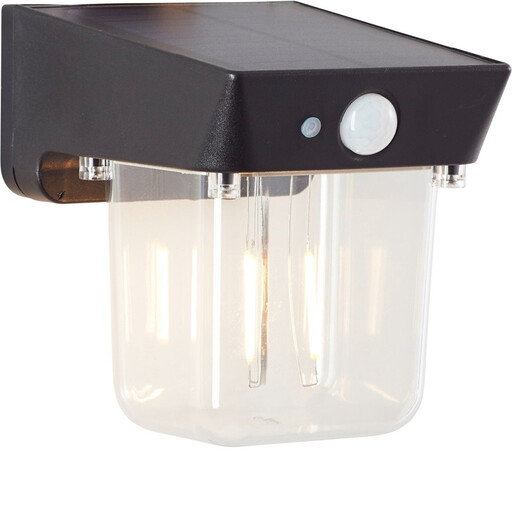
Why it fits this profile: This compact solar outdoor wall light is designed for an entrance, balcony, patio or small garden path where no fixed wiring is available.
The specifications state 180 lumens and an IP44 rating. This makes it clear that it's primarily for orientation and accent lighting, not a powerful floodlight.
Integrated LED, solar power, motion sensor and a specified light colour of 2700 K.

Why it fits this profile: A practical choice for those seeking a solar outdoor light with a clear set of specifications for their garden, balcony or wall.
The product description explicitly mentions an IP44 rating and two light modes. Therefore, do not place the light where it will be exposed to direct water jets.
400 lumens per light point, 2700 K warm white light, dusk-to-dawn and motion sensor, and wire-free installation according to the product information.
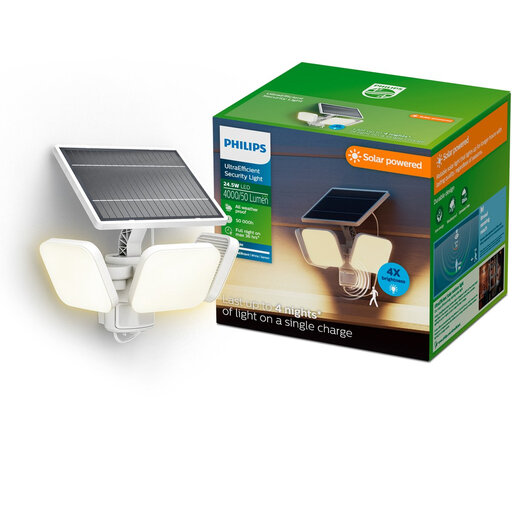
Why it fits this profile: This solar security light is aimed at large driveways, garages or spacious gardens where a wide and powerful beam of light is needed.
The product specifications list an IP65 rating, an adjustable head, and a detection range of 8 metres for direct approach and 16 metres for lateral approach.
4000 lumens, 3000 K warm white light, IP65 rating and two light modes according to the product description. A 5000 K version is also available.
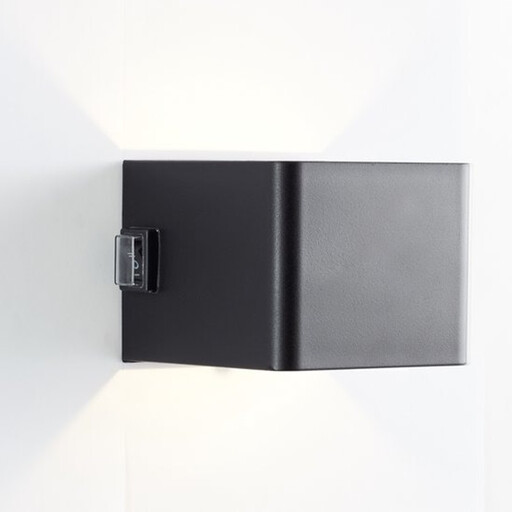
Why it fits this profile: This rechargeable light with a magnetic mount is handy when you don't want to drill or wire, for example on a balcony or in a rented property.
The description clearly states IP44: splash-proof, but not intended for submersion or direct water jets. Regular charging is still required.
300 lumens, 3000 K, integrated LED, USB-C charging and a motion sensor with a day/night function.
We have compiled a complete, up-to-date list of products that fully meet these strict selection criteria and comply with current European safety regulations.
Position a solar outdoor light so that the panel receives direct sunlight during the day. Avoid shadows from eaves, trees and fences. Aim the motion sensor towards the path you want to monitor, not directly at a busy street or moving branches. This helps to limit unnecessary activation.
For a wired outdoor light, the connection must be carried out by a qualified installer in accordance with local regulations. When installing, always check that the wall can support the weight and use the supplied mounting hardware where specified.
Clean the solar panel and sensor window regularly with a soft, slightly damp cloth. For models that the manual states should only be dry-cleaned, do not use water or harsh cleaning agents. After a storm or frost, check that the housing and mounting are still intact.
This varies by model, installation height and direction of approach. The Philips Zyren, for example, states 8 metres for direct approach and 16 metres for lateral approach. Always check the product specifications and adjust the light so that the sensor covers the desired path.
They can be, but the run time may decrease due to shorter days, cloudy weather and the lower position of the sun. Place the panel in a spot free from shade, keep it clean, and choose a light with a suitable battery capacity. Don't expect identical performance from solar lighting every night of the year.
A light that runs exclusively on solar energy doesn't draw power from the mains. However, there may be purchase, battery replacement and maintenance costs. With a rechargeable lamp, you indirectly pay for charging via USB. Therefore, consider the power source, battery and operating modes, not just the purchase price.
