
Vandaag of morgen in huis

Kwaliteit gegarandeerd

Welkomstaanbiedingen ontgrendelen: GRATIS bezorging | Tot 80% korting | Gratis 30 dagen JoyPlus-proefperiode
Download de app
An outdoor light with a motion sensor can be useful by the front door, shed, garage, in the garden or on the balcony. The light switches on when movement is detected, so you do not have to search for a key or bicycle lock in the dark. However, not every sensor light is suitable for every location.
Many disappointing purchases come down to three recurring pitfalls: insufficient light output, inadequate protection against moisture and a mounting method that is impractical in real-world use. Use the checks below to compare an outdoor LED light, outdoor wall light or garden light with a motion sensor based on verifiable specifications.
Wattage indicates how much electrical energy a light uses, but it does not directly tell you how much light you will get. Pay particular attention to the number of lumens.
Low energy consumption does not automatically mean that the light provides enough illumination for your intended use.
For outdoor lighting with a sensor, the IP rating is important. IP44 means that a product is protected against solid objects larger than 1 millimetre and against splashing water from various directions. An IP44 outdoor light is therefore suitable for sheltered outdoor locations, such as under a canopy, on a façade or on a balcony.
IP44 does not mean that the light is waterproof. Do not place this type of light under a direct jet of water and never immerse it. A higher IP rating may be more suitable for a completely exposed location. Also check whether the charging port, connection and housing are intended for outdoor use according to the product information.
A motion sensor usually works with a PIR sensor that detects changes in heat movement. Its performance depends on the positioning, viewing direction and distance. A sensor facing a busy pavement may switch on more often than desired. A sensor positioned behind an obstacle may fail to detect movement.
Also pay attention to the difference between:
A wireless wall light with magnetic mounting is flexible, but the mounting plate must be securely attached. A fixed 230V light must be installed by a qualified electrician.
Colour temperature is expressed in kelvin (K). Around 2700 to 3000 K produces warm white light, which often suits an entrance, patio or balcony. A value of around 4000 to 4500 K looks more neutral and can be practical in a hallway, storage room or workspace. 6500 K produces cooler, daylight-style light.
Alongside the colour temperature, check the brightness in lumens. For a bedroom or nursery, a compact LED night light version with 18 to 40 lumens is often sufficient. An outdoor façade will usually require more light.
A fixed mains-powered light does not need regular charging, but it does require wiring. A rechargeable outdoor light or solar-free outdoor light works without a solar panel and can therefore also be used in a shady location. The trade-off is that you need to recharge the battery in good time.
Pay attention to:
A battery-powered light is not the same as a solar outdoor light. With a solar-free outdoor light, you rely on charging via a cable or replacing the batteries.
Measure the location beforehand. A compact light measuring approximately 8 × 10 × 10 centimetres takes up less space than a fixed outdoor light standing more than 20 centimetres high. Also check the detection range. A model with a range of 3 to 5 metres is particularly suitable for a short passage or small space.
For indoor use, you can install an indoor light with a motion sensor in a cupboard, hallway, toilet or bedroom. For outdoor use, you should always check the IP rating and installation instructions as well.
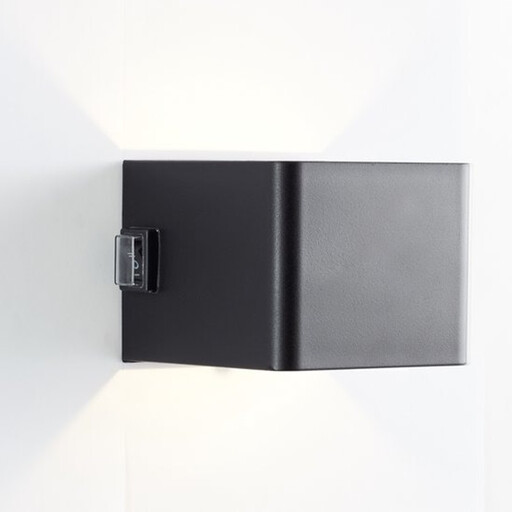
Why it suits this profile: The wireless design uses a rechargeable battery and magnetic mounting. This means no permanent wiring is needed on a balcony, in a shed or by a small entrance.
The product specifications state 300 lumens, 3000 K, a motion sensor and IP44. This makes it clear in advance that the model is designed for splashing water, not immersion.
Integrated 4W LED, USB connection, 300 lumens and magnetic mounting. The battery uses two 18650 batteries according to the product information.
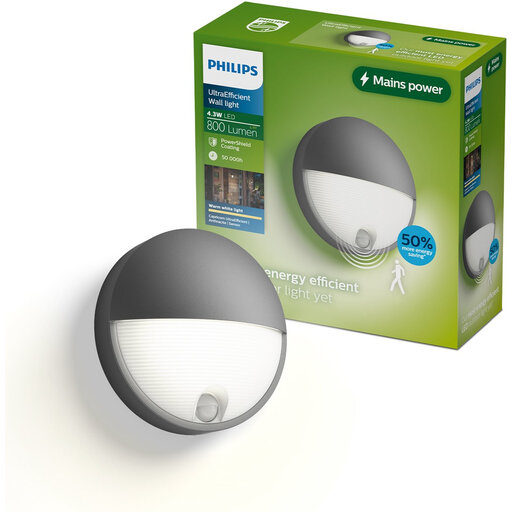
Why it suits this profile: This fixed outdoor wall light is designed for a façade, entrance or balcony where higher light output and a permanent connection are preferred.
The specifications list both a motion sensor and a dusk sensor. The IP44 rating is also clearly stated, allowing you to match the outdoor location to the conditions.
800 lumens, integrated LED, 2700 K warm white light and an aluminium housing. The light operates at 230 V and has IP44 protection according to the product details.
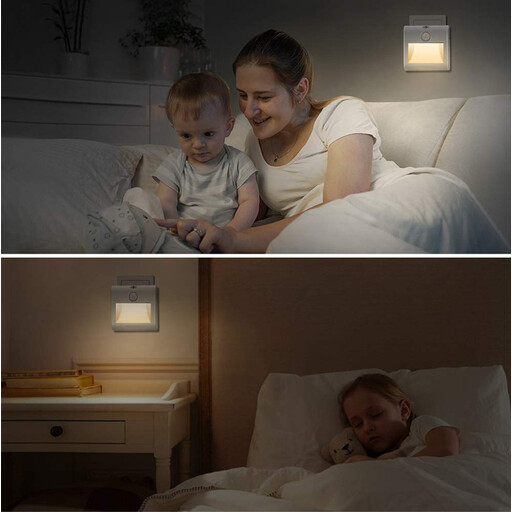
Why it suits this profile: The set is practical for several indoor spaces, such as a bedroom, hallway, toilet or nursery. Both lights can be plugged directly into a socket.
There is no need to guess the brightness: the product specification states 20 lumens and five dimming levels. This prevents a night light from being unnecessarily bright.
Two lights, touch dimming, memory function, 1W power consumption and a motion detection range of 3 to 5 metres according to the product description.
We have compiled a complete, up-to-date list of products that fully meet these strict selection criteria and the applicable European safety regulations.
Position an outdoor light with a motion sensor at a height where the sensor has a clear view of the route people take. Do not point the sensor directly at a road, moving branches or a heat source. Test the light after installation in daylight and again in the dark.
With a fixed outdoor wall light, the power must be switched off during installation. Have the mains connection installed in accordance with local regulations. A compact wireless wall light or rechargeable outdoor light is more practical for rented homes, provided that the mounting does not damage the surface.
Only use an IP44 model in the location described by the manufacturer. According to Brilliant’s product information, the Iseo light is splash-resistant but not waterproof. Clean lights of this type with a soft, dry cloth and do not use liquid cleaner near openings or connections.
For a small entrance or balcony, around 200 to 400 lumens is often a useful starting point. For a larger driveway or façade, 800 lumens may be more practical. A lower lumen output is usually sufficient for a cupboard, hallway or toilet.
This depends on the power rating, how long the light stays on and how often it is activated. According to the Brilliant Iseo product specifications, an integrated 4W LED uses 4 kWh per 1,000 hours when it remains on continuously. As a sensor light usually switches on only temporarily, actual consumption is generally lower. With a fixed light, you can compare consumption based on wattage and operating time.
IP44 protects against splashing water, not immersion or powerful water jets. An IP44 outdoor light may be suitable under a canopy or on a sheltered façade. Always check the installation instructions and do not position the light where rainwater can run directly into connections.
