
Vandaag of morgen in huis

Kwaliteit gegarandeerd

Welkomstaanbiedingen ontgrendelen: GRATIS bezorging | Tot 80% korting | Gratis 30 dagen JoyPlus-proefperiode
Download de app
An outdoor light with a motion sensor can automatically illuminate an entrance, driveway, garden path or patio. However, not every light is suitable for every location. A high lumen count, for example, means little if the light shines in the wrong direction. A solar outdoor light may also charge less effectively if the panel is in the shade all day.
So pay particular attention to these three common pitfalls:
With the right combination of sensor range, brightness, protection and installation, you can make a more informed choice. Below, you’ll find out which features matter and which models suit different situations.
Light output is measured in lumens (lm). For a front door, balcony or small patio, a compact model with a few hundred lumens may be sufficient. For a driveway, garage or large garden, a higher light output is more practical.
Colour temperature is measured in kelvin (K):
Also check the light spread. A model with several adjustable heads can illuminate a larger area than a compact wall light with a single fixed light source.
The IP code indicates how well a product is protected against dust and moisture. For outdoor use, you will often see IP44 or IP65.
An IP44 product must not be submerged or exposed to powerful water jets. Use the term waterproof outdoor light carefully: always check the official IP rating in the product information.
A solar-powered outdoor light works without mains electricity or wiring. This makes a solar outdoor light an appealing option for a garden shed, fence or rear pathway. However, performance depends on receiving sufficient daylight. Position the solar panel away from shade and clean it regularly.
When choosing a sensor, look at:

Why it suits this profile: This model runs on solar power and does not require a fixed electrical connection. That makes it practical for renters or beginners who want to illuminate an entrance, balcony or small patio without complicated installation.
The product information specifies a motion sensor, two lighting modes and an IP44 rating. Position the light in a sheltered location with plenty of direct sunlight; do not expect protection against direct water jets.
400 lumens, warm white light at 2700 K, automatic operation via dusk and motion sensors, and installation without wiring.
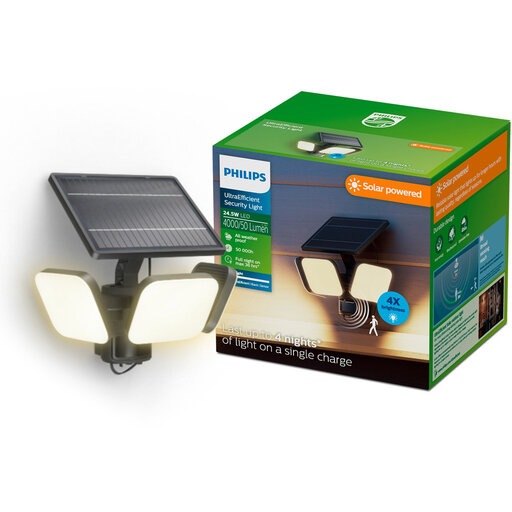
Why it suits this profile: For a large driveway, garage or spacious garden, strong light output and wide detection are more important than a compact size. This model is designed to provide powerful outdoor lighting with a sensor.
The product specifications state IP65, an adjustable light head and a sensor range of 8 metres for direct approach and 16 metres from the side. This gives you greater control over moisture protection and light direction.
4000 lumens, IP65, two lighting modes and a dusk sensor. According to the product information, the fully charged battery can provide up to four nights of illumination.

Why it suits this profile: This model is ideal for anyone looking for wide light coverage for a large garden, patio, garage or driveway, with several adjustable settings.
The light has three adjustable heads, a stated 270° angle and IP65 protection. This allows you to direct the beam more effectively than with a fixed single light source.
302 LEDs, a stated 3000 lumens, a sensor range of approximately 18 metres and three lighting modes. According to the product description, the solar panel has a higher conversion rate than the previous version.
Not every space needs a powerful LED outdoor light. For a bedroom, child’s bedroom, toilet or hallway, a small night light with a motion sensor is often a more suitable choice. In this case, pay attention to brightness, colour temperature and power supply.
A rechargeable model can be positioned flexibly. According to the product specifications, the 2-pack of rechargeable lights with motion detection offers a built-in 500 mAh battery, three colour temperatures, five dimming levels and a detection range of 3–5 metres. Take a look at the 2-pack rechargeable night lights with motion detection if, for example, you want to light a landing and bedroom at the same time.
For a socket, a plug-in model is simpler: there is no battery to recharge, but the light does need to stay in one fixed position. When using it in a child’s bedroom or bathroom, always check the safety instructions and keep electrical products away from moisture.
We’ve put together a complete, up-to-date list of products that fully meet these strict selection criteria and the applicable European safety regulations.
Yes, a solar outdoor light can continue to work in winter, but shorter days, cloudy weather and the low position of the sun can limit charging time. Position the panel as far from shade as possible and keep it clean. Also check whether the light has a permanent-on setting; this generally uses more energy than sensor mode.
This depends on the sensor range and light distribution. A mounting height of around 2 to 2.5 metres is practical for many wall lights, but always follow the product instructions. Do not point the sensor directly at a busy road or moving branches to reduce unnecessary activation.
A solar outdoor light does not use electricity from a socket. With a mains-powered model, consumption depends on the wattage and how long the light stays on. A motion sensor can reduce the number of hours the light is on, but total consumption varies from one product to another. Therefore, look at the wattage, lighting duration and any dimming settings rather than just the purchase price.
