
Vandaag of morgen in huis

Kwaliteit gegarandeerd

Welkomstaanbiedingen ontgrendelen: GRATIS bezorging | Tot 80% korting | Gratis 30 dagen JoyPlus-proefperiode
Download de app
An outdoor light with a motion sensor is a smart addition to any home, offering security, convenience, and ambiance. But the market is flooded with options, and not every light delivers on its promise. Common marketing claims can lead to a purchase you'll later regret. We'll outline the most important pitfalls so you know what to look for.
Pitfall 1: The Unreliable Sensor A sensor that reacts to every passing branch, or one that only switches on when you're already at the door. A common complaint is a sensor that is either too sensitive or not sensitive enough. This results in unnecessary energy consumption or a lack of functionality when you really need the light.
Pitfall 2: Poor Weather Resistance A light marketed as "weather-resistant" that fills with water or shows rust spots after the first major storm. The materials and sealing are crucial for the lifespan of outdoor lighting exposed to the elements.
Pitfall 3: The Overly Optimistic Solar Light A solar-powered outdoor light sounds ideal: sustainable and no installation costs. The reality can be different. After a few cloudy days, the light may be dim or stop working altogether. The battery capacity and the solar panel's efficiency are the deciding factors here.
To avoid the problems mentioned above, it helps to understand a few technical specifications. These details determine whether a light is right for your situation.
The IP rating (Ingress Protection) indicates how well a light is protected against dust and moisture. This is an objective standard, not a marketing term. For outdoor lighting, these are the most common ratings:
outdoor wall light with a motion detector that hangs under an overhang, carport, or on a sheltered porch. It is protected from rain, but not from direct jets of water.outdoor security light.The choice of power source directly impacts installation and reliability.
solar-powered outdoor light is easy to install and has no energy costs. Pay close attention to the battery capacity (expressed in mAh) and the light output (lumens). A model from a reputable brand often has a more efficient solar panel that charges sufficiently even on less sunny days.wireless outdoor light offers maximum flexibility. You can place it anywhere without needing cables. The downside is that the batteries need to be periodically recharged or replaced.A good outdoor light with a sensor offers adjustment options. Check if you can customise the following:
outdoor light with a dusk-to-dawn sensor ensures the motion detector only activates in the dark, which saves energy.Based on objective specifications, we have selected several products that fit different user profiles.
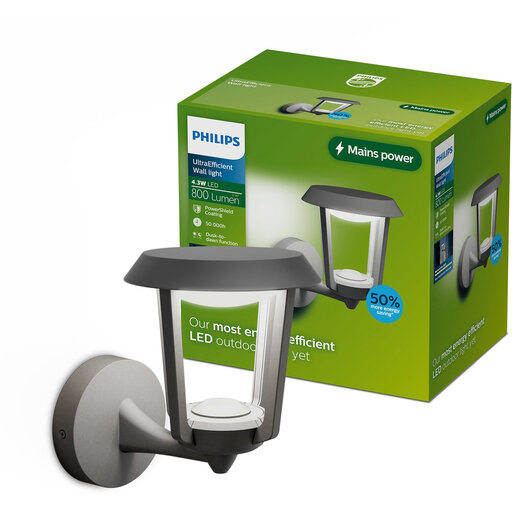
Why This Fits Their Persona: Ideal for those seeking a reliable, stylish light for their front or back door. The mains connection ensures it always works, regardless of the weather.
This light runs on mains power, completely avoiding the pitfall of a weak solar battery. The IP44 rating is honest and appropriate for its intended sheltered mounting location.
Consistent performance thanks to the hardwired connection. The Philips PowerShield coating provides extra protection against corrosion.
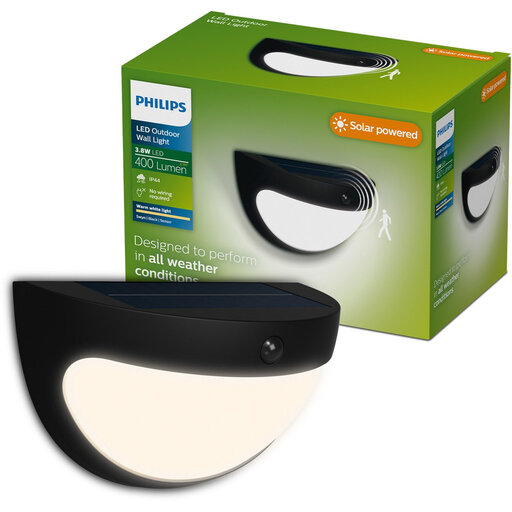
Why This Fits Their Persona: Perfect for those looking for an eco-friendly solution without the hassle of cables. Suitable for the garden, balcony, or next to a shed door where there is no power outlet.
Philips states that its solar panels convert energy efficiently, reducing the risk of a dead battery. The anti-UV plastic housing and IP44 rating tackle the pitfall of poor weather resistance.
No energy costs and extremely simple, wire-free installation. The two light modes ('Auto' and 'On') offer extra flexibility.
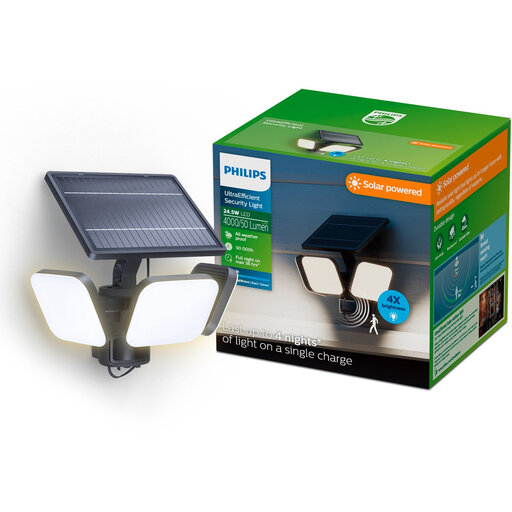
Why This Fits Their Persona: For those who want to powerfully illuminate a driveway, backyard, or dark corner for maximum peace of mind. This light is designed as a serious spotlight.
It tackles the weak sensor pitfall with a long detection range (up to 16m). The IP65 rating offers superior weather protection. According to Philips, the battery can last up to 4 nights on a single charge.
Very high light output of 4000 lumens for bright illumination. The adjustable head allows you to aim the light exactly where it's needed.
We have compiled a complete, up-to-date list of products that meet these selection criteria and safety standards.
How do I adjust the sensitivity of a motion sensor? On many models, there are small dials on the sensor itself, often labelled 'SENS' (sensitivity) and 'TIME'. These allow you to adjust the sensitivity and the duration the light stays on. Always consult the manual for your specific light, as the method can vary by brand.
How long does an LED outdoor light with a sensor last? A major advantage of an LED outdoor light with a sensor is its lifespan. The LEDs themselves often last for 25,000 to 50,000 operating hours. Since the light only turns on when needed, this can translate to many years of use in practice. The lifespan of the sensor and the housing are also important factors.
Do solar-powered outdoor lights work in the winter? Yes, but performance can be reduced. In winter, the days are shorter and there is less direct sunlight, so the battery doesn't charge as fully. Lights with an efficient solar panel and a large battery capacity generally perform better. Some models have a power-saving mode for the winter months. It's important to keep the solar panel clear of snow and debris.
