
Vandaag of morgen in huis

Kwaliteit gegarandeerd

Welkomstaanbiedingen ontgrendelen: GRATIS bezorging | Tot 80% korting | Gratis 30 dagen JoyPlus-proefperiode
Download de app
An outdoor lamp can make a dark entrance safer and a patio more inviting. However, many buyers fall for the same marketing tricks. A lamp may look sturdy in the product photos, only to arrive without a light source. Or a model may be labelled “weatherproof” when this only means splashproof.
With this guide, you can compare outdoor lighting using specifications you can verify. That way, you can choose a garden lamp, outdoor wall lamp or patio light that suits your home and how you plan to use it.
An IP rating indicates what types of exposure a light fitting is protected against. An IP44 outdoor lamp is protected against splashing water from different directions, but it is not designed for immersion or powerful water jets. It is therefore best placed beneath an overhang, veranda or sheltered wall.
An IP54 outdoor lamp also offers greater protection against dust. Even with IP54, it is important to follow the installation requirements and the manufacturer’s instructions.
With a GU10 outdoor lamp or E27 outdoor lamp, the fitting is often included, but the bulb itself is not. So check:
A fitting without a light source gives you more choice, but it does require an additional purchase.
An outdoor lamp with a motion sensor is useful by a front door, shed or driveway. However, the sensor may respond to passers-by, pets or moving branches. So check the detection range, installation height and whether you can adjust the lighting duration or sensitivity. On some models, these settings are limited.
Lumens indicate how much light a lamp produces according to the product specification. A lamp producing 170 to 300 lumens is often suitable for ambient lighting on a table or balcony. For an entrance or path, a higher light output may be more practical. For example, the vidaXL LED Outdoor Lamp provides 550 lumens with a power rating of 9 watts.
Colour temperature is measured in Kelvin:
Also consider the light distribution. A downlight directs light downwards, while a diffuse shade spreads the light more widely.
A fixed outdoor wall lamp running on 230 volts requires a suitable connection. Have the installation carried out by a qualified installer whenever wiring and mains voltage are involved.
A solar outdoor lamp works without a permanent cable, but its performance depends on the amount of daylight and the position of the solar panel. A north-facing wall or one that is constantly in the shade is less suitable.
A rechargeable outdoor lamp offers flexibility on a balcony, patio or table. Check the charging method, battery life and whether the lamp can be used while charging. With integrated LED modules, the light source generally cannot be replaced by the user.
Aluminium is lightweight and is often used for outdoor light fittings. Metal, glass and plastic each affect the weight, appearance and maintenance requirements. Also check the dimensions: a wall lamp measuring 29 cm in height needs a different location from a compact lamp of around 10 cm.
For magnetic or freestanding models, the surface must be stable and level. Magnetic mounting is not suitable for every wall. Check the weight and use the supplied mounting materials in accordance with the instructions.
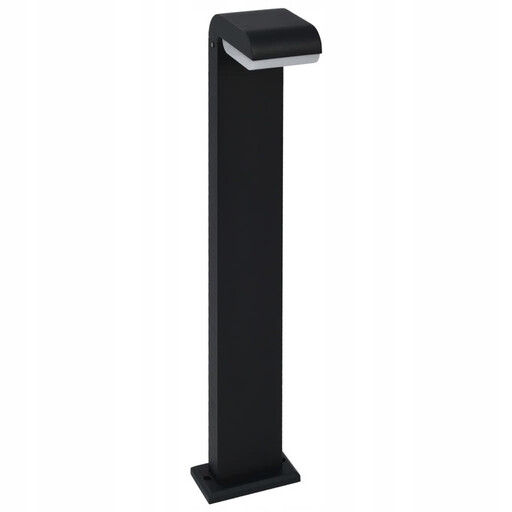
Why it suits this profile: This freestanding garden lamp has an integrated LED and does not require a separate fitting or light source. With a height of 800 mm, it is suitable for positioning along a garden path or border.
The light source is already integrated. The product specification also states IP54, 550 lumens and 9 watts, so you know exactly what you are buying in advance.
Cast aluminium, integrated LED, 550 lumens and IP54 protection.
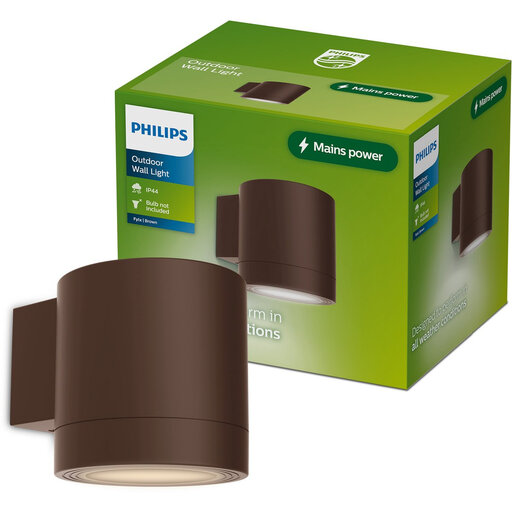
Why it suits this profile: This aluminium outdoor wall lamp has a replaceable GU10 fitting. You can choose the colour temperature and light output of the individual LED bulb yourself.
The product information clearly states that the GU10 spotlight is not included. This means you can calculate the total purchase cost in advance.
Aluminium housing, replaceable GU10 light source and IP44 for sheltered outdoor locations.
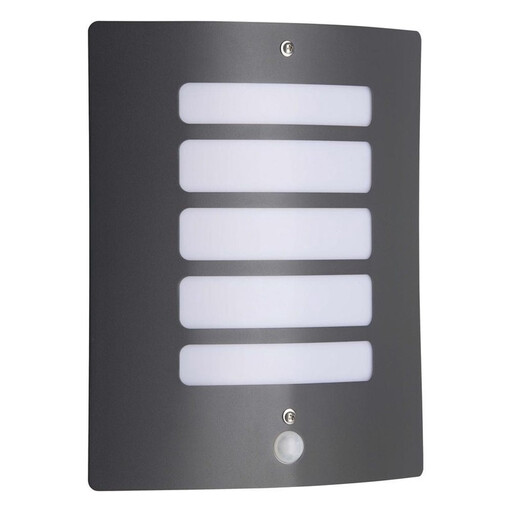
Why it suits this profile: This E27 outdoor wall lamp with motion sensor is designed for an entrance, exterior wall or side path where automatic lighting is useful.
The sensor function is listed separately in the product specifications. It also states that the lamp is supplied without an E27 light source.
Integrated motion sensor, E27 fitting up to 60 watts and compact design.
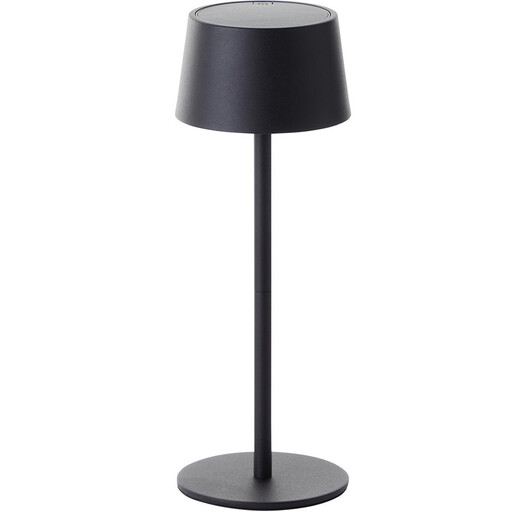
Why it suits this profile: This freestanding lamp runs on an integrated battery and, according to the product description, can be charged using solar power or USB.
The dual charging option means you are not dependent on sunlight alone. However, bear in mind that it has an IP44 rating: the lamp is splashproof, not waterproof.
170 lumens, 3000 K, three dimming modes and charging via solar power or USB.
We have put together a complete, up-to-date list of products that fully meet these strict selection criteria and the applicable European safety regulations.
An IP44 model is protected against splashing water, but not against immersion or direct, powerful water jets. Position the lamp according to the product instructions and, for an exposed location, choose a model with a suitable protection rating.
An LED outdoor lamp generally uses little electricity relative to its stated light output, but consumption depends on the wattage and the number of hours it is switched on. A lamp with a motion sensor may be on for less time than one that stays lit all evening. With a solar-powered or battery-operated model, you do not use mains electricity while it is running, but you do need to consider charging and battery capacity.
The lifespan varies according to the light source, battery, housing and conditions of use. An integrated LED cannot always be replaced by the user. With a GU10 or E27 fitting, you can replace the light source separately, provided the fitting and maximum wattage are compatible. Before buying, therefore, check not only the appearance but also the maintenance and replacement options.
