
Vandaag of morgen in huis

Kwaliteit gegarandeerd

Welkomstaanbiedingen ontgrendelen: GRATIS bezorging | Tot 80% korting | Gratis 30 dagen JoyPlus-proefperiode
Download de app
In the Netherlands, an outdoor jacket needs to cope with more than a brief shower. Bike rides, walks, fresh coastal winds and changing temperatures all call for a jacket suited to how you use it. Even so, it can be difficult to translate marketing terms into practical features.
Pay particular attention to these three common pitfalls:
A waterproof jacket needs more than a smooth outer fabric. Check whether the product description refers to waterproof fabric, fully taped seams or a specific membrane. Taped seams help prevent water from getting in through the stitched seams.
A DWR finish, or Durable Water Repellent, is a surface treatment. According to the product descriptions of various The North Face models, this finish helps water bead off the fabric. The treatment can become less effective through use and washing. Always follow the care label and do not use a random detergent that could damage the finish.
For walks in persistent rain, a technical shell, such as a DryVent jacket, is generally a more sensible choice than an ordinary fleece jacket or lightly padded jacket. A fleece jacket mainly works as an insulating mid-layer and does not offer the same protection from rain.
Choose the insulation based on your activity:
A jacket with synthetic insulation can be useful in damp weather. Also look at the cuffs, hood, hem and zips. These details determine how much wind gets in around the sleeves or underneath the jacket.
A jacket should allow freedom of movement without leaving unnecessary gaps. For women's and men's jackets, measure at least your chest, waist and arm length, then compare these measurements with the size chart for the specific model. Sizes can vary between brands and models.
Do you like wearing a jumper or fleece jacket under your coat? Wear that layer when trying the jacket on. A standard fit is often suitable for everyday use; a roomier fit may be more comfortable when hiking or camping. Also pay attention to sleeve length when choosing a jacket with a hood or adjustable cuffs.
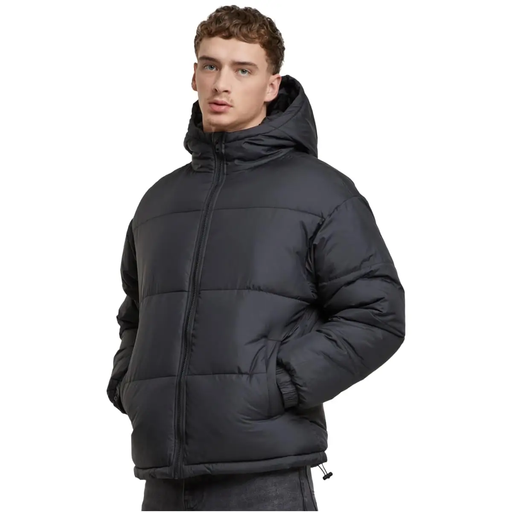
Why it suits this profile: This black puffer jacket is designed for everyday use and cold days in the city. The hood and synthetic insulation make it a practical basic winter layer.
The product information specifically states that it has 100% polyester filling, a polyamide outer fabric and a polyester lining. This gives you more useful information than simply calling it a winter jacket.
Synthetic insulation, hood, black colour and machine washable according to the product information provided.

Why it suits this profile: This Triclimate 3-in-1 system is designed for anyone who wants one jacket solution that can be adapted to changing conditions while walking and enjoying outdoor activities.
According to the product description, the outer layer and insulating inner jacket can be worn separately or together. This means you do not need a different jacket for every type of weather.
Adjustable hood, taped outer seams, underarm zips and an inner layer with 550 fill power down according to the product information.

Why it suits this profile: This walking jacket is designed for hiking and activities where rain, wind and freedom of movement all matter.
According to the product description, the jacket has fully taped seams and a 2L DryVent outer layer. These are verifiable specifications alongside the waterproof claim.
Adjustable hood, mesh lining, adjustable hem and two zipped pockets; the size chart lists chest measurement and body length.
Use this quick checklist:
We have compiled a complete, up-to-date list of products that fully meet these strict selection criteria and the applicable European safety regulations.
Water-repellent usually means that a finish temporarily makes water droplets roll off the fabric. Waterproofing also depends on the construction of the fabric, seams, zips and any waterproof rating. That is why you should check the full product description.
Its lifespan depends on use, friction, washing and storage. A jacket worn for daily commuting may wear more quickly around the shoulders and cuffs than one worn occasionally. Wash it according to the care label and only restore a DWR finish in the way specified by the manufacturer.
For running, choose a lightweight running jacket that allows freedom of movement and provides ventilation and protection from wind or rain. A thick puffer jacket can become too warm during exercise. For rainy training sessions, a model with a technical shell and hood is more practical, while in dry but windy weather, a windproof jacket may be all you need.
