
Vandaag of morgen in huis

Kwaliteit gegarandeerd

Welkomstaanbiedingen ontgrendelen: GRATIS bezorging | Tot 80% korting | Gratis 30 dagen JoyPlus-proefperiode
Download de app
In the Netherlands, an outdoor jacket needs to cope with more than just a brief shower. During a walk, the wind can pick up; when you are cycling, rain often blows in from the side; and at the campsite, chilly mornings can give way to mild afternoons. Even so, it is not wise to rely solely on terms such as “all-weather” or “breathable”.
The key question is: what protection do you really need, and how can you check whether the product information supports it?
A jacket with a water-repellent finish can temporarily make light rain bead up and run off. That does not automatically mean the jacket is waterproof for prolonged periods. Check whether the product description refers to a waterproof membrane, sealed seams or a specific waterproofing test.
Also pay attention to the zips, hood and cuffs. Waterproof fabric is of little use if rain can get in through an open zip or a loose sleeve.
A breathable jacket can allow water vapour to move from the inside to the outside, but its performance depends on exertion, temperature, humidity and how you wear the jacket. A heavy rucksack or closed ventilation zips can affect comfort.
For a walking or trekking jacket, look for practical ventilation features such as underarm zips, a mesh lining or an adjustable hem. A marketing name for a membrane is not, by itself, a measurable performance rating.
A windproof jacket can block cold air without being lined. A fleece jacket retains warmth, but usually does not provide sufficient protection against prolonged rain on its own. A warm outdoor jacket for winter use therefore needs insulation, a close-fitting design and protection from the wind.
A 3-in-1 jacket generally combines an outer layer with a fleece, synthetic or down inner layer. Check whether both layers can be worn separately and how they are attached to each other.
For walking in rainy conditions, a waterproof jacket, an adjustable hood and sealed seams are useful features. “Seam-sealed” or fully taped seams refers to additional sealing along the stitched seams. Also check the care instructions: a water-repellent finish can become less effective over time and may sometimes need to be reapplied.
The product description for The North Face Quest Jacket states that it has a fully seam-sealed DryVent outer fabric with waterproof, windproof and breathable properties. This is a claim from the brand’s product information, so treat the stated features as product specifications rather than a guarantee for every weather condition.
A windproof jacket is useful for cycling, walking along the coast and in exposed areas. Look for an adjustable hem, elasticated or adjustable cuffs and a hood that will not easily blow off. For trekking, the jacket should also provide enough room for a base layer and, if needed, a fleece.
A jacket that is too tight restricts freedom of movement. One that is too loose can lose heat and flap around in the wind. Measure your chest and sleeve length according to the product’s size chart, rather than relying solely on your usual clothing size.
A polyester fleece jacket is primarily suitable as an insulating mid-layer. A shell is designed as an outer layer to protect against rain and wind. For changing conditions, a layering system is often more practical than one very thick jacket:
For camping, travelling and everyday use, a flexible combination can remain useful for longer than a jacket that is comfortable only within one temperature range.
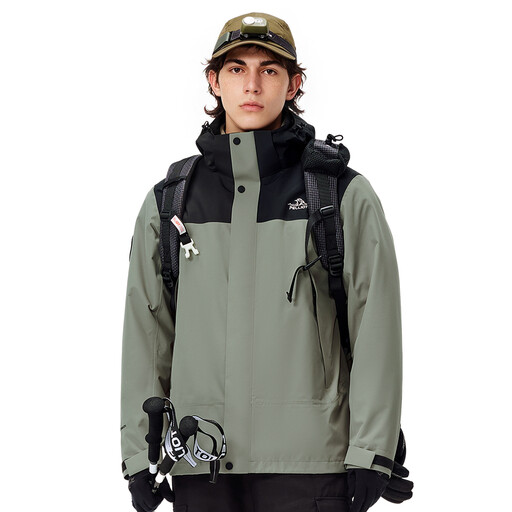
Why it suits this profile: The combination of an outer jacket and thermal inner layer is practical for camping, travelling and everyday commuting. According to the product description, the layers can be worn separately or together.
Rather than offering warmth or rain protection alone, this model has a 3-in-1 construction. The description mentions a microporous membrane, taped seams and a wind-resistant design. Before buying, however, check the current size chart.
3 ways to wear it; outer layer with scratch-resistant fabric; inner layer with an anti-static treatment according to the product description.

Why it suits this profile: Designed for changeable outdoor conditions, this men’s jacket combines a protective shell with a down inner jacket, according to the product description. That makes it suitable for trekking, travelling and cold-weather walks.
The layers can be worn separately, so you do not always need to wear a thick jacket. The description mentions taped seams, underarm ventilation zips, and adjustable cuffs and hem.
3-in-1 system; 550 fill power down according to the product information; adjustable hood and underarm ventilation.

Why it suits this profile: This women’s outdoor jacket is designed as a shell for walking in wet and windy conditions. It is therefore suitable for users who want to choose their own fleece or other mid-layer.
The product description mentions fully sealed seams, an adjustable hood, an adjustable hem and a mesh lining. This makes the design easier to assess than a general claim such as “suitable for any weather”.
DryVent 2L fabric according to the brand description; mesh lining; two zipped pockets and an adjustable hood.
We have put together a complete, up-to-date list of products that fully meet these strict selection criteria and the applicable European safety regulations.
Women’s and men’s outdoor jackets differ in more than just colour or style. Shoulder width, chest measurement, sleeve length and room around the hips can vary. Take your measurements while wearing the clothing you plan to wear under the jacket.
With a 3-in-1 jacket, pay particular attention to the size of both layers. For example, the PELLIOT jacket lists separate outer and inner sizes. The product information advises allowing for layers when choosing your size. Use the weight-and-height reference as an additional guide only; your body measurements and the freedom of movement you want remain more important.
The lifespan of an outdoor jacket depends on use, washing, storage and exposure to abrasion. Close the zips before washing, use the detergent stated on the label and avoid bleach when this is not recommended. Fleece jackets can generally be left to air-dry, while you should check that a lined jacket is completely dry before storing it.
With a waterproof jacket, the outer finish may become less effective over time. Follow the brand’s care instructions and use only a suitable reproofing treatment. A jacket that loses its water-repellent performance is not automatically leaking; however, its original performance may change.
Look for waterproof outer fabric, sealed seams, an adjustable hood and protected zips. A fleece jacket on its own is usually intended as a warm mid-layer rather than a rain jacket.
Yes, provided the layers can be worn separately and the fit is comfortable with a jumper underneath. This makes a 3-in-1 jacket useful for commuting, walking and travelling in different temperatures.
Wash a jacket when it is dirty or starts to smell less fresh, but not after every short walk. Always follow the care label. Washing at too high a temperature, drying it incorrectly or using unsuitable products can damage the fabric, insulation or water-repellent finish.
