
Vandaag of morgen in huis

Kwaliteit gegarandeerd

Welkomstaanbiedingen ontgrendelen: GRATIS bezorging | Tot 80% korting | Gratis 30 dagen JoyPlus-proefperiode
Download de app
Good outdoor garden lighting needs to do more than look attractive. It should suit the location, provide enough light and stand up to the British weather. However, product pages aren’t always clear. A light might be described as “weather-resistant”, for example, even though its IP rating only indicates protection against splashes.
Popular features such as solar power, RGB colours and smart controls also have their limitations. Solar lights won’t stay on as long after several overcast days, RGB lighting isn’t always suitable for practical illumination, and a motion sensor may be triggered unnecessarily if the light faces a busy pavement. Keep the following points in mind to avoid choosing the wrong light.
IP44 outdoor lighting is protected against splashes and solid objects of a certain size. This doesn’t mean the light can be submerged or withstand direct jets of water. It’s best to place an IP44 light under a canopy, on a sheltered wall or somewhere rainwater can drain away.
Wattage mainly tells you how much electrical power a light uses. To find out how much light it produces, look at lumens. A low-wattage LED light can still provide enough light, but a decorative light producing just 100 to 200 lumens isn’t designed to illuminate an entire garden.
Solar garden lights need direct daylight to charge their batteries. Shade from a fence, tree or canopy can reduce how long they stay lit. Also check that you’ll be able to position the solar panel properly. On some models, the panel is attached to the light; on others, it can be positioned separately using a cable.
Choose the level of protection to suit the location. IP44 may be suitable for a sheltered wall or patio. For a spot exposed to a lot of rain, it’s worth considering a higher level of protection. Always check the installation instructions and use an outdoor socket with suitable protection.
Use lumens as a practical guide:
Light colour is measured in Kelvin. Around 2700 to 3000 K gives you a warm white light for a relaxed atmosphere. A range such as 3000–6500 K offers more flexibility. RGB lighting adds coloured effects, but it won’t always replace bright white light at an entrance or along a path.
LED outdoor lights with an integrated light source are often easy to install, but check whether the LED can be replaced. Models with a GU10 or E27 fitting let you choose a suitable light source yourself. A fixed 220–240V connection will usually need to be installed by a qualified electrician.
Smart garden lighting can be controlled via an app, Bluetooth, Wi-Fi or a voice assistant. Check in advance which connection is required and whether you need to create an account. A dimmable outdoor light is handy for everyday use, while an outdoor light with a motion sensor is particularly suitable for an entrance, garage or back path.

Why it suits this type of buyer: The three ground spikes are ideal for highlighting a garden path, flower bed or individual plants. App control makes things easier, without the need for multiple switches.
The specifications list 660 lumens, adjustable brightness and an IP44 rating. Keep the cable away from walkways and remember that IP44 protects against splashes, not water ingress.
Set of three, RGB and CCT from 3000–6500 K, dimmable, and compatible with Tuya Smart, Alexa and Google Assistant, according to the product description.

Why it suits this type of buyer: This solar wall light is a good fit for an entrance, shed or patio without a power cable, where you’d like extra light when movement is detected.
The product details clearly list two light modes, a dusk sensor, a motion sensor and 1000 lumens. The panel does need enough daylight to charge.
Integrated LED, warm white light at 3000 K, solar-powered, 1000 lumens and an IP44 rating.
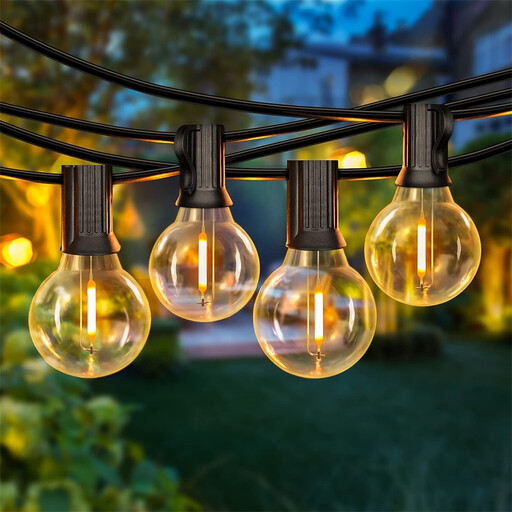
Why it suits this type of buyer: At 30 metres long, this string light offers plenty of coverage for a large patio, balcony or garden party. The plug-in connection is a good choice if a constant power supply matters more to you than solar power.
The bulbs can be replaced, and the maximum number of connectable lights is specified. Keep connections away from standing water and don’t exceed the limit of 500 lights.
30 metres, 50+2 LED bulbs, dimmable, timer function, multiple light modes and replaceable bulbs, according to the product information.
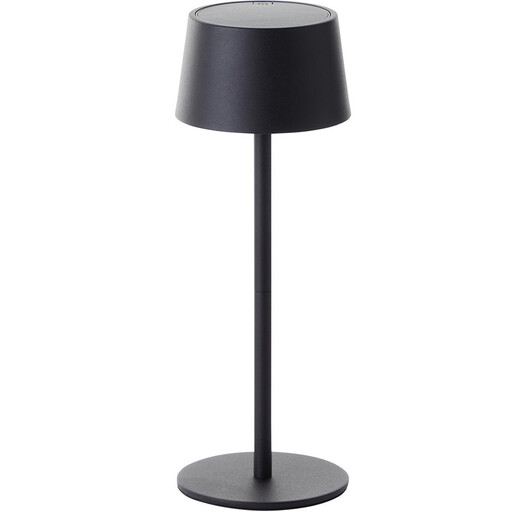
Why it suits this type of buyer: This compact LED outdoor table lamp is easy to move around on a balcony, garden table or patio.
As well as solar power, the lamp can be charged via USB. That means you’re less dependent on sunny days. IP44 still only protects against splashes, so don’t place the lamp in a puddle.
170 lumens, warm white light at 3000 K, three brightness settings, integrated LED and two charging options.
We’ve put together a comprehensive, up-to-date list of products that meet these strict selection criteria and comply with current European safety regulations.
It depends on the wattage, how many hours the lights are on and the price of energy. LED outdoor lighting generally uses less power than traditional light sources. Solar lights don’t use mains electricity during normal operation, but how long they stay lit depends on the sunlight and battery capacity.
IP44 is suitable for certain sheltered outdoor locations and protects against splashes. It doesn’t protect against submersion or direct jets of water. Consider where you’ll install the light and follow the manufacturer’s safety instructions.
Lifespan varies depending on the model and conditions of use. With integrated LED lights, the light source isn’t always replaceable. Before buying, check the stated lifespan, warranty terms and whether parts such as the bulb, battery or fitting can be replaced.
