
Vandaag of morgen in huis

Kwaliteit gegarandeerd

Welkomstaanbiedingen ontgrendelen: GRATIS bezorging | Tot 80% korting | Gratis 30 dagen JoyPlus-proefperiode
Download de app
A garden light may look atmospheric in photos, but disappoint in practice because it gives off too little light, has an unsuitable IP rating or has a solar panel that gets hardly any direct sunlight. So before buying outdoor garden lighting, it’s worth deciding what you’ll use it for and checking the technical specifications.
As a Joybuy Product Recommendation Officer, I review the key product information with practical considerations in mind. This helps you quickly find outdoor lights to suit a patio, flower bed, driveway, garden path or entrance.
With LED garden lighting, wattage mainly tells you how much energy a light uses. To check how bright it is, look at the lumens. A solar path light with 10 lumens is suitable for a subtle accent, but not for lighting a dark driveway. A 350-lumen ground spotlight serves a very different purpose.
IP44 outdoor lighting is protected against splashing water and solid objects above a certain size. This makes IP44 suitable for many sheltered patios, entrances and general outdoor uses. However, don’t place this type of light in a dip where water collects or somewhere it will be hit directly by a high-pressure jet.
IP65 outdoor lighting offers greater protection against dust and water jets. It can be a sensible choice for open flower beds, garden paths and locations more exposed to rain. IP65 does not mean the light can be submerged.
Solar garden lights need direct sunlight during the day to charge their batteries. Shade from a fence, tree or canopy can affect how long they stay lit. Check that the panel will also stay clean. Solar lighting is easy to install, but its performance still depends on where you place it and the weather.
Warm white light around 2700K to 3000K usually creates a relaxed feel. Cooler light can be useful by an entrance or in a work area, but may look less soft in a leafy setting. Also check the lumen output per light. For a set of solar lights, it’s useful to know whether the stated light output applies to each light or the whole set.
Solar lights work without a mains connection and are usually installed using a ground spike. A 230-volt light, on the other hand, needs a suitable outdoor-rated power connection. Don’t use an indoor socket with a plug-in model, and make sure cables don’t create a trip hazard.
Materials such as aluminium, glass, rust-resistant steel, ABS and plastic all have their own properties. For metal parts, check the stated finish and install the light according to the instructions. The statutory guarantee and any additional warranty are listed for each product.
The following selection is based on verifiable details such as light output, colour temperature, IP rating, power supply and controls. Brand claims about performance are not presented as independently proven results.
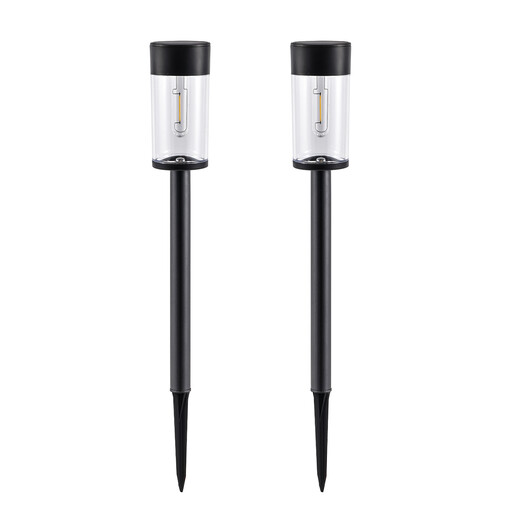
Why it suits this profile: This set is designed for anyone who wants to mark a garden path, flower bed or driveway edge without cables. The two lights are installed using ground spikes and, according to the product description, switch on automatically at dusk.
The specifications state 10 lumens per light, so it’s clear from the outset that the brightness is limited. These lights are intended for marking and ambience, not as the main source of light.
Solar-powered, with 3000K warm white light and an IP65 rating. The set has a built-in light sensor and, according to the product information, is suitable for around 6 to 8 hours of sunlight a day.
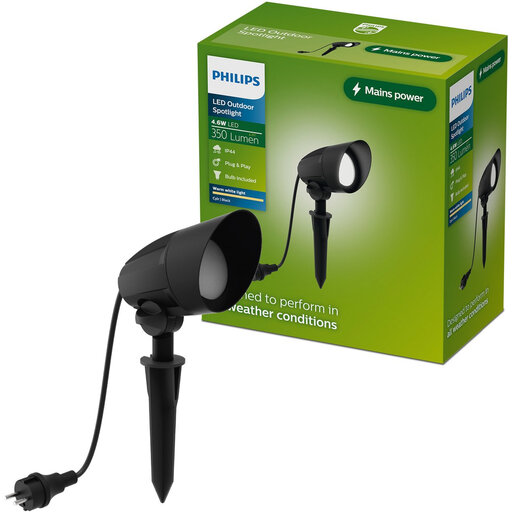
Why it suits this profile: This plug-in ground spotlight is a good match for garden owners who want to direct light at a tree, shrub, wall or entrance and have an outdoor mains connection.
The product information states 350 lumens, 2700K and a cable length of 150 cm. It also clearly explains that IP44 is not suitable for submersion or direct high-pressure jets.
Adjustable spotlight, aluminium and glass housing, GU10 LED bulb included and a warm colour temperature for accent lighting.
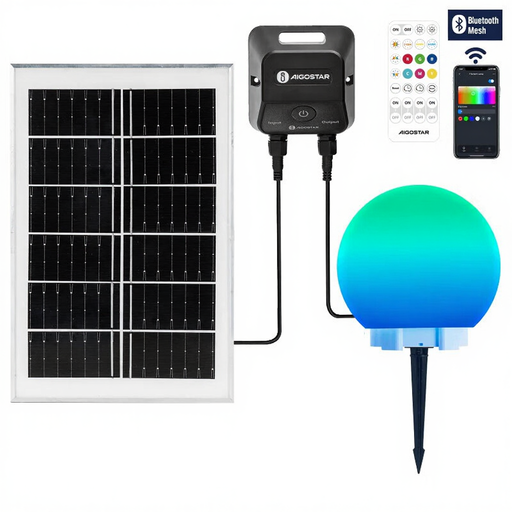
Why it suits this profile: This recessed solar ground light is aimed at anyone who values colour settings and smart controls in a front garden or landscaped outdoor space.
The light has an IP65 rating and a charging time of 4 to 6 hours. This makes the key requirements for installation and use clear from the outset.
RGB and white light settings, 200 lumens, Bluetooth Mesh control and installation without fixed wiring.
We’ve put together a complete, up-to-date list of products that meet these strict selection criteria and the applicable European safety regulations.
Solar path lights with a low light output may be enough for subtle guidance. A driveway, steps or entrance will usually need brighter lighting. Always compare the lumens per light and consider the distance between fittings.
How long they stay lit depends on the battery, the amount of direct sunlight, the temperature and the selected light setting. Manufacturers sometimes give an estimated run time, but this can vary in practice, according to the brand’s own information. Clean the solar panel regularly and only replace the battery in line with the product instructions.
Solar lights use stored solar energy collected during the day. For plug-in outdoor lights, energy use depends on the wattage, how many hours they’re on and the type of light source. An LED light with a timer, dusk sensor or motion sensor can help reduce unnecessary hours of use. For fixed installations, always check the regulations for safe outdoor use.
