
Vandaag of morgen in huis

Kwaliteit gegarandeerd

Welkomstaanbiedingen ontgrendelen: GRATIS bezorging | Tot 80% korting | Gratis 30 dagen JoyPlus-proefperiode
Download de app
Good outdoor garden lighting should do more than simply look attractive. The light needs to suit its location, be sufficiently resistant to rain and match how you intend to use it. A light for a garden path has different requirements from a string light for the patio or an outdoor light with a motion sensor by the drive.
Many disappointing purchases come down to three recurring pitfalls:
The IP rating consists of two digits. The first digit refers to protection against solid particles, while the second indicates protection against water. Examples from the range include:
You should also consider the material. Stainless steel, aluminium and ABS plastic can all be suitable for use in the garden, but the construction, seals and positioning also affect how the product copes with rain and frost. Always check the safety warnings in the product information.
Colour temperature is measured in kelvin:
Lumens indicate the amount of visible light. For example, the UME solar lights specify 10 lumens per light: this is suitable for subtle path lighting and highlighting borders. The vidaXL light specifies 550 lumens at 9 watts, making it more suitable for general lighting along a path or in an outdoor area.
Solar garden lighting does not need a socket or a cable running back to the house. However, the solar panel does need a position with sufficient direct sunlight. Set the switch to “on” when using the light for the first time if the instructions require this. Clean the panel occasionally with a soft cloth.
Note the differences between the models:
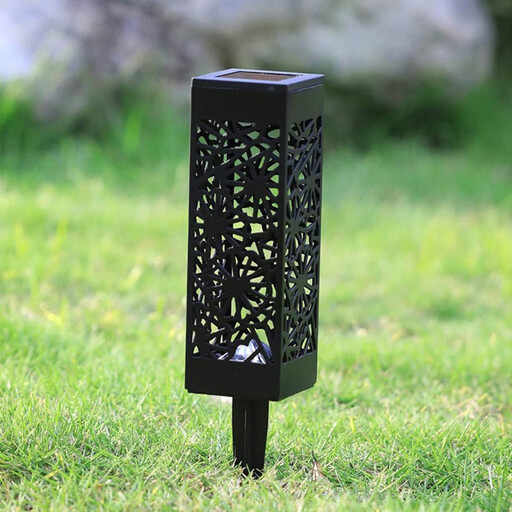
Why it suits this profile: Six lights offer a simple way to mark out a garden path, flower bed or patio edge without wiring or tools.
The product description specifies a charging time of 4–6 hours, an operating time of 5–8 hours and an IP65 rating. Performance still depends on sunlight.
Warm-white LED, ground spikes, six lights per set and a stated IP65 rating.
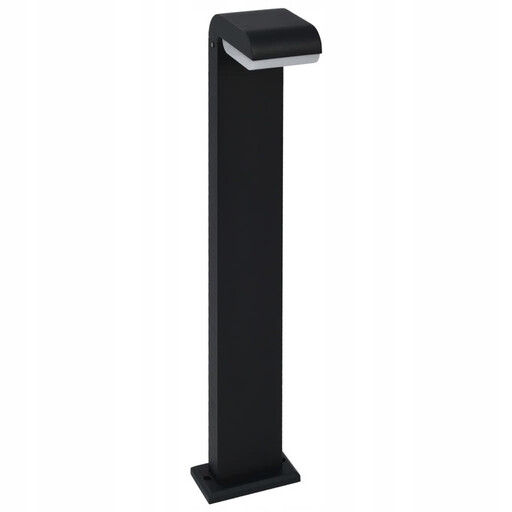
Why it suits this profile: This fixed light is ideal if you are looking for a sleek, permanent lighting solution for a garden path or entrance.
The specifications list the material, power, light output and IP54 rating separately. This allows you to compare the light based on more than just its appearance.
Integrated LED, 550 lumens, 9 watts, aluminium housing and a height of 800 mm.

Why it suits this profile: A practical choice if you want to adapt your lighting for everyday use, parties or different areas of the garden.
The IP44 rating is clearly described as splash-resistant, not completely waterproof. Cables should also be kept away from walkways.
Three lights, 660 lumens, dimming function, adjustable 3000–6500 K, RGB and control via Tuya.
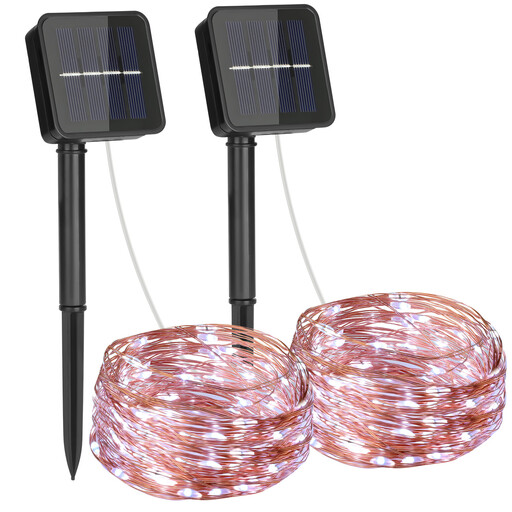
Why it suits this profile: A practical choice for fencing, plants, balcony railings or patio decoration, where flexible lighting matters more than powerful path lighting.
The product description specifies eight lighting modes, a memory function, IP65 and a charging time of 6–8 hours. The stated 8–14 hours of operating time depends on the weather.
Two 8-metre strings, each with 80 LEDs, eight modes and automatic switching on and off.
Do not place solar panels directly beneath a tree, canopy or tall fence. During the day, check whether they receive several hours of direct light. For garden path lighting, even spacing is more important than a single bright light. For a drive, you could consider a light with a motion sensor, but check that the stated detection range and IP rating are suitable for the installation location.
Use warm lighting around a seating area and more neutral or cooler light by an entrance. Do not position solar string lights so that the wire creates a trip hazard. With fixed electric lights, the cable must be installed safely and in accordance with local regulations.
We have put together a complete, up-to-date list of products that fully meet these strict selection criteria and the applicable European safety regulations.
Solar garden lighting can be used outdoors when this is stated in the product information. Performance may be lower during the darker months because the panel receives less light or is illuminated for fewer hours. Keep the panel clean and position it as far as possible from shade.
The operating time per charge varies depending on the model and weather conditions. In the product information mentioned above, the stated figures range from approximately 5–8 hours to 8–14 hours. The battery and LED module also have their own service life. Check whether the components can be replaced; some models have an integrated LED light source.
LED lighting generally uses less power than traditional light sources with a comparable light output. Actual consumption depends on the wattage, number of lights and operating hours. Solar garden lights charge via their solar panel, while electric models such as smart garden spotlights draw power from a socket.
