
Vandaag of morgen in huis

Kwaliteit gegarandeerd

Welkomstaanbiedingen ontgrendelen: GRATIS bezorging | Tot 80% korting | Gratis 30 dagen JoyPlus-proefperiode
Download de app
Good outdoor garden lighting should suit the location, how you’ll use it and the British weather. A light for a sheltered balcony has different requirements from lighting along a driveway or beside an exterior wall. Yet many purchases are driven by attention-grabbing claims such as “extra bright”, “waterproof” or “lasts all night”. If you don’t check the technical details, you could end up paying for features that offer little benefit in your situation.
A light with an IP44 rating is protected against splashing water and solid objects larger than 1 millimetre. This makes it suitable for many sheltered outdoor areas, such as under a canopy or on an exterior wall. However, IP44 does not mean the light can withstand a direct jet of water or immersion.
IP65 outdoor lighting offers greater protection against dust and water jets. This makes it more practical for an open garden, a fence or a spot where rain falls directly onto the casing. Also check that the cable, plug and mounting points are suitable for outdoor use. Looking only at the light’s IP rating doesn’t always give you the full picture.
A high light output isn’t automatically more pleasant. For garden path lighting, an even, low-level light is often enough. A brighter light by an entrance or driveway can be useful, especially with a sensor. For ambience on a patio, the colour temperature, dimmability and direction of the light matter more than maximum brightness.
When choosing LED lighting, look out for:
Solar outdoor lights are easy to install, but the solar panel needs direct daylight. Shade from a fence, tree or canopy will reduce charging time. In winter and on overcast days, the lights may also stay on for less time.
So place solar-powered garden lighting somewhere with as much open sky as possible. Clean the solar panel regularly and set the on/off switch correctly when you first use the light. A solar product isn’t always suitable if you need powerful, consistent lighting all night.
Solar is handy for renters, flower borders, garden paths and places without a power connection. You won’t need fixed wiring, and installation is usually straightforward. A mains-powered light generally provides a more consistent level of light, but often requires professional installation. A fixed 230V outdoor wall light must be connected by a qualified installer.
A rechargeable LED light is another option. It can be installed without wiring, but you’ll need to recharge it periodically via USB. So check not only the lighting itself, but also how it charges and whether the light will be easy to reach.
An outdoor light with a motion sensor is suitable for a front door, garage, shed or driveway. Check the detection range, viewing angle and adjustment options. A sensor aimed at a public road or busy path may switch on unnecessarily often. Also check whether you can choose between continuous light, sensor mode and a dimmed setting.
Plastic is lightweight and often easy to clean. Metal can offer a different look, but check the finish and corrosion protection. All waterproof garden lighting still needs maintenance: remove dirt from the solar panel, check the screws and make sure cables aren’t left lying in puddles.
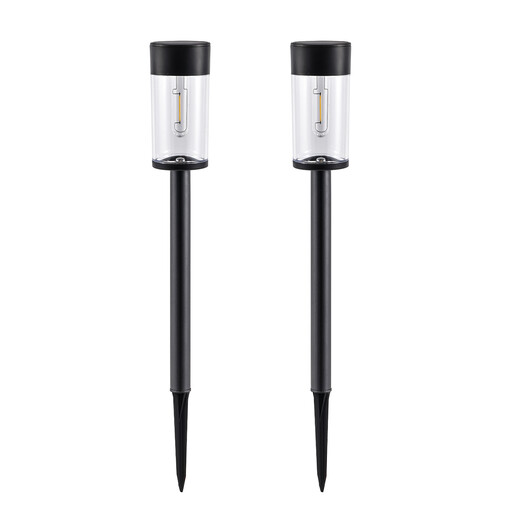
Why it suits this profile: This set is designed for easy installation along a garden path, flower border, lawn edge or driveway. According to the product description, the lights switch on automatically via a light sensor and charge using sunlight.
The stated IP65 rating offers greater protection against dust and water jets than IP44. Do bear in mind that the lights need 6 to 8 hours of direct sunlight to charge.
Set of two, warm white 3000K light, ground stakes and automatic on/off switching.
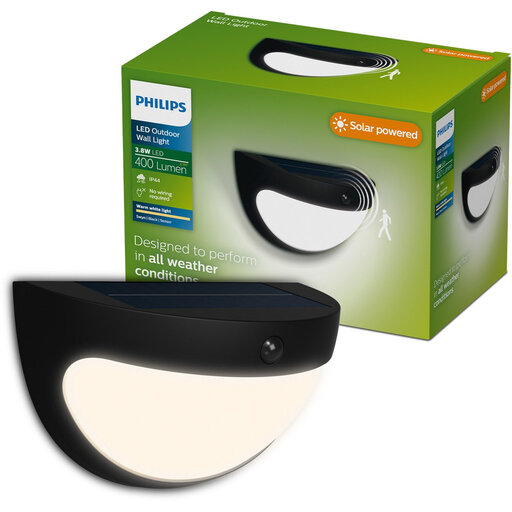
Why it suits this profile: A practical choice for an exterior wall, patio or entrance if you’re looking for a solar wall light with a motion sensor. The product information lists two lighting modes and an integrated LED light source.
The lighting modes and sensor make it easier to understand how the light works than a basic model with only an on/off switch. However, IP44 means splash-resistant, not suitable for direct water jets.
Warm 2700K light, motion sensor, two settings and installation without a mains cable.

Why it suits this profile: According to the product specifications, this solar floodlight is designed for driveways, garages, gardens and larger outdoor areas where broad light coverage is needed.
The specifications list three lighting modes, motion detection up to 60 feet and a 180-degree detection angle. This gives you more flexibility to tailor the light to its location.
302 LEDs, stated light output of 3000 lumens, three adjustable heads and IP65 protection.
We’ve put together a complete, up-to-date list of products that meet these strict selection criteria and the applicable European safety regulations.
It depends on where the lights are placed, the amount of daylight and the battery capacity. Short days and cloudy weather can reduce how long the lights stay on. Choose a sunny spot, keep the panel clean and don’t always expect decorative solar lights to stay on as long as they do in summer.
A modest light output is usually enough to guide you along a garden path, as long as the lights are evenly spaced. A driveway, entrance or larger area will benefit from more light. Position brighter lights so they don’t shine directly into windows or people’s eyes.
Solar lighting doesn’t use electricity from the mains while it’s on. For mains-powered LED lights, energy use depends on the wattage, how long they’re on and how many lights you have. A motion sensor or timer can help prevent them being left on unnecessarily. For fixed lighting, always check the installation costs and choose a suitable light source, such as a low-wattage LED.
