
Vandaag of morgen in huis

Kwaliteit gegarandeerd

Welkomstaanbiedingen ontgrendelen: GRATIS bezorging | Tot 80% korting | Gratis 30 dagen JoyPlus-proefperiode
Download de app
A dark driveway, a garden path that’s difficult to see or a patio that lacks atmosphere after sunset: the right outdoor garden lighting can solve several problems at once. But choosing the right lights involves more than picking a design you like. A low price, high light output or a label saying “waterproof” doesn’t tell the whole story.
The main pitfalls to avoid are:
The IP code consists of two digits. The first indicates protection against solid particles; the second indicates protection against water.
Also check that cables, plugs and connection points are suitable for outdoor use. For 230-volt lighting, such as some ground spotlights, a certified outdoor connection point and safe installation are important.
Colour temperature is measured in Kelvin:
Pay attention to lumens too. A 10-lumen light is mainly for marking a route and creating atmosphere. A larger area needs a higher lumen output. Several small lights can look more appealing than one powerful light, as they spread the illumination more evenly.
Solar garden lights don’t need a mains connection, but they do rely on sunlight. Ideally, position the panel somewhere that gets several hours of direct daylight. Cloudy weather and shorter winter days can affect how long the lights stay on.
For solar lights, check:
LED garden lights generally use little energy. For mains-powered lighting, you’ll also need to consider installation, cabling and a safe power supply. Smart garden lighting adds features such as dimming, colour settings, schedules and Bluetooth control. These are useful if you want to connect several lights, but aren’t essential for straightforward path lighting.
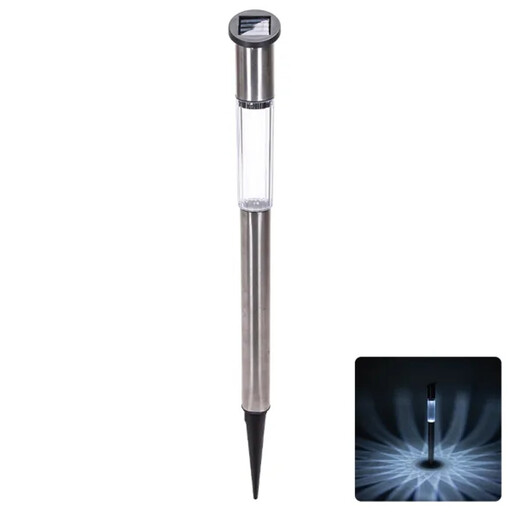
Why it suits this type of buyer: This solar stake light is designed for simply marking flowerbeds, lawn edges and garden paths without fixed wiring. It stands 550 mm tall and is supplied individually.
The specifications state a charging time of 4 to 6 hours, a run time of 8 to 12 hours and an IP44 rating. So avoid placing the light where water collects.
Stainless steel, a polycrystalline solar panel, a NiMH battery and straightforward ground installation.

Why it suits this type of buyer: This fixed garden post light is suitable for paths, patios and flowerbeds where you want a consistent, permanent lighting solution.
The product information states 800 lumens, 2700K warm white light and IP44. This makes it easier to choose the right light colour and brightness for your needs.
Aluminium housing, integrated LED and a height of 96 cm. Earthing is required for installation.
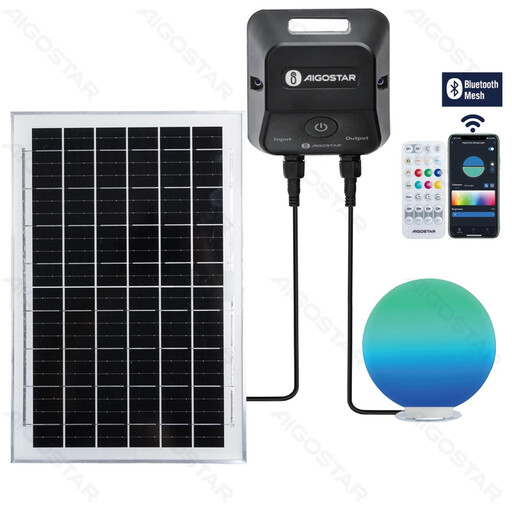
Why it suits this type of buyer: This smart solar garden light is designed for anyone who wants to control colour, brightness and multiple lights from one place.
The product details list IP65, a charging time of 4 to 6 hours and Bluetooth Mesh functionality for more than 200 devices. Check first whether you really need these features.
RGBCCT lighting, scheduling and brightness control, a 120° beam angle and a stated battery life of up to 24 hours.
We’ve put together a complete, up-to-date list of products that meet these strict selection criteria and the applicable European safety regulations.
Choose a spot that gets as much direct daylight as possible. Keep the panels clear of leaves and dirt, and avoid placing the lights too close to bright light sources, as this may delay the sensor switching them on. The stated run time is a guide; weather, season and battery condition all affect the result.
An IP44 outdoor light is protected against splashing water and is often suitable for a sheltered patio, balcony or garden path. For an exposed spot with lots of rain or splashing dirt, an IP65 model may be a better choice. Neither rating automatically means the light can be used underwater.
Energy use depends on the wattage, number of lights and hours they’re on. Solar lights use energy stored in a built-in battery. For fixed LED outdoor lights, you can calculate energy use as follows: wattage × hours on ÷ 1000. Smart features can make usage easier to schedule, but they do add extra technology.
