
Vandaag of morgen in huis

Kwaliteit gegarandeerd

Welkomstaanbiedingen ontgrendelen: GRATIS bezorging | Tot 80% korting | Gratis 30 dagen JoyPlus-proefperiode
Download de app
A dark driveway, poorly lit garden path or lacklustre patio does not automatically call for the most expensive light. With outdoor garden lighting, it is mainly about finding the right combination of brightness, power supply, protection against the elements and installation method. Marketing copy often focuses on attractive design, while the technical details are what really determine whether a light is right for your garden.
A light with IP44 is protected against splashing water, but not direct water jets or immersion. This makes such a model suitable for a sheltered wall, covered area or balcony, but less appropriate for an exposed spot where rainwater constantly lands on the light.
IP65 offers greater protection against dust and water jets. Even this does not mean you can place the light in a pond. Always check the exact IP rating and the recommended installation location.
Solar garden lighting works without a fixed connection, but the solar panel does need direct daylight. Shade from a fence, tree or covered area can limit charging time. Therefore, pay attention to:
A product described as being able to operate for 8 to 12 hours will not necessarily achieve this every night if the weather is cloudy during the day or the panel is partly in the shade.
A string light or decorative lamp can add attractive lighting to a patio, but it is not always suitable for a garden path or steps. For functional LED garden lighting, check the light output in lumens. For ambient garden lighting, a warm colour temperature and lower brightness are often more pleasant. An entrance, back door or driveway may require more focused lighting.
First decide where the light will be installed. Outdoor wall lighting beneath a roof may be fine with IP44 if the product description permits it. For a freestanding position in the garden, greater protection against moisture is often more practical. Install electrical connections and cables in accordance with the installation instructions, and avoid placing cables across walkways.
Colour temperature is measured in Kelvin:
Lumens indicate the amount of light, but not automatically how widely it is distributed. A 300-lumen light may be suitable for an entrance, while several garden spike lights may be needed to illuminate a long garden path evenly.
Solar lights do not require a mains connection, but they do depend on sunlight. Mains-powered models generally offer more consistent operation, but require a safe connection. An outdoor light with a sensor switches on when movement is detected. Check that the sensor is designed for the required distance and that the light can be switched off manually.
Smart garden lighting may also require an app, Bluetooth or Wi-Fi and, in some cases, an account. Check in advance that a connection is available where the light will be installed.
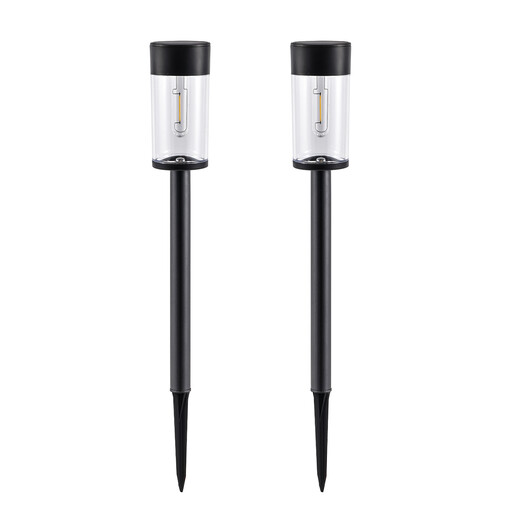
Why it suits this profile: This set is designed for garden paths, borders, lawn edges and the edge of a driveway without a fixed power connection. The lights are installed using ground stakes.
The product description mentions a solar panel, automatic dusk sensor and IP65 rating. However, place the lights somewhere with sufficient direct sunlight.
A set of two, 3000K warm white light, 10 lumens per light and, according to the specifications, an expected operating time of 8 to 12 hours after 6 to 8 hours of sunlight.

Why it suits this profile: This set is ideal for anyone who wants to combine several light points with control via an app or voice assistant, for example on a patio, along borders or around plants.
The specifications state IP44 and warn that the light is splash-resistant but not waterproof. Cables should be kept away from walkways.
Three integrated LED lights, 660 lumens, dimming function, RGB and adjustable colour temperature from 3000 to 6500 K.
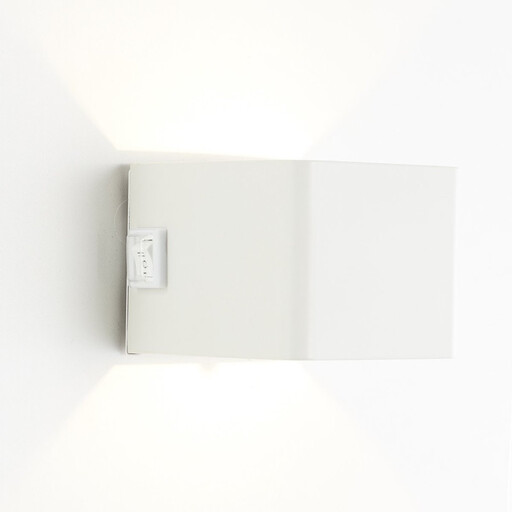
Why it suits this profile: This model is suitable for an entrance, shed, balcony or patio without fixed wiring, where light is only needed when movement is detected.
The light runs on a rechargeable battery and has a motion sensor. IP44 means it should be installed in a sheltered location and not exposed to direct water jets.
300 lumens, 3000K warm white, magnetic mounting, USB charging and integrated motion detection according to the product information.
We have put together a complete, up-to-date list of products that fully meet these strict selection criteria and the applicable European safety regulations.
For garden path lighting, install several lights at equal intervals. Do not point them all directly into people’s eyes; instead, let the light fall downwards or to the side. Garden spike lights are suitable for covering a larger area, but check the height, foundation and required power connection beforehand.
A fixed wall light with an E27 fitting, such as the Brilliant Newport, is supplied without a bulb and must be connected by a qualified electrician in accordance with the product information. Its IP44 rating makes it suitable for a sheltered outdoor location, but not for a place exposed to direct water jets.
For outdoor party lighting, check not only the IP44 rating but also the cable length, adapter and distance between the hanging points. Use a suitable outdoor connection and make sure that connections cannot lie in puddles.
For a subtly lit garden path, a low brightness per light may be sufficient, particularly if you use several lights. More light is useful for an entrance or driveway. Do not look only at lumens, but also at the light distribution, height and distance between the lights.
Operating time depends on sunlight, the season, temperature, battery capacity and dirt on the panel. Clean the solar panel regularly and position it away from shade. The operating time stated by the manufacturer is a guideline based on the conditions specified.
LED lights generally use little electricity compared with traditional light sources. Consumption depends on the wattage, number of lights and operating hours. A sensor, timer or app control can help ensure that mains-powered lighting only comes on when needed.
