
Vandaag of morgen in huis

Kwaliteit gegarandeerd

Welkomstaanbiedingen ontgrendelen: GRATIS bezorging | Tot 80% korting | Gratis 30 dagen JoyPlus-proefperiode
Download de app
Outdoor garden lighting can clearly mark a pathway, make a patio feel cosier or dress up a balcony for a party. However, things do not always work out as expected. For example, a solar lamp may not get enough sunlight, a string of lights may not be suitable for rain or an outdoor light may be much dimmer than anticipated.
The main pitfalls are usually not related to appearance, but to the specifications. Before buying, check the brightness, IP rating, power supply and installation requirements. This will help you choose outdoor lighting that suits your garden, patio, driveway or balcony.
Solar garden lighting uses a solar panel and a built-in battery. If the panel is positioned under a tree, on the north-facing side of your home or frequently in the shade, the operating time may be shorter. Output is also lower in winter and during cloudy weather.
When choosing solar garden lighting, check the stated charging time and operating time. Treat these figures as a guide based on the conditions specified by the manufacturer, rather than as a fixed daily guarantee.
An IP rating indicates how well a product is protected against dust and water. IP44 is suitable for splashing water, but electrical connections and adapters should still be kept out of direct rain. IP65 offers greater protection against dust and water jets, but it does not mean that a lamp can be placed underwater.
So, do not use IP44 Christmas lights in an open, unprotected area where rainwater could remain on the adapter for long periods.
A string of lights with small LEDs is mainly intended to create atmospheric lighting in the garden. This is different from a lamp that makes a path or driveway sufficiently visible. Therefore, look at lumens, the unit used to measure luminous flux. A solar path light with 10 lumens per light provides a soft marker, but it cannot replace a powerful wall light or floodlight.
Warm white solar string lights are ideal for a cosy seating area. Along a pathway, solar ground spotlights or freestanding path lights are a more logical choice.
For open areas, preferably choose IP65 outdoor lights or other outdoor lighting with a suitable IP rating. Also check whether the cable, adapter and switch have the same level of protection as the lamp itself. With outdoor Christmas lights, the string may be splashproof while the adapter must remain dry.
Position solar panels away from obstructions and clean them occasionally with a soft cloth. For ground lights, it is a good idea to check that the stake is firmly secured and does not create a trip hazard.
Solar lighting does not require a socket, but it does depend on sunlight and a battery. Check whether the lamp needs to be switched to “on” before first use. On some models, the automatic dusk sensor only works when this switch is set correctly.
Mains-powered outdoor lights generally provide a more consistent light output, but they require a suitable connection and sometimes professional installation. A lamp with an E27 fitting gives you more choice of light source, but the LED bulb is not always included.
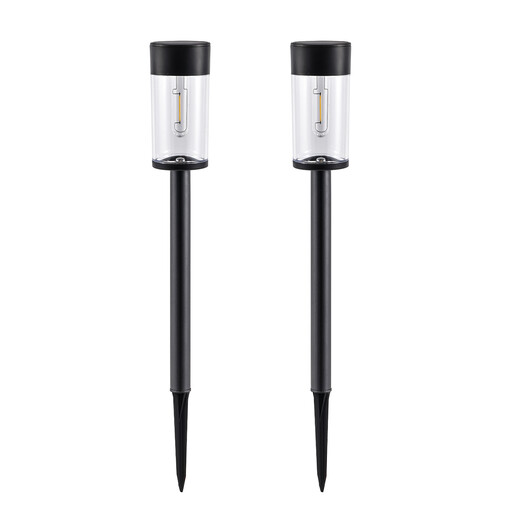
Why it suits this profile: This set is designed to mark out a garden path, lawn edge or driveway without cables. Installation is carried out using ground stakes.
The product information states IP65, automatic activation and an estimated charging time of 6–8 hours for 8–12 hours of illumination. Positioning in direct sunlight remains essential.
Two lights, warm white 3000K light, 10 lumens per lamp and a stated two-year warranty.
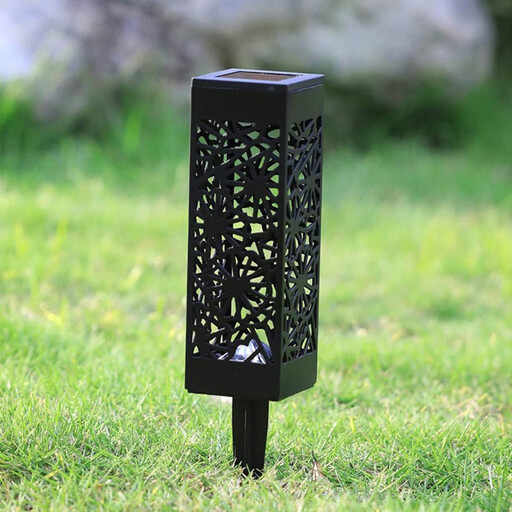
Why it suits this profile: The six-light set is ideal for larger borders, multiple garden paths and driveways where an even pattern is desired.
The stated IP65 construction and simple ground installation make positioning straightforward. The stated operating time of 5–8 hours depends on sunlight.
Six warm white LED lights, decorative light patterns through the open shade and a stated charging time of 4–6 hours.

Why it suits this profile: This lighting system is designed for large decorative areas, such as a façade, covered patio area or Christmas tree during the festive season.
The product information states an IP44 rating and advises protecting the adapter and connections from direct rain. This makes the installation limits clear.
720 warm white 3000K LEDs, 15 hanging points, a coverage area of 10 × 0.5 metres and a memory function.
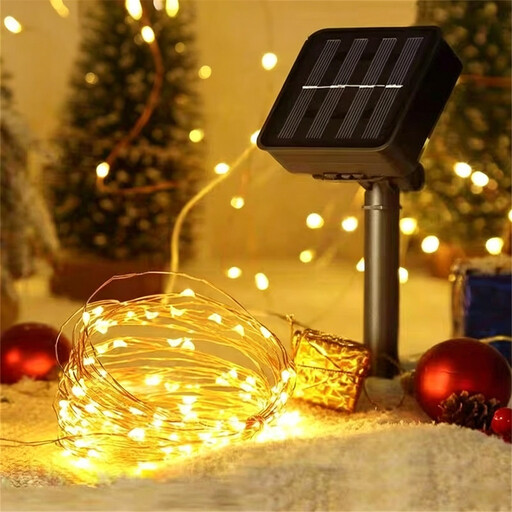
Why it suits this profile: The two flexible 49 ft strings are suitable for decorating a balcony railing, pergola, bush or covered patio area.
The specifications list eight lighting modes, a memory function and 6–8 hours of charging in direct sunlight. The panel must be positioned outdoors; the lights must not be submerged.
150 warm white LEDs in total, two 49 ft strings and automatic switching on and off according to the product information.
We have put together a complete, up-to-date list of products that fully meet these strict selection criteria and the applicable European safety regulations.
Position the solar panel where it will receive as much direct sunlight as possible. Keep trees, walls and garden furniture away from the panel. Set the switch to “on” before the first charging cycle if instructed to do so in the manual. Securely place path lights in the ground and allow enough room for safe passage.
The operating time per night depends on sunlight, the battery, temperature and dirt on the panel. The stated operating time is therefore only an indication. Clean the panel regularly and consider storing delicate decorations during prolonged frost or storms. After a while, check whether the battery still has sufficient capacity.
During normal use, solar lighting draws energy from the solar panel and uses a rechargeable battery. No connection to the mains is required. However, the battery or the entire product may need replacing over time. For lighting with an adapter or batteries, you should allow for mains or battery usage.
