
Vandaag of morgen in huis

Kwaliteit gegarandeerd

Welkomstaanbiedingen ontgrendelen: GRATIS bezorging | Tot 80% korting | Gratis 30 dagen JoyPlus-proefperiode
Download de app
Good outdoor garden lighting should do more than look attractive. The light needs to suit its location, provide enough illumination and withstand the Dutch weather. A pathway, balcony, driveway or flowerbed will also have different requirements.
Marketing copy can sometimes make it difficult to compare products fairly. Pay particular attention to verifiable specifications, rather than relying only on terms such as “extra bright” or “waterproof”.
A lamp with a high lumen output can be unpleasantly bright if the light is not distributed properly. For a garden path, evenly distributed, low-level light is often more practical than a powerful beam. So check the number of lumens, as well as the light colour, beam angle and position of the lamp.
A warm colour temperature of around 2700 to 3000 kelvin is usually suitable for atmospheric garden lighting. Cool white light, such as 6500 kelvin, can be functional but tends to look harsher.
A product with IP44 is protected against splashing water, but is not designed to stand in water or be exposed to powerful water jets. IP54 provides protection against dust and splashing water. IP65 protects against dust and low-pressure water jets, but this type of lamp must not be submerged either.
Always install a lamp according to the instructions. An IP65 outdoor lamp is not automatically suitable for every in-ground installation.
Solar garden lighting is easy to install, but its performance depends on sunlight. A lamp beneath a dense tree, on the north-facing side of a building or on a shady balcony will charge less efficiently. The stated operating time is generally based on sufficient direct sunlight and a fully charged battery.
Also check whether the switch needs to be set to “on” before first use. With many solar garden lights, switching on and off then happens automatically via a light sensor.
For a sheltered veranda or balcony, you could use a lamp with IP44, provided it is not directly exposed to heavy rain. For open borders, lawns and areas where there is more dust and rain, IP54 or IP65 outdoor lighting may be more suitable.
A lamp connected to the mains requires a suitable outdoor socket. For example, a ground spotlight with a plug must be connected to an outdoor-rated socket with residual-current protection. Do not run the cable through an area where it could be left as a trip hazard.
An integrated LED garden light generally requires little maintenance. Pay attention to:
For a path, several soft light sources are often more pleasant than one bright lamp. Outdoor ground spotlights are suitable for highlighting a tree, façade or border, but do not point them directly at windows or eye level.
Solar garden lights do not need a cable connected to the mains. This makes them useful for rented homes, flats and parts of the garden without a power point. An outdoor light with a motion sensor can be practical by an entrance or garage, while constant ambient lighting is better suited to a patio.
Smart outdoor lighting offers extra features such as scheduling, brightness control and colour selection. Check in advance whether the connection uses Bluetooth or Wi-Fi, how wide the range is and whether the lamp has a separate solar panel module.
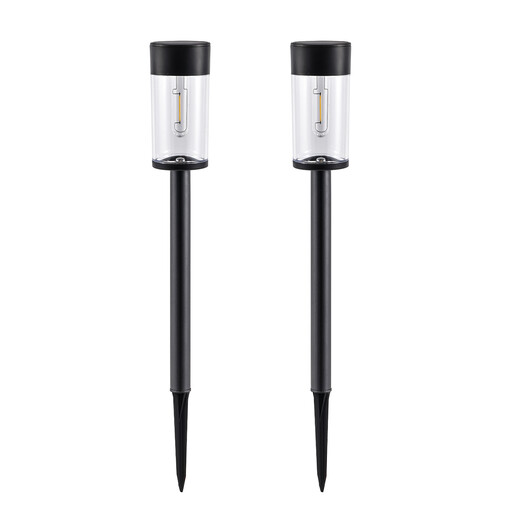
Why it suits this profile: This set is designed as an easy introduction to solar garden lighting along a path, lawn edge or driveway.
The product description mentions a light sensor, automatic switching on and off, and an IP65 rating. Make sure you place the lights in a sunny location.
Set of 2, warm white light at 3000 K and a stated operating time of 8–12 hours after 6–8 hours of sunlight.
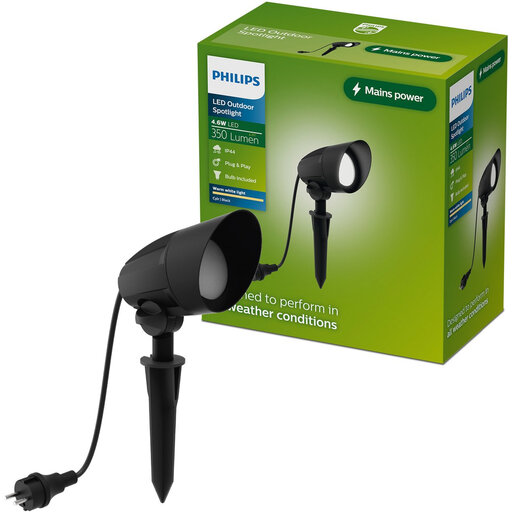
Why it suits this profile: This plug-in light is ideal if you want a focused light source for a tree, shrub, driveway or entrance.
The specifications state IP44 and warn against immersion and direct water jets. This makes the correct installation location clear.
GU10 LED included, 350 lumens, 2700 K and an adjustable spotlight for focused illumination.
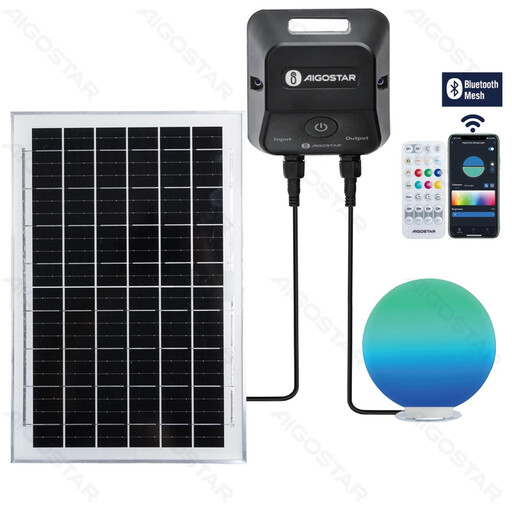
Why it suits this profile: An option for anyone who wants to combine smart outdoor lighting, colour settings and multiple connected lights.
The product information explicitly states IP65, a charging time of 4–6 hours and an operating temperature range of -10 °C to 50 °C. Check the Bluetooth range beforehand.
RGB and white light, Bluetooth Mesh control and a stated battery life of up to 24 hours.
We have put together a complete, up-to-date list of products that fully meet these strict selection criteria and the applicable European safety regulations.
Choose a spot with several hours of direct sunlight and avoid shade from trees, fences and walls. Clean the solar panel occasionally with a soft, damp cloth. Bear in mind that charging performance will be lower during dark or cloudy days.
For sheltered areas, IP44 may be sufficient. For open garden locations, IP54 or IP65 is often more practical, depending on exposure to rain and dust. Always read the safety instructions: none of these ratings means that the lamp may be placed under water.
Consumption depends on the wattage, the number of lamps and the operating time. A 5-watt lamp that runs for five hours a day uses approximately 25 watt-hours per day. Solar garden lighting uses energy from its built-in battery, although the lamp still needs sufficient sunlight to charge it.
