
Vandaag of morgen in huis

Kwaliteit gegarandeerd

Welkomstaanbiedingen ontgrendelen: GRATIS bezorging | Tot 80% korting | Gratis 30 dagen JoyPlus-proefperiode
Download de app
Outdoor garden lighting can make a garden path easier to see, create a more pleasant atmosphere on a patio and provide extra light on a driveway. However, a light does not always live up to expectations in practice. The stated operating time may not be achieved when there is little sunshine, a low IP rating may not be suitable for an exposed location and a light may provide more ambience than practical illumination.
With these considerations in mind, you can compare outdoor solar lights, LED outdoor lights and garden lanterns based on verifiable specifications rather than appearance or marketing copy alone.
Solar-powered garden lighting needs direct daylight to charge the battery. In winter, during overcast weather or when a panel is positioned beneath a tree, the light may operate for less time than stated in the product description. Therefore, place solar garden lights where they receive as much direct sunlight as possible. Also check whether there is an on/off switch and whether the light comes on automatically at dusk.
An IP rating indicates the influences against which a product is protected. IP44 means protection against solid objects from 1 mm in size and splashing water. This is not the same as protection against a powerful jet of rain or immersion in water. IP54 additionally provides a limited degree of protection against dust. IP65 indicates a dust-tight housing and protection against water jets.
So always check the exact IP code and the installation instructions. For example, a light with an IP44 rating should not be placed where it will be exposed directly to water from a sprinkler or gutter.
A warm light along a border is pleasant as garden mood lighting, but it may not provide enough visibility on stairs or a dark driveway. Therefore, pay attention to the light output in lumens, the colour temperature in Kelvin and the direction of the light. A light providing 10 lumens per light is mainly decorative. A model offering 350 to 800 lumens is more suitable when you want to illuminate a larger area, although the result also depends on positioning.
For a fixed 230V light, check whether installation by a qualified electrician is required. This applies, for example, to certain wall lights with an E27 or GU10 fitting.
A colour temperature of around 2700–3000K produces warm white light and usually suits a patio, balcony or garden lantern. At around 4000K, the light appears more neutral and can be more practical along a driveway. 6500K is a bright, cool white with a clearly functional character.
For garden path lighting, several low-level lights are often more pleasant than one very bright lamp. Position the lights at equal distances and do not aim them directly at windows or seating areas.
Aluminium and rust-resistant steel are common materials for fixed outdoor lights. Plastic can be lighter and cheaper, but in that case check whether the product is suitable for prolonged outdoor use. Also consider the height: a spike light of approximately 36 to 55 cm suits a garden path, while a post light of around 80 to 96 cm can mark a larger area.
With solar lights, regularly cleaning the panel and light cover with a soft, damp cloth can help. Consider whether the light source and battery can be replaced. With integrated LED lighting, the light source is often not designed to be replaced by the user.
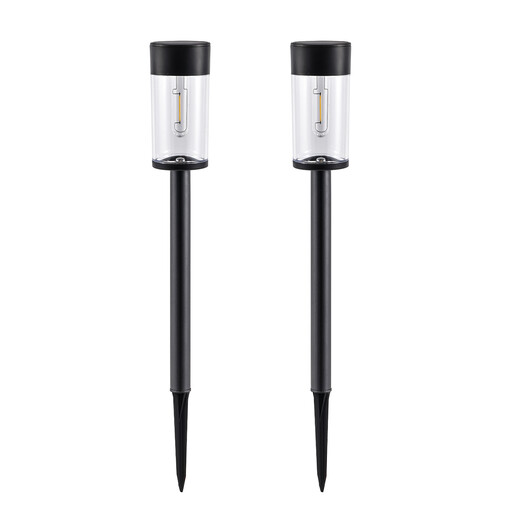
Why it suits this profile: This set contains two spike lights for a garden path, border, lawn edge or driveway. They can be installed without cables or a technical connection.
The product description states a light output of 10 lumens per lamp, making expectations clearer: this is mainly path and mood lighting, not a powerful security light.
IP65 rating, warm white 3000K light and automatic activation at dusk according to the product details.

Why it suits this profile: This fixed garden lantern is designed for long-lasting LED lighting along paths, patios and garden borders.
The specifications state 800 lumens, 4.3 watts and a colour temperature of 2700K. This clearly shows the difference between functional lighting and decorative solar lighting.
Aluminium housing, 96 cm height, integrated LED and IP44 rating for splash protection.
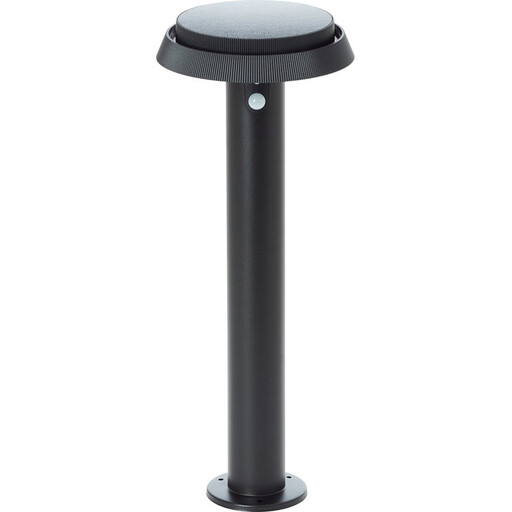
Why it suits this profile: The motion sensor makes this light suitable for an entrance, driveway or passageway where light is mainly needed when someone walks past.
The light is not designed as continuous mood lighting, but according to the product description it is intended for use with a motion sensor. The IP44 rating means splash protection, not complete waterproofing.
500 lumens, 3000K warm white light, integrated LED and three adjustable modes according to the product information.
We have compiled a complete, up-to-date list of products that fully meet these strict selection criteria and the applicable European safety regulations.
For decorative path lighting, a low light output per lamp may be sufficient. A driveway, entrance or dark passageway requires more light. Do not compare only the number of LEDs; focus mainly on the stated number of lumens and the light distribution.
That depends on the IP rating, positioning and amount of sunlight. Choose a light with a suitable IP code, place the solar panel away from shade and keep it clean. During prolonged overcast weather, the operating time may decrease.
An LED light generally uses little electricity, but the cost depends on the wattage, number of operating hours and electricity price. Solar lights do not use mains electricity while operating, but they do have a battery and solar panel that may perform less effectively over time. Before buying, also consider the warranty, replaceability and maintenance requirements.
