
Vandaag of morgen in huis

Kwaliteit gegarandeerd

Welkomstaanbiedingen ontgrendelen: GRATIS bezorging | Tot 80% korting | Gratis 30 dagen JoyPlus-proefperiode
Download de app
Good outdoor garden lighting needs to do more than look attractive during the day. In the Netherlands, lights have to cope with rain, wind, changing temperatures and sometimes limited sunlight. Yet many garden lights are marketed mainly with atmospheric images and claims such as “waterproof”, “energy-efficient” or “extra bright”. Check the technical specifications first, then choose a light that’s suited to where you plan to use it.
A product description may highlight water resistance, even though the IP code is missing or offers less protection than you expect. IP44 protects against splashing water, but isn’t designed for immersion or direct water jets. IP54 also offers limited protection against dust. IP65 means the product is dust-tight and protected against water jets from different directions.
So don’t place an IP44 light in a low-lying part of the garden where water collects. Also check that the plug, connection and cable are suitable for outdoor use. With solar garden lights, the solar panel is particularly vulnerable to dirt, shade and standing water.
Solar garden lights won’t run indefinitely on a full battery. According to Huacan’s product information, the Solar Garden Lights take around 4 to 6 hours to charge in direct sunlight, then stay lit for around 5 to 8 hours. In cloudy weather, in the shade or on short winter days, they may run for less time.
A solar light under a canopy or next to a tall fence may not get enough sunlight. In those spots, it’s better to choose LED outdoor lighting with a power connection, or place the solar panel somewhere sunnier if the design allows.
A warm-white string light is ideal for a patio, balcony or party, but it won’t necessarily light up a dark driveway. For a path, you’ll need even coverage and enough brightness. Look at lumens, which measure the amount of visible light, rather than just the number of LEDs.
Light colour matters too. Warm white creates a softer feel, while neutral or cool white makes details easier to see. RGB lighting gives you a choice of colours, but it’s not always the most practical option for everyday path lighting.
Use the IP rating as your first selection guide:
No IP rating automatically makes a product suitable for immersion. Always follow the installation and safety instructions.
For decorative outdoor lighting, atmosphere is what matters most. For a driveway, entrance or garden path, lumens, beam angle and the distance between lights are more important. An integrated LED can reduce maintenance, but it isn’t replaceable on some models. This is stated explicitly for the Brilliant Kamara set, for example.
An outdoor light with a sensor can be useful by a front door or shed, but check that the product actually has a motion sensor. Not every smart garden light or solar light switches on when it detects movement; some only work with a manual button, timer or automatic dusk function.
Solar garden lights don’t need fixed wiring, but they do need a good spot for the panel. Battery-powered models are easy to move, while plug-in models can draw power continuously. For a balcony or patio, cable length is often a deciding factor.
Also check:
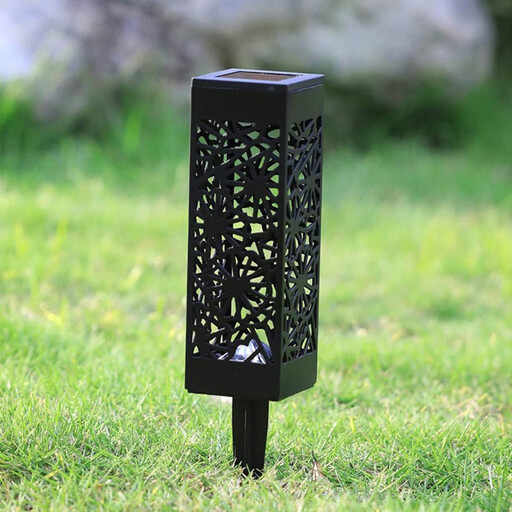
Why it suits this type of buyer: This set is a practical choice if you want to light a garden path, border or balcony without cables. The six lights can be installed with ground spikes.
The IP65 rating is clearly stated. The stated 5–8-hour operating time is based on a full charge and depends on the weather.
Set of 6, warm-white LEDs, no wiring required and, according to the product information, a charging time of 4–6 hours in sunlight.
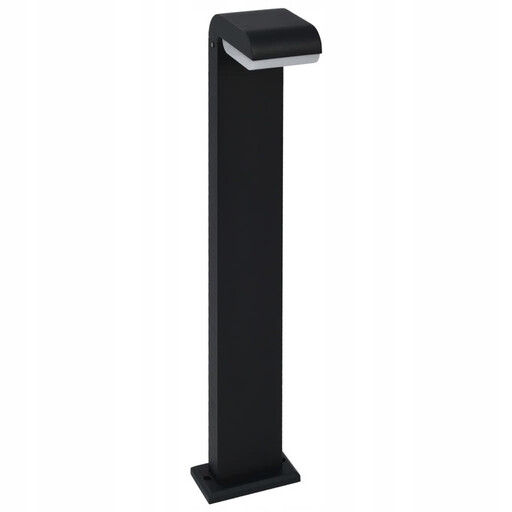
Why it suits this type of buyer: This fixed LED path light is a good fit for buyers who want a clean look and clearly stated lighting specifications for a garden path or entrance.
The product page lists IP54, 9 W and 550 lumens. This makes it easier to compare with other lights than a model described only in terms of ambience.
Integrated LED, die-cast aluminium housing, 800 mm high and, according to the description, light that shines downwards.
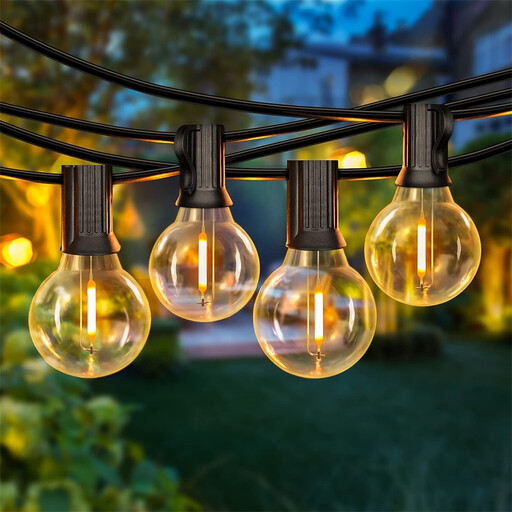
Why it suits this type of buyer: For a large patio, balcony, garden party or event, a 30-metre string gives you plenty of reach without having to install separate lights in several places.
The product information makes it clear that this is a plug-in model and that the lights aren’t designed for immersion. This avoids confusion with solar or waterproof garden lighting.
30-metre length, 50+2 LEDs, dimming function, timer, multiple lighting modes and replaceable bulbs, according to the product description.
LED outdoor lighting generally uses less electricity than traditional light sources with a similar light output, but total consumption depends on wattage and operating time. A solar light doesn’t use mains electricity while it’s on, but its performance depends on sunlight and battery capacity.
For fixed garden lights, you can calculate energy use with:
wattage × hours on ÷ 1,000 = kilowatt-hours
Use a timer, dusk sensor or smart controls if the model supports them. With smart lighting, such as the Brilliant Kamara set, you may need an app, Bluetooth or Wi-Fi and, in some cases, an account. Check the cable route too: a cord shouldn’t create a tripping hazard.
IP44 may be suitable for a sheltered spot. For an open garden or somewhere more exposed to rain and dirt, a higher rating such as IP54 or IP65 is more practical. Always check the full installation instructions.
Operating time varies depending on the battery, charging capacity, lighting mode and weather conditions. Check the stated charging time and operating time, but bear in mind that performance may be lower in cloudy or shaded conditions. Clean the solar panel regularly.
Solar garden lights don’t use mains electricity while they’re on. For mains-powered LED lights, energy use depends on the wattage, the number of lights and how long they’re on each day. A timer or smart controls can help you avoid leaving them on unnecessarily.
We’ve put together a complete, up-to-date list of products that meet these strict selection criteria and the applicable European safety regulations.
