
Vandaag of morgen in huis

Kwaliteit gegarandeerd

Welkomstaanbiedingen ontgrendelen: GRATIS bezorging | Tot 80% korting | Gratis 30 dagen JoyPlus-proefperiode
Download de app
An OSRAM LED driving light for your car can improve visibility on dark country roads, unlit building sites and unsurfaced tracks. But a high lumen output doesn’t automatically make it the right choice. The wrong beam pattern, inadequate protection from moisture or incorrect fitting could leave you disappointed in practice — or mean the light isn’t suitable for use on public roads.
As Joybuy Product Recommendation Officer, I start by checking the specifications. Below, you’ll find what to look for in a 12V 24V LED driving light, LED light bar or auxiliary high beam.
Lumens indicate the total light output, but they don’t tell you how far you’ll be able to see. The beam pattern is just as important:
As well as the lumen output, check the stated range, beam pattern and intended use.
Some ECE-approved driving lights must be fitted in pairs. For example, according to the supplied product specifications, this applies to the OSRAM LEDriving ROUND MX180-CB and VX500-SP. A single light may work technically, but it might not meet the requirements for use as an auxiliary high beam.
Before buying, check:
A light designed for 12V and 24V may be electrically suitable for cars, SUVs, lorries and commercial vehicles. That doesn’t mean every fitting position or application is automatically permitted. Dutch road traffic rules and the relevant ECE regulations still apply.
Pay attention to alignment, too. A misaligned LED driving light can dazzle oncoming drivers, even if the light itself carries an ECE marking.
Check whether your vehicle uses a 12V or 24V system. A light that supports both voltages offers more flexibility for an SUV, van, lorry or agricultural machine. Also check the wattage. Two 63-watt lights will place considerably more demand on the electrical system than a single compact 39-watt light.
Use a suitable fuse and cable size when fitting the light. If you’re unsure about the connection, it’s best to have it fitted by a qualified installer.
The stated light range is usually linked to a particular light intensity, such as the range at 1 lux. This makes it easier to compare lights than relying on a marketing claim about an “extremely long” beam.
According to the product specification, the LEDriving ROUND MX180-CB has a combo beam with a range of up to 300 metres. The VX500-SP has a spot beam with a stated range of up to 415 metres. The VX1000-CB SM is listed with a combo beam and a stated range of up to 523 metres.
For off-road LED lighting, materials and sealing matter. A polycarbonate lens is impact-resistant and suitable for conditions involving vibration or flying dirt. Check the IP rating, too:
Good thermal design matters as well. LEDs produce heat at the rear, so leave enough space around the housing and don’t block any ventilation or cooling surfaces.
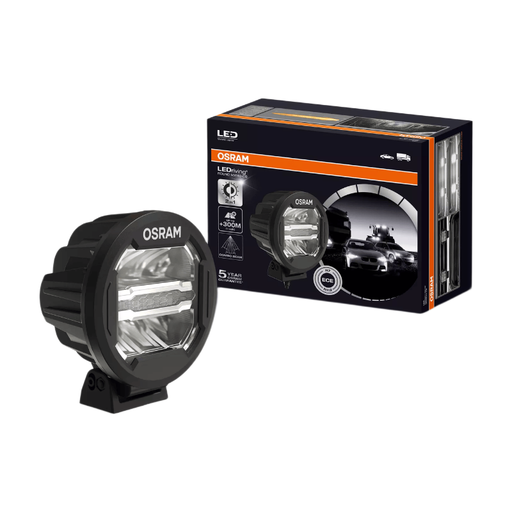
Why it suits this type of user: A round LED auxiliary light for drivers looking for a compact solution for 12V or 24V vehicles, such as a car, SUV or commercial vehicle.
The specifications list a combo beam, so you’re not relying solely on a narrow, long-range spot. According to the product information, the lights must be fitted in pairs.
39 watts, 3,000 lumens, a stated range of up to 300 metres, IP69K and ECE R7, ECE R112 and ECE R10, according to the product specification.
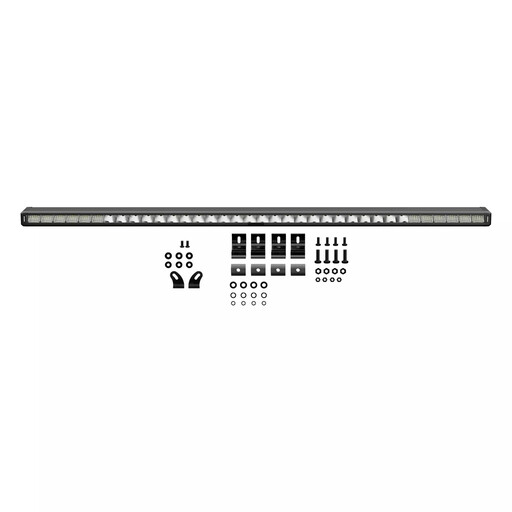
Why it suits this type of user: This long LED light bar is designed for SUV, truck and commercial vehicle drivers looking for a wide combination of near- and long-range illumination.
The product information lists a combo beam and an aluminium housing with a polycarbonate lens. Be sure to check the specific fitting instructions before using the light bar.
36 OSRAM LEDs, up to 6,000 lumens, a stated range of up to 523 metres, IP67 and dual ECE R112 approval, according to the product specification.
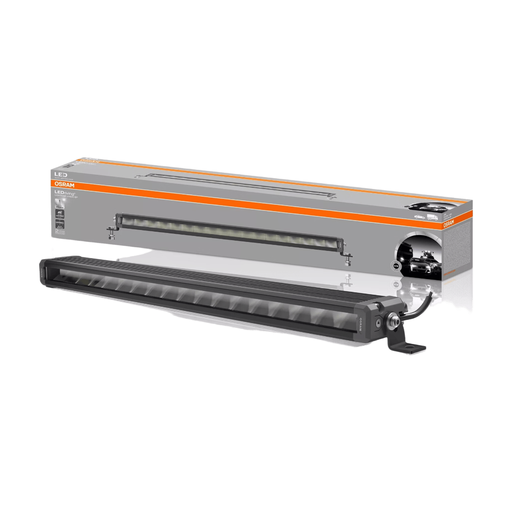
Why it suits this type of user: The spot beam is suited to long, dark journeys and intensive use on vehicles for transport, agriculture, construction or off-road driving.
The stated range and spot beam are clearly specified. According to the product information, two identical lights are required for ECE-compliant use.
2,800 lumens, a stated light range of up to 415 metres, 18 OSRAM P7 LEDs, IP67 and ECE R112 and R10, according to the product details.
We’ve put together a complete, up-to-date list of products that meet these stringent selection criteria and the applicable European safety regulations.
An LED driving light for a lorry, SUV or car must be securely attached at a suitable mounting point. Check that the bumper, grille, roof bar or roll cage can withstand the weight and vibration. Connect the lights using a suitable wiring kit and make sure cables don’t run along sharp edges.
When using the lights on public roads, bear the following points in mind:
The stated light ranges, lifespans and performance figures come from the product information. According to OSRAM’s own research, certain models can offer up to 5,000 operating hours; actual lifespan depends, among other things, on voltage, temperature, fitting and duration of use.
According to their product information, the models listed are designed for 12V and 24V systems. Always check the technical details for the specific model and measure or check your vehicle’s voltage before connecting the light.
It depends on the model and the regulations that apply. The product information for the MX180-CB and VX500-SP specifies that they must be fitted in pairs. The VX1000-CB SM is listed for central mounting as a single light bar, but also has specific fitting requirements. Check the fitting instructions and Dutch regulations.
A spot beam LED driving light focuses most of its light forwards to provide long-range visibility. A combo beam combines long-range illumination with a wider area closer to the vehicle. A spot beam may suit a long, straight route, while a combo beam can be more practical for off-road use, verges and changing driving conditions.
