
Vandaag of morgen in huis

Kwaliteit gegarandeerd

Welkomstaanbiedingen ontgrendelen: GRATIS bezorging | Tot 80% korting | Gratis 30 dagen JoyPlus-proefperiode
Download de app
Whiter headlights give your car a modern look. However, upgrading is not as simple as adding a bulb with a higher Kelvin rating to your basket. The fitting, headlamp type and your car’s electronics all determine whether a car bulb will actually fit and work properly.
As a Joybuy Product Recommendation Officer, I filter the most important product information down to practical considerations. This helps you avoid buying a promising OSRAM COOL BLUE INTENSE car bulb that does not fit, triggers a warning message or is used for the wrong lighting function.
An OSRAM H7 bulb is not automatically suitable if your car uses an H11, H8 or H15. Even within the H8/H11/H16 family, the base, locking mechanism and electrical connection can differ. Always check the handbook or the existing bulb first.
The same applies to xenon bulbs. An OSRAM Xenarc D1S, D2S, D3S or D4S is designed for a specific factory system. These types are not interchangeable and are not direct replacements for halogen lighting.
According to OSRAM’s own information, COOL BLUE INTENSE can provide up to 100% more brightness for certain halogen types compared with the legal minimum standard or a standard reference. This does not mean that every car will deliver exactly the same improvement in light output. The reflector, lens, headlamp adjustment and condition of the unit also have an impact.
For xenon bulbs, OSRAM states up to 150% more brightness for various XENARC COOL BLUE INTENSE models compared with the legal minimum standard. This is a manufacturer claim under the stated comparison conditions, not a guarantee for every real-world situation.
A 5000K car bulb or a xenon bulb rated at 6200K will appear whiter or cooler. However, a higher colour temperature does not automatically mean greater light output. Coated glass can also create a bluish tint. For everyday driving, it is more important that the bulb is fitted correctly, the beam is properly adjusted and the bulb is approved for your vehicle and its intended function.
First, note which type you need:
A 55-watt H7 halogen bulb is a direct replacement when the car was originally designed for a 55W H7 system. Do not use it in an LED or xenon housing unless the vehicle manufacturer specifies a suitable solution.
Halogen bulbs with an LED look use a coated glass tube to create whiter light. The OSRAM COOL BLUE INTENSE H7 and H11 state a colour temperature of up to 5000K. The H8 product information refers to an effective colour impression of around 5000K and a stated temperature of 4200K. The H15 has a stated colour temperature of up to 3700K.
Xenon bulbs such as the OSRAM XENARC COOL BLUE INTENSE D1S, D2S, D3S and D4S state up to 6200K. These bulbs are intended only for cars with the corresponding factory-fitted xenon system.
A CAN bus car bulb must work with the car’s control system. Some vehicles display a warning after installation because the power consumption changes. The product information for the OSRAM H7, H11 and H8 states that certain warning systems may require a resistor or CAN bus adapter. These components are not included.
According to the product description, KATUR T10/W5W LED bulbs are supplied with built-in CAN bus support. The manufacturer mentions compatibility with many 12-24V systems, but you should still check your car’s fitting, available space and any warning messages.
Switch off the lights before installation and allow the bulb to cool down. Do not touch the glass of a halogen or xenon bulb with bare fingers. Professional installation is advisable for xenon bulbs because of the high voltage. Ideally, replace headlight bulbs in pairs so that both sides have the same colour and brightness.
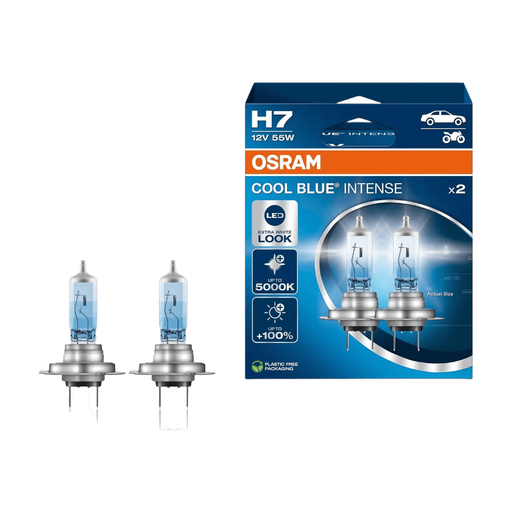
Why it suits this profile: An accessible halogen upgrade for cars with a standard H7 fitting, without converting to LED.
The H7 fitting and 55W specification are clearly stated. However, check your vehicle’s compatibility and CAN bus requirements yourself.
Halogen technology, 55W, up to 5000K according to the product information and supplied as a pair.
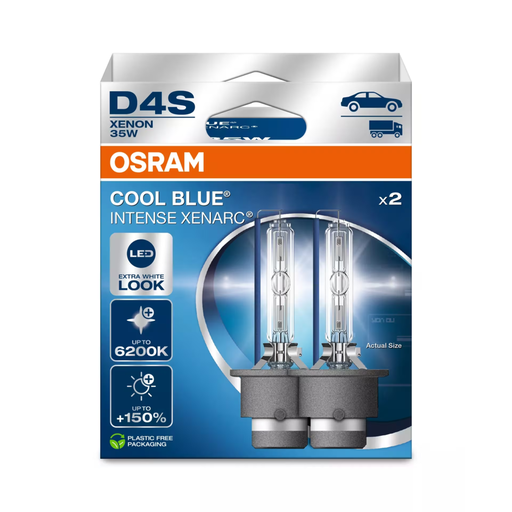
Why it suits this profile: For drivers with a factory-fitted D4S xenon system who want a whiter light appearance.
The model is specifically D4S, making it clear that this bulb is not intended for D1S, D2S or D3S systems.
35W xenon, D4S base P32d-5 and a stated colour temperature of up to 6200K.
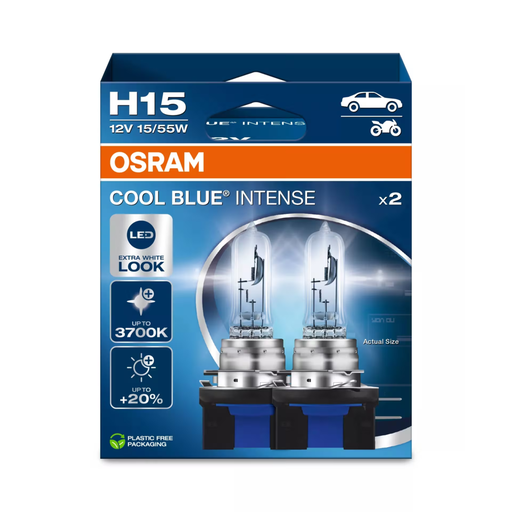
Why it suits this profile: For cars in which one H15 bulb provides both daytime running lights and main beam.
The product information warns that H15 is not universal. Check OSRAM’s official compatibility list before buying.
55W halogen, up to 20% more brightness according to OSRAM and a stated colour temperature of up to 3700K.
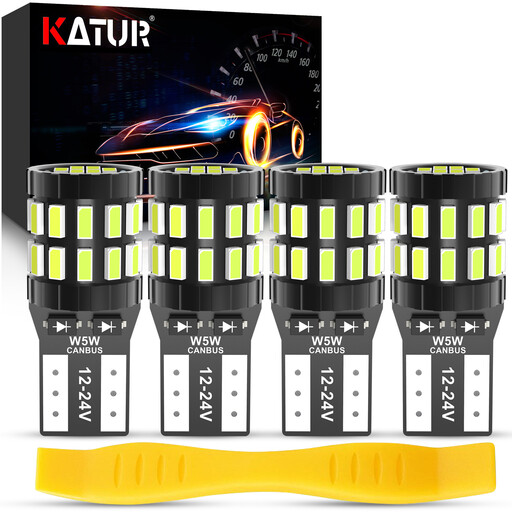
Why it suits this profile: For decorative interior, sidelight or number plate lighting with a blue LED look.
The product information explicitly states that the blue LED is not intended for main lighting. Check the T10/W5W fitting and available space.
12-24V, four bulbs per pack and built-in CAN bus support according to the product description.
We’ve put together a complete, up-to-date list of products that fully meet these strict selection criteria and the applicable European safety regulations.
Not without checking first. H8 and H11 bulbs look similar, but the connection, locking mechanism and electrical power can differ. Check the handbook or compare the original part number before buying an H11 bulb.
This depends on usage, vibration, vehicle type and bulb technology. Halogen bulbs are often replaced in pairs when one bulb fails, so that the light colour remains the same on both sides. With xenon bulbs, replacing them in pairs is particularly important for a consistent light appearance. Always follow the manufacturer’s installation instructions.
An LED bulb generally has a lower stated wattage than a comparable halogen bulb. The KATUR T10/W5W product information states 3W per bulb. If your car has a bulb monitoring system, check that the built-in CAN bus support works with your vehicle; “error free” is a product claim, not a guarantee for every model.
